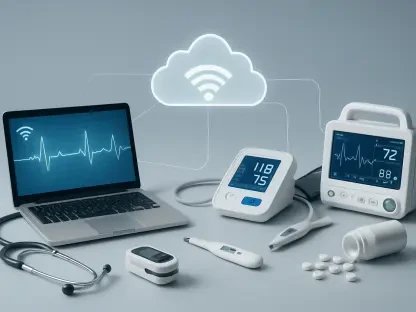

The global healthcare sector currently operates within a vast, intricate web of the Internet of Medical Things, ranging from sophisticated hospital imaging machines to discrete wearable pulse oximeters that continuously stream vital patient information. While this interconnected ecosystem

The rapid proliferation of interconnected hardware has outpaced the security infrastructure meant to protect it, leaving a trail of vulnerable entry points for increasingly sophisticated malicious actors to exploit. This systemic failure in the internet of things ecosystem has paved the way for the

The proliferation of sophisticated supply chain attacks has fundamentally altered how semiconductor giants approach the foundational security protocols embedded within their proprietary silicon architectures today. As modern computing environments become increasingly decentralized, the reliance on

The sleek, high-definition displays that occupy central positions in modern living rooms have evolved from simple broadcast receivers into sophisticated computing hubs equipped with multi-core processors and constant high-speed internet connectivity. While these advancements facilitate seamless

The transition from traditional door locks and handwritten sign-in sheets toward a fully integrated digital ecosystem represents the single most significant advancement in corporate safety protocols seen in the last several decades. For a long time, the concept of a secure office was defined by the

The digital architecture of the modern residence has transformed into a sophisticated hub where every appliance, from the thermostat to the refrigerator, relies on a single wireless gateway to function. This interconnectivity creates a seamless living experience but also exposes a massive attack