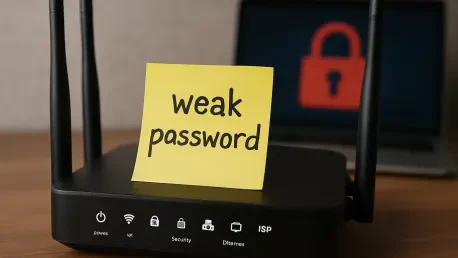

The digital architecture of the modern residence has transformed into a sophisticated hub where every appliance, from the thermostat to the refrigerator, relies on a single wireless gateway to function. This interconnectivity creates a seamless living experience but also exposes a massive attack surface that many individuals overlook during their daily routines. Recent data indicates that nearly seventy percent of smart home compromises originate from improperly secured routers, yet the average homeowner has not changed their network credentials in over three years.
This “set it and forget it” mentality ignores the reality that a home network is the primary defense line for personal banking, private communications, and sensitive biometric data stored on connected devices. When a single entry point is guarded by a predictable or reused password, the entire ecosystem becomes vulnerable to lateral movement by malicious actors who can hop from a lightbulb to a desktop computer with ease. Security is no longer just a technical concern but a fundamental aspect of maintaining a safe domestic environment in an era of total connectivity.
Behavioral Risks: The Social Roots of Vulnerability
Access Proliferation: How Convenience Weakens Security
The concept of “exposure bleed” represents a significant yet frequently ignored risk factor where network credentials slowly leak into the public domain through casual social interactions. When residents provide their Wi-Fi password to visiting friends, temporary contractors, or service workers, they effectively hand over a permanent key to their digital front door without any expiration date. This creates a lasting vulnerability as these individuals may still have access to the internal network long after their visit has concluded.
Most modern devices are designed to remember these networks indefinitely, allowing them to reconnect automatically whenever they come within range of the signal. Over several years, a single household might have dozens of unauthorized devices authorized to use its bandwidth and potentially access local file shares. This distribution of access means that a password is no longer a confidential secret but a shared piece of information. Without a structured process to prune these permissions, the security perimeter vanishes.
Credential Hygiene: The Psychology of Lazy Choices
Human psychology plays a pivotal role in the persistence of weak passwords, as the friction involved in entering complex characters on limited interfaces often outweighs the perceived risk of a breach. Inputting a long alphanumeric string using a television remote or a small printer screen is an exercise in frustration, which encourages users to select memorable yet dangerously simple sequences that provide very little actual protection. This preference for convenience over safety is a primary driver of successful network intrusions.
These “lazy” choices, such as sequential numbers or common words, are exactly what automated brute-force tools prioritize when scanning for vulnerable targets. Even as sophisticated hacking methods evolve, the majority of unauthorized entries still occur because users prioritize the few seconds saved during setup over the long-term integrity of their personal data. This behavioral pattern creates a systemic weakness that attackers exploit daily. Until the user experience for entering credentials improves, the trade-off will remain a liability.
Technical Barriers: Standards and Access Control
System Integrity: Strengthening Network Protocols
Distinguishing between the wireless access password and the router’s administrative credentials is a critical step that many homeowners fail to take, leading to a false sense of security. While the Wi-Fi password controls which devices can transmit data over the air, the administrative password grants total authority over the hardware’s internal operating system and security settings which control the flow of all incoming data. A breach at this level allows an attacker to change the fundamental rules governing the network.
Even when using the newer WPA3 standards, networks often operate in a “mixed mode” for compatibility, which can leave them vulnerable if the primary credentials are weak. An attacker who bypasses the Wi-Fi password can access the router’s login screen, which often remains set to default settings. Once control is established, a malicious actor can divert traffic or install rogue firmware, making strong administrative keys a necessity. This layer of defense must be shielded behind unique keys to prevent total system takeover.
Proactive Defense: Securing the Digital Gateway
Protecting the home network required more than just technical knowledge; it demanded a fundamental shift in how individuals perceived their digital footprint and the tools used to navigate it. Homeowners who successfully secured their environments moved away from simple, easily guessed words and embraced long, randomized passphrases that resisted automated cracking attempts. They implemented multi-factor authentication on router management panels and prioritized hardware that offered automatic security updates.
The decision to treat the router as a critical piece of infrastructure, rather than a background utility, proved essential in safeguarding the vast amounts of personal information generated within the modern smart home. Future safety initiatives focused on the integration of biometric passkeys and the total elimination of text-based credentials to reduce human error. Ultimately, those who took these concrete steps established a robust perimeter that defended their privacy. These users maintained a safer environment by rotating access keys and isolating guests on separate virtual networks.