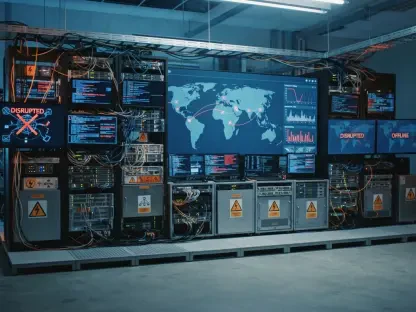

The sudden disappearance of malicious processes from a compromised server used to signal a successful cleanup, yet the emergence of the Tengu botnet has completely upended this traditional security assumption. Unlike older iterations of malware that sought to maintain a constant, visible presence

The interconnected fabric of our modern digital existence has reached a point where a single vulnerability in a household smart device can ripple through global supply chains with devastating efficiency, fundamentally altering the way industrial and consumer landscapes operate. As billions of

The global cybersecurity landscape experienced a radical transformation recently as the emergence of the Aisuru botnet signaled a new era of high-intensity distributed denial-of-service attacks that have shattered all previous volume records within the industry. This sophisticated threat actor does

The rapid expansion of the Internet of Things has created a massive attack surface that traditional centralized cloud architectures can no longer adequately protect against the sophisticated threats of the modern digital landscape. In previous years, the industry relied on backhauling every byte of

The digital landscape has entered a volatile new phase where the line between human-authored code and machine-generated logic is rapidly blurring within the dark corners of the global internet, as evidenced by the emergence of sophisticated threats like TuxBot v3. This modular malware, meticulously

The recent identification of the TuxBot v3 malware has fundamentally shifted the understanding of how sophisticated threat actors can leverage modular frameworks to compromise the global Internet of Things landscape. This newly discovered botnet represents a significant leap from its predecessors,