
The global cybersecurity landscape experienced a radical transformation recently as the emergence of the Aisuru botnet signaled a new era of high-intensity distributed denial-of-service attacks that have shattered all previous volume records within the industry. This sophisticated threat actor does not merely rely on brute-force password guessing; instead, it utilizes a sophisticated arsenal of zero-day vulnerabilities specifically designed to compromise high-bandwidth Internet of Things devices and modern networking hardware. By the middle of 2026, telemetry reports indicated that this botnet had successfully integrated millions of compromised nodes into a singular, cohesive offensive unit. The sheer magnitude of these coordinated strikes has forced major internet service providers to re-evaluate their fundamental architectural resilience. This isn’t just a temporary spike in activity; it represents a fundamental change in how botnets are constructed and deployed, moving toward a more resilient and self-healing structure that resists standard takedown attempts and conventional filtering.
Technical Sophistication: Exploitation and Entry
The rapid expansion of the Aisuru network is primarily attributed to its modular design, which allows the malware to pivot across different hardware architectures with unprecedented ease and efficiency. Upon initial entry into a host system, the malware immediately scans for locally connected peripherals, attempting to exploit known flaws in communication protocols like UPnP and specific proprietary management interfaces. This lateral movement capability ensures that a single point of failure in a local network can lead to the infection of dozens of high-performance devices within minutes. Moreover, the payload itself is remarkably lightweight, designed to reside in the volatile memory of a device to evade detection by standard filesystem scanners that look for persistent malicious binaries. This stealthy approach, combined with the use of polymorphic code, makes it incredibly difficult for automated security tools to generate a reliable signature, allowing the infection to persist across reboots if the initial vulnerability remains unpatched.
Technical Sophistication: Command and Control
A significant departure from previous botnet generations is the implementation of a decentralized command and control infrastructure that utilizes peer-to-peer communication to distribute operational instructions. This topological shift means there is no central server for law enforcement or security researchers to target, as each compromised node acts as a miniature relay for the entire network’s logic. Instructions for target acquisition and attack duration are propagated through a series of encrypted handshakes that mimic legitimate traffic, further complicating the task of isolating malicious signals from the background noise of the internet. By utilizing advanced cryptographic routines, the operators of Aisuru ensure that even if a node is captured and analyzed, the larger command structure remains opaque and resilient. This level of sophistication suggests a well-funded development team behind the project, one that understands the limitations of traditional centralized botnets and has engineered a solution that thrives on the very interconnectedness of the modern digital economy.
Strategic Mitigation: Real-Time AI Defense
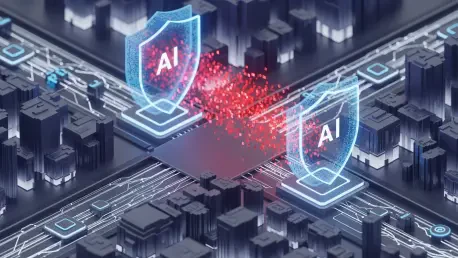
To combat the unprecedented scale of the Aisuru threat, organizations have begun transitioning toward an AI-driven security posture that emphasizes real-time behavioral analysis over static threat signatures. By deploying machine learning models at the network edge, defenders can identify and quarantine suspicious traffic patterns before they reach the internal infrastructure, effectively neutralizing the volumetric impact of a DDoS attack. This proactive approach involves the use of specialized hardware accelerators that can process millions of flow records per second, allowing for the granular filtering of malicious packets without introducing significant latency for legitimate users. Additionally, the adoption of BGP flowspec has allowed internet service providers to disseminate filtering rules across the global transit network almost instantaneously, creating a distributed firewall that can stop an attack closer to its source. These technical advancements are essential for maintaining the availability of critical services in an environment where the intensity of automated threats continues to escalate at an exponential rate.
Strategic Mitigation: Collaborative Ecosystem Recovery
The resilience of the global digital ecosystem ultimately depended on a fundamental shift in how organizations collaborated to share threat intelligence and defensive strategies. Stakeholders recognized that isolating internal networks was no longer sufficient, leading to the creation of shared clearinghouses where anonymized data regarding Aisuru’s behavior was exchanged in real-time. This collective defense model proved instrumental in shortening the response time to new attack vectors, as lessons learned by one entity were rapidly applied to protect the entire community. Engineers moved away from reactive patching and instead embraced a philosophy of security by design, ensuring that new IoT devices were shipped with hardened default configurations. By prioritizing the visibility of encrypted traffic and investing in scalable cloud-native scrubbing services, the industry established a more robust baseline for future operations. These actions demonstrated that while the threats grew more complex, a unified and technically rigorous approach could mitigate the most severe consequences of large-scale cyber warfare.