
The transition from traditional door locks and handwritten sign-in sheets toward a fully integrated digital ecosystem represents the single most significant advancement in corporate safety protocols seen in the last several decades. For a long time, the concept of a secure office was defined by the thickness of the doors and the complexity of the keys used to open them, yet these physical barriers often failed to address the dynamic nature of a modern workforce. In 2026, the reliance on isolated, mechanical solutions has largely evaporated as organizations recognize that true protection requires a continuous stream of actionable data. Today’s facilities require systems that not only control entry but also provide visibility into who is in the building, where they are going, and whether their presence aligns with established security policies. This evolution is driven by the convergence of the Internet of Things and machine learning, creating an environment where security is an intelligent assistant that anticipates risks before they even materialize on the horizon of daily business operations.
The Evolution of Access: Overcoming the Limitations of Legacy Systems
The Transition From Manual Logs to Digital Credentials
Historically, the management of physical access relied on methods that were inherently reactive and remarkably prone to human error, often leaving security teams guessing about the true status of their facilities. Mechanical keys posed a constant logistical nightmare because they could be easily duplicated, lost, or shared without any record of the event, forcing companies to spend significant sums on rekeying entire buildings whenever a master key went missing. Paper logs at reception desks were equally unreliable, often filled with illegible handwriting or incomplete data that offered zero value during an actual security audit. These legacy systems lacked the centralized oversight necessary to manage modern, distributed workforces where employees might need access to multiple sites across different time zones. The absence of a real-time audit trail meant that unauthorized entries could go undetected for weeks, creating massive vulnerabilities that savvy intruders could exploit with minimal effort. This fundamental lack of accountability necessitated a total overhaul of access control.
Enhancing Accountability Through Smartphone Integration
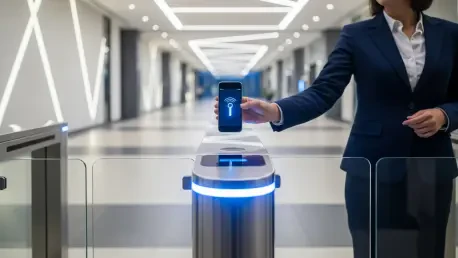
The introduction of cloud-based management and mobile credentials has fundamentally transformed how personnel interact with the office environment, replacing outdated plastic badges with secure digital tokens. Most employees now use their smartphones as primary keys, leveraging encrypted Bluetooth or Near Field Communication protocols to gain entry without the friction of fumbling for a physical card. This shift has significantly enhanced security because users are statistically far more likely to notice and report a missing personal phone than a lost work badge, which might go missing for days before being discovered. From an administrative perspective, the ability to grant or revoke access rights instantly from a remote dashboard has eliminated the lag time associated with manual credential management. If a staff member leaves the organization or changes roles, their permissions can be adjusted in real-time across every connected site, ensuring that the perimeter remains secure without requiring physical intervention or the retrieval of hardware from the individual.
Modular Infrastructure: Building a Resilient Network Architecture
Core Components and Flexible Scalability
Modern smart security is built upon a modular architecture that prioritizes hardware interoperability and the seamless exchange of data across various physical and digital touchpoints. At the edge of this network sit smart readers and biometric scanners that provide multiple layers of verification, ensuring that a simple stolen credential is not enough to compromise a high-value area like a server room or an executive suite. These devices are connected to a centralized brain that aggregates information from every sensor, door contact, and camera to create a comprehensive view of the entire facility’s status. By utilizing open standards like the Open Supervised Device Protocol, organizations can mix and match components from different manufacturers without facing the vendor lock-in that plagued earlier generations of security technology. This interoperability allows for a more customized approach to protection, where high-risk zones are fortified with facial recognition or fingerprint sensors while standard areas use mobile readers.
Decentralized Control and Global Expansion Capabilities
A major advantage of this decentralized IoT framework is its inherent scalability, allowing a growing business to expand its security footprint without needing to overhaul the existing infrastructure. For instance, a startup beginning in a single co-working space can implement a basic cloud-controlled reader and then expand that same system to cover an entire corporate campus as the company grows from 2026 to 2030. This flexibility ensures that the initial investment in security hardware remains relevant even as the operational requirements of the organization become more complex over time. Cloud-native platforms make it possible to manage an unlimited number of entry points and users from a single interface, providing a unified security posture for multinational enterprises with offices in different countries. Because the processing power resides in the cloud, updates to software features or security patches can be deployed globally with a single click, ensuring that every location is protected by the latest defensive measures.
Proactive Defense: Data-Driven Security and Operational Intelligence
Driving Efficiency Through AI and System Integration
Artificial intelligence has introduced a proactive layer of defense by identifying anomalies in real-time that would be impossible for a human guard or a traditional monitoring system to notice. Rather than simply recording video for later review, AI-powered analytics monitor entry patterns and alert security personnel the moment an unusual event occurs, such as a credential being used at 3:00 AM in a building that is normally empty. These systems can also detect ‘impossible travel’ scenarios, where a user’s digital key is presented in two different cities simultaneously, indicating a likely compromise of that individual’s credentials. Furthermore, multi-factor authentication has been integrated into the physical entry process, requiring a secondary biometric check or a push notification on a mobile device for access to sensitive zones. This level of scrutiny ensures that even if a smartphone or badge is stolen, the unauthorized user is blocked by an additional barrier that requires the owner’s presence.
Unified Protection Through HR and IT Synchronization
The synergy between physical security and digital identity management systems represents the final step in creating a truly frictionless and secure office environment for the modern era. When access control platforms are synchronized with HR databases and Single Sign-On providers, employee permissions are automatically updated during the onboarding and offboarding processes. This integration removes the manual administrative burden that often leads to security gaps, such as a former employee retaining building access weeks after their network accounts have been deactivated. Moreover, this connectivity allows for a more holistic approach to data security, where physical presence in the building can be a prerequisite for logging into internal servers or accessing proprietary software applications. By linking the digital and physical realms, companies ensure that their assets are protected by a unified policy that adapts to the specific context of each user’s role and location to minimize the surface area for threats.
Strategic Implementation: Future-Proofing the Modern Work Environment
Enhancing Security With Advanced Tech and Best Practices
Beyond the core functions of entry and exit control, integrated IoT systems enable a level of building automation that directly responds to the behavior and needs of the people inside the facility. For example, when an authorized employee scans their badge to enter a specific zone, the system can automatically trigger pre-set lighting and climate control settings, optimizing energy use while improving comfort. Conversely, if an unauthorized individual attempts to force a door, the system can instantly lock down adjacent hallways and activate nearby high-definition cameras to track the intruder’s movements in real-time. Guest management has also been revolutionized through this connectivity, allowing hosts to issue temporary digital badges that are sent directly to a visitor’s mobile device before they even arrive on site. These credentials can be programmed to expire automatically once a meeting ends, ensuring that visitors cannot wander through the building unescorted or return without a valid invitation.
Operational Resilience and Long-Term Defensive Strategies
To achieve a successful implementation of these technologies, organizations adhered to strict cybersecurity best practices such as network segmentation and frequent firmware updates to harden their infrastructure. It became clear that while high-tech hardware was essential, the human element remained a vital component of the security equation, requiring ongoing training to prevent social engineering from undermining technical guards. Leaders prioritized the development of clear data privacy policies that balanced the need for granular oversight with the rights of employees, fostering a culture of trust and transparency. Moving forward, the adoption of blockchain for immutable audit trails and the further refinement of edge computing offered even greater levels of transparency and operational resilience. By treating security as a dynamic ecosystem rather than isolated locks, companies built environments that were safer and more efficient. These strategic investments proved that a proactive approach was the best way to protect assets.