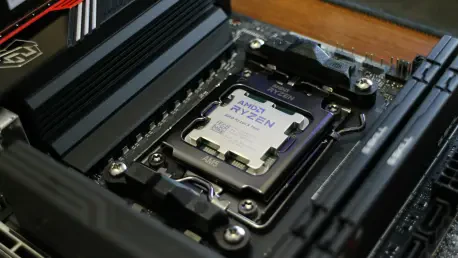

In the rapidly evolving landscape of modern computing, the expectation that hardware owners maintain full control over the security capabilities of their purchased silicon has become a fundamental tenet for many power users and privacy advocates. The recent discovery that Advanced Micro Devices has begun systematically disabling a sophisticated security protocol on its consumer-grade Ryzen processors has therefore sent shockwaves through the technology community. This feature, known as Transparent Secure Memory Encryption, was once a quiet but reliable pillar for those building hardened workstations outside of enterprise environments. By migrating this capability exclusively to its specialized product lines through mandatory firmware updates, the company has initiated a contentious debate regarding the ethics of artificial market segmentation. The shift suggests a prioritization of corporate branding over the universal availability of hardware-level data protection. This development serves as a poignant reminder of how fragile digital autonomy can be when it is tied to proprietary software updates that override user preferences.
The Architecture: Understanding Hardware Memory Encryption
To grasp the magnitude of these changes, one must examine the specific mechanics of Transparent Secure Memory Encryption, which functions as a formidable hardware-level defense against sophisticated data theft. This technology operates by encrypting every bit of information that travels between the central processor and the system memory, functioning entirely at the hardware layer without requiring support from the operating system. This isolation is critical because it mitigates the risk of physical exploits, such as cold-boot attacks, where an adversary physically removes memory modules to extract sensitive data while the chips still hold a residual electrical charge. Unlike standard Secure Memory Encryption, which requires the kernel to actively manage specific memory pages, the transparent version simplifies the security model by providing a blanket of encryption that is invisible to the software. For years, this was the gold standard for high-security environments, ensuring that intercepted data remained unreadable.
This capability eventually transitioned from high-end server hardware to the broader Ryzen consumer lineup, providing an unexpected but welcome layer of defense for various privacy-conscious demographics. Linux enthusiasts and independent developers specifically leveraged this hardware feature to build robust systems that did not rely on the potential vulnerabilities of software-based encryption alone. Because the encryption is handled by a dedicated security co-processor within the silicon, it generally incurs a negligible performance penalty while offering peace of mind that the physical machine is hardened against localized tampering. The presence of this technology in standard consumer chips allowed for the democratization of advanced security, enabling hobbyists to achieve a level of protection that was previously reserved for government agencies or massive corporate data centers. Consequently, the sudden removal of this functionality feels less like a technical correction and more like a withdrawal of a significant value proposition that users have come to depend on.
Technical Analysis: The Role of the Boot Loader
The investigation into these disappearing security features reached a fever pitch as users adopting the latest Zen 5 architecture noticed that their security dashboards were flagging memory encryption as unavailable. Hardware enthusiasts and motherboard manufacturers eventually pinpointed the discrepancy within the newest iterations of the Generic Encapsulated Software Architecture, which serves as the foundational firmware for modern systems. While earlier versions of the firmware allowed consumer chips like the Ryzen 9700X and the 9800X3D to utilize memory encryption when enabled in the BIOS, the updated code effectively neutralized these settings. This created a frustrating scenario where the user-facing interface indicated the feature was active, yet the underlying hardware remained unencrypted. Detailed diagnostic probes revealed that the restriction was not the result of a silicon defect or a lack of physical capability but was instead a deliberate instruction embedded within the startup sequence of the machine.
Technical forensics performed by community experts highlighted the specific mechanism of this suppression within the AMD Boot Loader, a critical piece of early-stage code that initializes hardware. A specific internal flag, identified as DfIsTsmeEnabled, was discovered to be the primary switch that authorizes or denies the encryption process during the system’s power-on self-test. On systems equipped with “Pro” series processors, this flag remains responsive to the user’s configuration in the BIOS, allowing for full security functionality. However, when the firmware detects a standard consumer-grade processor, it now forces this flag to a permanent state of denial, overriding any manual attempts to secure the memory. This confirms that the loss of the feature is a policy-driven decision executed through software logic rather than a reflection of the hardware’s inherent limitations. By utilizing the boot loader as an enforcement tool, the manufacturer has effectively locked away existing hardware potential behind an invisible wall of proprietary firmware code.
Strategic Outcomes: Navigating the New Security Landscape
The decision to categorize this encryption protocol strictly as a proprietary technology for enterprise clients marked a significant shift in the corporate relationship with the consumer market. When users initially integrated these processors into their security models, they did so under the impression that the hardware would remain consistent throughout its lifecycle. However, the subsequent firmware updates forced a difficult choice between maintaining an encrypted environment and staying current with performance-enhancing microcode and security patches for other vulnerabilities. This shift was characterized by a lack of transparency, as the removal of the feature was not highlighted in public change logs but was discovered through trial and error by the user base. The company provided few technical justifications for why a feature that functioned perfectly well in previous iterations was suddenly deemed unsuitable for consumer use, leading to widespread speculation about the true motives behind this strategic move.
The broader implications of this policy involved a fundamental reassessment of how consumers approached hardware security and the importance of firmware transparency in the purchase decision. Users who prioritized physical data security were advised to conduct thorough audits of firmware release notes before applying updates that could potentially strip away critical defenses. Many advocates within the tech industry suggested that future buyers should specifically seek out hardware with open-source firmware alternatives or manufacturers who pledged to maintain consistent feature sets across all product tiers. The situation highlighted the necessity of supporting initiatives that give users greater control over the silicon they own, rather than allowing manufacturers to dictate functionality through remote software interventions. Ultimately, the community learned that the most reliable security was that which could not be toggled off by a corporate update, prompting a shift toward hardware platforms that prioritized open standards and verifiable security protocols.