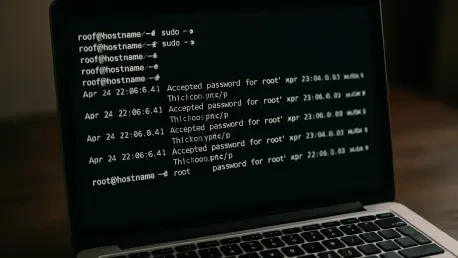

The realization that a single unauthenticated request can grant a malicious actor complete administrative control over a network core represents a significant shift in modern cybersecurity risk assessments. Cybersecurity researchers recently disclosed a critical vulnerability within the Ubiquiti UniFi OS that enables unauthorized individuals to bypass traditional authentication mechanisms and gain root-level access to the underlying operating system. This security flaw stems from an improper handling of specific API endpoints that fail to validate the session state before executing high-privilege commands. In a landscape where network hardware often serves as the final line of defense for sensitive data, such an exposure highlights a systemic weakness in how device firmware manages internal communications. The vulnerability affects a range of UniFi Dream Machine and Cloud Key models, which are integral components in countless small-to-medium business infrastructures globally. By exploiting this gap, attackers can potentially intercept traffic, modify firewall rules, or even install persistent malware that remains hidden from standard monitoring tools. This discovery has prompted an immediate response from the vendor to secure these critical nodes. It serves as a reminder that the perimeter is only as strong as the code powering it.
Security Architecture: Analyzing the Authentication Bypass
The technical specifics of the exploit involve a series of logic flaws found in the UniFi OS management interface, specifically targeting the way the system processes requests sent to the local management portal. When a user interacts with the web interface, the system is supposed to enforce strict access control lists to ensure that only authorized accounts can initiate changes to the system configuration or access sensitive log files. However, the identified vulnerability allows an attacker to send a specially crafted packet that triggers a race condition or a logic bypass in the authentication service daemon. Once this service is tricked into believing a valid session exists, it provides an interactive shell with root privileges to the requester without ever requiring a password or a multi-factor authentication token. This level of access is particularly dangerous because it allows for the manipulation of the kernel and the installation of custom scripts that can survive a reboot. The exploit demonstrates that even hardened proprietary systems are susceptible to vulnerabilities that arise from the complex interaction between legacy code and modern web-based management features. By bypassing the front-end security controls, the attacker gains direct access to the low-level operating system commands.
Beyond the immediate threat of unauthorized command execution, the flaw exposes the internal directory structure and configuration databases of the UniFi ecosystem to external scrutiny. Researchers noted that the vulnerability does not require any prior knowledge of the target network, making it an ideal target for automated scanning tools that roam the internet looking for exposed management ports. If a UniFi device is configured to allow remote management via the cloud or a direct WAN interface, the risk profile increases exponentially as the barrier to entry for an attacker disappears completely. The researchers utilized a combination of reverse engineering and traffic analysis to pinpoint the exact function call responsible for the authentication failure, revealing that a lack of input sanitization played a secondary role in the exploit’s success. This multi-layered failure underscores the necessity of a “secure by design” philosophy where every internal component treats incoming data as potentially malicious, regardless of where it originated within the system architecture. By gaining root access, an intruder could effectively turn the very device meant to protect the network into a bridge for lateral movement across the internal local area network. This provides an entry point for ransomware.
Strategic Defense: Implementing Resilient Network Protections
Addressing a vulnerability of this magnitude requires a proactive stance from network administrators that goes beyond simply waiting for an automated patch notification to appear in the dashboard. The primary recommendation for securing affected hardware involves updating the UniFi OS to the latest stable release, which contains the necessary logic corrections to prevent unauthorized session elevation. In addition to firmware updates, it is crucial to audit the exposure of management interfaces to the public internet by ensuring that administrative access is restricted to specific, known IP addresses or restricted entirely to local connections via a dedicated management VLAN. Implementing a robust firewall policy that blocks unsolicited traffic to common management ports can serve as an effective stopgap measure while update cycles are being coordinated across large-scale deployments. Organizations should also consider rotating all administrative credentials and reviewing the audit logs for any signs of anomalous activity that occurred prior to the application of the security fix. These steps are essential for restoring the integrity of the network environment and ensuring that the perimeter remains resilient against future exploitation attempts. Proactive defense is the best way to handle such risks effectively.
The incident served as a stark reminder of the importance of continuous monitoring and the adoption of zero-trust principles within the internal network infrastructure. Administrators moved quickly to isolate management traffic from general user data, ensuring that even if a single device were compromised, the potential for widespread damage was minimized. Moving forward, the industry transitioned toward more frequent security audits and the integration of automated vulnerability scanning tools that could detect similar flaws before they were publicly disclosed. Security teams prioritized the deployment of hardware security modules and advanced encryption for local management sessions to prevent the interception of sensitive configuration data. By adopting a more skeptical view of internal service communications, organizations successfully hardened their environments against the evolving landscape of firmware-based threats. The focus shifted from reactive patching to the implementation of redundant security layers that could mitigate the impact of unforeseen software bugs. Ultimately, these actions fostered a more resilient operational framework where security was treated as a dynamic process rather than a static configuration, significantly reducing the long-term risk profile for critical network infrastructure. These measures ensured stability.