
The traditional inbox has transitioned from a simple communication repository into an overwhelming management crisis where high-level professionals struggle to navigate hundreds of daily messages without significant technological intervention. As the sheer volume of digital correspondence continues to escalate, the technology sector has responded by deploying sophisticated AI email assistants that operate as active digital collaborators rather than passive storage systems. Deeply integrated into ecosystem-wide suites such as Microsoft 365 and Google Workspace, these tools are no longer mere experimental plugins but are central features of the modern workplace. They promise to bridge the efficiency gap by managing the cognitive load of the inbox, yet this advancement simultaneously introduces a complex web of security vulnerabilities and privacy considerations that organizations must address. By shifting the burden of administrative tasks to machine learning algorithms, users gain time but potentially lose a degree of oversight over their most sensitive business communications.
The Evolution: Intelligent Inbox Management Systems
To achieve high levels of utility, modern AI email assistants leverage Large Language Models that have been trained on vast datasets of human interaction to understand the subtle nuances of professional language. These systems do not simply search for keywords; they analyze the sentiment, intent, and urgency of incoming messages to categorize them or suggest relevant responses. By functioning as a bridge between the inbox and peripheral data sources like digital calendars and contact databases, these assistants transform from simple writing aids into comprehensive administrative tools. This deep integration allows the software to recognize a request for a meeting, cross-reference the user’s availability, and draft a response that includes specific time slots, all without the user manually opening their calendar application. The technological foundation of these agents relies on their ability to maintain a persistent state of awareness regarding the user’s professional context, which is essential for providing meaningful and accurate support.
The productivity dividend resulting from these AI integrations is multifaceted, centering primarily on time recovery and the elevation of communication quality across the organization. For a project manager or executive who handles hundreds of messages a day, the ability to automate routine inquiries or extract specific action items from long threads allows for a more sustained focus on high-level strategic decision-making. Furthermore, these assistants act as sophisticated editorial partners, refining the tone and clarity of outgoing messages to ensure that the sender’s intent is communicated professionally. By reducing the friction associated with the “blank page” problem, AI tools enable faster response times and a more consistent brand voice. This shift in the workflow represents a significant departure from the manual processes of the past, as the machine takes on the role of a first responder that filters noise and highlights only the most critical information requiring human intervention.
The Challenge: Navigating Technical and Privacy Risks
Despite the impressive capabilities of current AI assistants, these systems possess inherent technical limitations that often manifest as an illusion of genuine understanding. Because Large Language Models operate on statistical probability rather than conscious comprehension, they can occasionally misinterpret sarcasm, cultural metaphors, or complex emotional contexts. This lack of true awareness can lead to “hallucinations,” where the assistant generates factual errors or invents details with a high degree of confidence. There is also a significant risk of user overreliance, particularly in high-pressure environments where individuals might approve and send AI-generated responses without a thorough review. If an assistant incorrectly summarizes a contract negotiation or misstates a deadline, the resulting professional fallout can be severe. Maintaining a rigorous “human-in-the-loop” protocol is therefore necessary to prevent these subtle but impactful errors from compromising the accuracy of business correspondence.
The integration of artificial intelligence into daily workflows also introduces substantial privacy challenges, as most advanced assistants process data on external, cloud-based servers rather than locally on the device. This architectural requirement raises critical questions regarding data storage, access protocols, and whether private communications are being utilized to further train the provider’s underlying models. For organizations operating in highly regulated sectors such as legal services, healthcare, or finance, this external processing necessitates a rigorous evaluation of data protection compliance and jurisdictional laws. If sensitive client information or trade secrets are transmitted to a third-party server for processing, the risk of data exposure through a provider-side breach becomes a primary concern. Consequently, the adoption of these tools requires a transparent understanding of the service level agreements and a proactive approach to configuring privacy settings that align with the organization’s risk tolerance.
The Threat: Securing AI Against Cyber Attacks
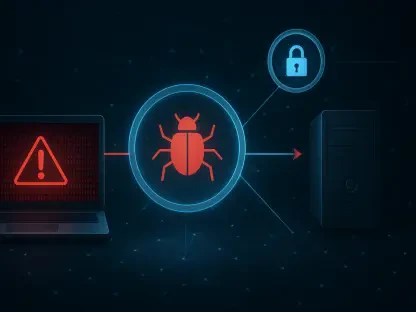
A significant trend in the 2026 cybersecurity landscape is the emergence of prompt injection and AI hijacking, where attackers target the automated logic of the assistant instead of the human user. By embedding hidden instructions within the body of an innocent-looking email, a malicious actor can manipulate the assistant into performing unauthorized actions, such as forwarding sensitive documents to an external address or ignoring established security warnings. These instructions are often completely invisible to the human eye, utilizing techniques like microscopic white-on-white text that the AI can read but the user cannot see. This creates a new vector for social engineering where the assistant is tricked into becoming an internal threat. As these machine-targeted attacks become more sophisticated, the traditional methods of email filtering, which focus on malicious links or attachments, are proving insufficient for detecting logic-based manipulation.
To counter these sophisticated machine-targeted attacks, specialized security solutions like Bitdefender’s Email Protection have evolved to identify specific manipulation techniques tailored for AI environments. These defensive layers are designed to scan for obfuscated commands, unusual font configurations, and patterns that are specifically engineered to override an assistant’s internal guardrails. By decoding hidden instructions and analyzing the behavioral intent of incoming emails, these security tools provide a necessary buffer between the inbox and the AI agent. This defensive posture focuses on ensuring that the assistant remains a tool of the user rather than an entry point for an attacker. As the adoption of AI continues to expand, the definition of email security has broadened to include the protection of the very intelligence designed to enhance productivity, requiring a multi-layered strategy that combines behavioral analysis with real-time threat intelligence.
The implementation of AI email assistants represented a permanent shift in how digital correspondence was managed, offering undeniable gains in efficiency and a significant reduction in cognitive fatigue for the global workforce. However, successful organizations realized that maintaining security in this new landscape required a balanced approach that combined human oversight with specialized defensive technology. Security leaders moved toward a model where every automated action was treated with the same scrutiny as a manual one, ensuring that the productivity boon did not come at the cost of corporate integrity. By establishing clear guidelines for AI usage and deploying advanced threat detection systems, companies were able to mitigate the risks of prompt injection and data leakage. Ultimately, the transition to AI-enhanced communication was most successful when it was treated as a strategic partnership between human intuition and machine speed, bolstered by a robust framework of technical safeguards.