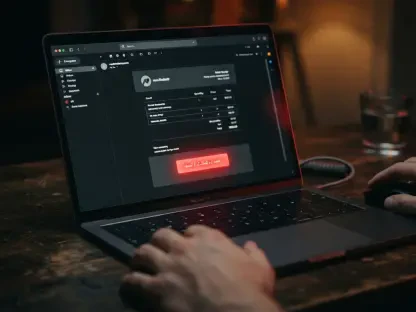

Apple recently issued emergency security updates for macOS Tahoe, Sequoia, and Sonoma to address a flaw that allows hackers to seize control of devices without possessing any valid credentials. This critical vulnerability, discovered in the underlying remote management framework, bypassed traditional authentication layers, essentially rendering password protection obsolete for exposed instances of the Screen Sharing service. In the current cybersecurity climate of 2026, where Apple Silicon’s efficiency makes it a prime target for illicit mining, this exploit provided a direct path for threat actors to turn consumer hardware into distributed cryptojacking nodes. By manipulating the session negotiation process, attackers gained full interactive control over the graphical user interface, allowing them to operate with the same privileges as the logged-in user. This breach highlighted a significant gap in how remote access protocols were historically validated, pushing the industry to rethink the security of built-in administrative tools.
The Mechanics of Protocol Subversion
Technical Exploitation of Remote Frame Buffers
The exploitation focused on the Remote Frame Buffer protocol, which macOS uses to facilitate its native Screen Sharing application. By sending a sequence of malformed packets during the initial handshake, attackers triggered a memory corruption bug that allowed them to jump over the authentication challenge entirely. This was not a simple password-cracking attempt; it was a structural failure in how the system verified the legitimacy of the remote client. Researchers found that the Screen Sharing service in macOS Tahoe failed to correctly implement a mandatory cryptographic check when certain legacy flags were present in the connection request. This allowed an unauthorized actor to establish a session that the system perceived as already verified by a local administrator. Once this tunnel was established, the attacker had a clear view of the victim’s desktop, enabling them to execute commands and navigate the file system without triggering typical remote access warnings.
Strategic Bypassing of the Transparency Framework
Beyond the initial connection, the exploit leveraged a secondary flaw in the Transparency, Consent, and Control (TCC) database. Ordinarily, any application attempting to access sensitive components like the terminal or system settings would prompt the user for permission. However, because the Screen Sharing service is a trusted system process, the attacker could use the hijacked graphical interface to manipulate these settings directly. By simulating mouse clicks and keyboard events, they could whitelist their own malicious scripts and mining binaries, effectively silencing the built-in security alerts that would normally protect the OS. This level of access meant that even the most robust endpoint detection and response (EDR) tools struggled to distinguish between the actions of the legitimate owner and those of the remote intruder. The ability to operate within the “trusted” context of the system’s own UI made this specific exploitation route one of the most effective and stealthy methods for deploying persistent cryptojacking software.
Cryptojacking Execution and Persistence
Silent Deployment of Mining Architectures
Once the graphical session was secured, the primary objective shifted to the installation of high-efficiency mining software. Attackers favored specialized versions of XMRig, which they carefully tuned to utilize the high-performance cores of the M4 and M5 chips without causing thermal throttling or system instability. They often disguised these miners as common background processes, naming them things like “com.apple.mdworker.sync” to evade detection in the Activity Monitor. To further minimize their footprint, the software was configured to only activate when the system remained idle for more than five minutes, ensuring that the user never noticed a drop in performance while actively using the machine. This “stealth mining” approach allowed the threat actors to aggregate computational power from thousands of hijacked Macs, creating a massive, invisible workforce that generated substantial amounts of Monero. This transition from access to revenue was seamless, demonstrating how modern vulnerabilities are quickly monetized by organized cybercrime groups.
Strategic Resilience and Future Security Frameworks
The resolution of this crisis required a multifaceted approach that combined rapid software updates with fundamental changes to remote access policies. Security teams realized that relying solely on built-in OS authentication was no longer sufficient for high-value targets. They moved toward a model where Screen Sharing was only accessible through encrypted tunnels and required hardware-based multi-factor authentication. The conclusion of this security cycle demonstrated that the most effective defense involved a combination of disabling unnecessary remote services and implementing rigorous network segmentation. Organizations that successfully mitigated these risks were those that treated their Apple fleet with the same level of scrutiny as their server infrastructure. Experts determined that the era of “set and forget” security for desktop operating systems had truly ended, as attackers continued to find innovative ways to exploit the very tools designed for administrative convenience. This proactive stance remained the only way to ensure that high-performance hardware served its owners.