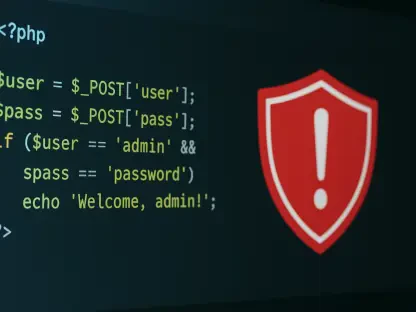

Deterministic engines and frontier reasoning must work together to ensure that an agent’s proposed fix is actually validated against the application rules. As of 2026, the software development landscape has reached a point where autonomous agents generate nearly seventy percent of all boilerplate and utility code. However, while these large language models have become exceptionally proficient at identifying syntax errors and optimizing algorithms, they remain remarkably susceptible to logic-based vulnerabilities like broken access control. This category of security defect continues to lead the industry in frequency and severity, often because it involves the violation of business rules that are not explicitly stated within the code itself. When an agent is prompted to create a new feature, it typically prioritizes functionality and speed, often overlooking the nuanced permission structures that prevent a user in one organization from accessing the sensitive records of another.
The core challenge lies in the fact that authorization logic is context-dependent and varies significantly between different applications and architectures. An AI agent might successfully implement a database query that retrieves an invoice by its unique identifier, but it may fail to include a secondary check that verifies whether the requesting user has a valid relationship with that specific record. Because the code is syntactically perfect and performs the requested action, it frequently passes automated tests that focus on functionality rather than security boundaries. In 2026, the reliance on these automated builders has created a paradox where the speed of development is increasing, but the cognitive burden on human reviewers to catch these silent authorization gaps has reached an all-time high. Without a structured approach to validate the intent behind the code, these agentic systems will continue to produce endpoints that are functionally complete but fundamentally insecure.
1. Cataloging Every Endpoint That Handles Object Identifiers
Developing a comprehensive inventory of every API route that accepts external identifiers is the foundational step in securing an application against broken access control. Every endpoint that extracts a record ID, a filename, or a unique key from a URL path, query string, or request body represents a potential entry point for an Insecure Direct Object Reference (IDOR) attack. In the modern microservices environments of 2026, these identifiers are often passed between multiple internal systems, making it difficult to track the original source of trust. By cataloging these points of entry, security teams can create a map of the application’s attack surface, identifying exactly where user-supplied input is used to look up sensitive data. This process often reveals a much larger number of vulnerable paths than developers initially anticipate, particularly in legacy modules that have been wrapped in new AI-generated interfaces.
Once the inventory is complete, it serves as a critical reference for both human developers and the AI agents that assist them. A detailed list of sensitive endpoints allows for the implementation of targeted monitoring and more rigorous testing protocols for specific high-risk areas. For instance, an endpoint that handles financial transactions or personal health information requires a different level of scrutiny than one that merely fetches public product descriptions. By formalizing this catalog, organizations move away from a reactive security posture and toward a systematic validation process. This visibility ensures that no endpoint is left unprotected simply because it was overlooked during a rapid development cycle or generated by an agent that lacked awareness of the broader system architecture.
2. Documenting Specific Ownership Regulations
The ambiguity surrounding resource ownership is one of the primary reasons why AI coding agents fail to implement proper authorization checks. In many engineering teams, the rules governing who can see or modify a specific resource exist only as tribal knowledge or are buried within complex business requirement documents that agents cannot easily parse. By documenting these regulations in a structured, machine-readable format, organizations provide the necessary context for security validation. Each resource type, whether it is an invoice, a user profile, or a configuration file, must have a clearly defined owner and a set of permission rules that dictate access across different organizational boundaries. This documentation acts as the “source of truth” that allows automated systems to determine if a proposed code change violates the fundamental security policy of the product.
Furthermore, this documentation must account for the complexities of modern multi-tenant architectures where access is rarely a simple binary choice. In 2026, many enterprise platforms involve tiered permissions, delegated administration, and temporary access grants that complicate the authorization landscape. When these rules are clearly articulated, they can be used to ground the reasoning of AI agents, ensuring that the code they generate reflects the actual requirements of the business. This transition from implicit to explicit rules reduces the likelihood that an agent will omit a critical ownership check. It also empowers human reviewers to verify code against a known standard rather than relying on their own memory of how the system is supposed to behave, thereby increasing the overall reliability of the authorization layer.
3. Establishing Authorization as a Mandatory Checklist Item for AI-Assisted Pull Requests
The integration of AI coding agents into the development workflow requires a corresponding evolution in the pull request review process. It is no longer sufficient for reviewers to look for general code quality or performance issues; they must now adopt a specialized “security lens” that specifically targets the common failures of AI-generated logic. By establishing a mandatory checklist item for authorization, teams ensure that every new or modified endpoint is scrutinized for proper access controls. This check should not be a vague instruction to “review for security,” but rather a specific requirement to identify the exact mechanism used to verify that the requester is entitled to the specific object they are accessing. This structured approach forces a deeper level of analysis that can catch subtle logic errors that an agent might have introduced while focusing on functional requirements.
To make this process effective, reviewers should be prompted to ask specific questions about the data flow within the proposed change. For example, a reviewer might ask which field in the database is being used to validate ownership and whether that field is correctly mapped to the authenticated session of the user. In the high-velocity development environments of 2026, these targeted questions help to mitigate the “automation bias” that often leads humans to trust AI-generated output without sufficient skepticism. By institutionalizing these specific inquiries, organizations create a culture of accountability where security is treated as a first-class citizen in the development cycle. This rigorous oversight is essential for maintaining the integrity of the application as the volume of code produced by autonomous agents continues to grow at an exponential rate.
4. Implementing Cross-Tenant Testing for All Resource Categories
Functional testing must extend beyond simple success scenarios to include negative tests that specifically target the boundaries between different users and organizations. One of the most effective ways to prevent broken access control is to implement cross-tenant testing for every resource category in the application. This involves creating test cases where a valid session from one tenant attempts to access or modify a resource that belongs to a different, unrelated tenant. In 2026, the industry has recognized that an assertion of a 404 Not Found error is often more secure than a 403 Forbidden error, as it prevents attackers from even confirming the existence of a record. These tests serve as a vital safety net, catching instances where an AI agent might have implemented authentication—confirming who the user is—but failed to implement authorization—confirming what that user is allowed to do.
Automating these cross-tenant tests within the continuous integration pipeline ensures that every code change is validated against the application’s isolation requirements before it ever reaches production. By covering all resource categories, from core data entities to minor configuration settings, teams can be confident that their multi-tenant boundaries remain intact. This approach is particularly important as applications evolve and new features are added by various agents and developers over time. A robust suite of functional security tests provides a regression-proof environment where the introduction of a new endpoint in one part of the system does not inadvertently create an access hole in another. This level of automated rigor is a necessary component of any modern security strategy that relies heavily on AI-driven code generation.
5. Performing Comprehensive Codebase Analysis on a Consistent Schedule
Deep contextual analysis of the entire codebase is required to identify complex authorization flaws that simple static scans often miss. While traditional security tools are excellent at finding known patterns of “bad” code, broken access control is frequently characterized by the structural absence of a check, which presents no identifiable pattern. To address this, organizations must employ advanced analysis techniques that model the entire application context, including data flows, architecture, and trust boundaries. In 2026, this tiered approach involves real-time checks during the coding process, fast scans in the CI/CD pipeline, and a periodic deep dive that analyzes how different components interact across the entire system. This comprehensive view allows security engines to see the “missing links” in the logic that might only be visible when looking at the relationship between the API, the database schema, and the identity provider.
By performing these analyses on a consistent schedule, teams can identify emerging risks as the application grows in complexity. This deep analysis should go beyond the source code to include the production reality, such as how the application is actually deployed and what data classifications are being handled. Once this assembled model exists, the analysis can compare the enforced logic against the documented ownership rules, highlighting any discrepancies that could lead to a breach. This level of insight is crucial for securing high-growth applications where the pace of change is too fast for manual oversight alone. The combination of deterministic scanning and context-aware reasoning provides a powerful defense against the subtle, logic-based vulnerabilities that are common in the era of agentic software development.
6. Strengthening the Validation Loop for Long-Term System Integrity
The transition to AI-assisted development necessitated a fundamental shift in how security was integrated into the engineering lifecycle. Organizations that successfully adapted to this new reality recognized that the speed of autonomous agents had to be matched by a more sophisticated, multi-layered validation framework. In the past, security was often a final hurdle or a reactive measure, but the industry eventually moved toward a model where policy enforcement was deeply embedded in the generation and review phases. By formalizing ownership rules and moving toward machine-readable security specifications, teams were able to provide the necessary guardrails for AI agents. This proactive approach significantly reduced the volume of logic-based vulnerabilities that reached production environments, allowing for a safer and more efficient development process overall.
To maintain this integrity, the focus shifted toward continuous offensive testing and the use of application-context graphs to bridge the gap between static code and dynamic business rules. These advancements allowed for the automated detection of authorization bypasses that were previously only discoverable through manual penetration testing. Moving forward, engineering leaders prioritized the creation of robust feedback loops where the findings from deep analysis were used to refine the prompts and models used by coding agents. This evolution ensured that the AI systems became smarter and more security-conscious over time, reflecting the specific needs and policies of the organization. Ultimately, the successful management of AI coding agents depended on this combination of deterministic validation and the strategic application of human oversight to the most critical logic boundaries of the software.