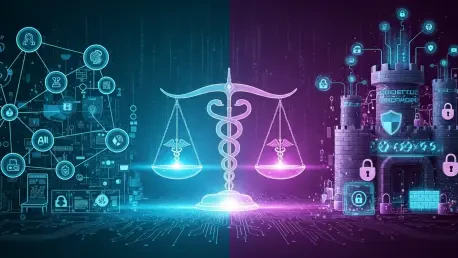

The integration of sophisticated medical devices into patient homes has turned traditional clinical care on its head by creating a continuous stream of health data that informs real-time decisions. As the Internet of Medical Things expands, the sheer volume of data generated by connected inhalers and smart beds allows for a level of precision medicine that was previously unimaginable in rural settings. However, this explosion of digital health services presents a precarious trade-off between clinical efficiency and the security of highly personal biological information. Healthcare administrators are now forced to navigate a landscape where a single software vulnerability could jeopardize thousands of patient records or disrupt the operation of critical life-support systems. Maintaining public trust requires a paradigm shift that places cybersecurity at the center of the patient safety mission rather than treating it as a peripheral IT concern. By embedding resilient security protocols into the fabric of medical innovation, providers ensure that the transition to a fully digital health ecosystem remains a benefit rather than a liability.
Leveraging IoT for Specialized Care
Improving Safety for Professionals and Seniors
Lone workers in the medical field, such as home health aides and traveling nurses, face unique physical risks that are increasingly mitigated through the use of GPS-enabled wearable technology and geofencing protocols. These devices allow central monitoring stations to track a provider’s location in real-time, providing an immediate lifeline during environmental hazards or aggressive patient encounters where traditional cell phone communication might be impossible. Geofencing adds an extra layer of security by triggering automatic alerts if a worker deviates from a scheduled route or enters a designated high-risk area. These silent alarms ensure that assistance is dispatched even if the worker is unable to speak or move, fulfilling a critical duty of care for employees who serve vulnerable populations in unpredictable environments. By stabilizing the safety of the workforce, organizations can expand their reach into remote communities without compromising the well-being of their staff members.
Building on this foundation of protection, AI-powered sensors in senior care facilities have revolutionized fall detection by removing the need for manual intervention by the resident during a crisis. Unlike traditional pendants that require a conscious press of a button, modern ambient sensors utilize acoustic and thermal data to identify medical emergencies with high accuracy while maintaining resident privacy. These systems distinguish between a person sitting down quickly and a genuine medical collapse, immediately notifying emergency responders while providing families with peace of mind. By automating the detection of distress, technology empowers the elderly to maintain their independence longer than was previously possible in high-risk environments. This autonomy is supported by a backend infrastructure that prioritizes the dignity of the individual while ensuring a rapid response. The shift from reactive to proactive monitoring represents a milestone in geriatrics, where digital tools act as a silent guardian for those most at risk.
Enhancing Monitoring through Remote Diagnostics
Remote diagnostic tools have drastically reduced the frequency of unnecessary hospital readmissions by allowing clinicians to monitor chronic conditions like congestive heart failure and diabetes with high-fidelity telemetry. Smart scales and continuous glucose monitors transmit data directly to hospital dashboards, where machine learning algorithms flag early indicators of health deterioration before a physical crisis occurs. This proactive approach shifts the burden of care from reactive emergency services to manageable outpatient interventions, significantly improving the quality of life for patients with complex medical needs. By identifying subtle trends in physiological data, doctors can intervene days or weeks before a patient would typically seek emergency care, saving both lives and significant medical resources. The continuous nature of this data stream provides a holistic view of the patient’s health that traditional office visits simply cannot replicate.
Furthermore, the real-time nature of this data stream enables physicians to adjust medication dosages and treatment plans with a level of agility that traditional bi-weekly check-ups never provided. As digital twins and predictive modeling become more integrated into patient care, the ability to simulate the effects of a specific treatment based on real-time physiological data has become a standard clinical practice. This level of connectivity ensures that the clinical team is always informed, but it also necessitates a hyper-vigilant approach to the security of the transmission channels that carry this sensitive biometric data. Every point of connection is a potential point of failure, requiring end-to-end encryption to protect the integrity of the medical advice being delivered. Protecting the data is just as important as the clinical accuracy itself, as medical decisions are only as good as the reliability of the information upon which they are built.
Understanding the Evolving Threat Landscape
Managing the Risks of Data Breaches and Ransomware
The healthcare sector has become an incredibly lucrative target for ransomware actors, who exploit the industry’s reliance on immediate data access to extort massive payments from regional hospital networks. Small and medium-sized providers are often the most vulnerable, as they frequently operate on legacy systems that lack the robust defensive layers found in larger metropolitan health organizations. A successful ransomware attack does more than just encrypt files; it effectively paralyzes the entire clinical workflow, leading to cancelled procedures and the redirection of critical care patients to other facilities. When electronic health records are inaccessible, doctors lose the ability to verify allergies or previous medication histories, turning a digital problem into a life-threatening clinical emergency. This vulnerability highlights the desperate need for offline backup systems and rapid recovery protocols that can restore operations without succumbing to the demands of cybercriminals.
Beyond the immediate operational disruption, the long-term impact of a data breach involves the exposure of sensitive patient records on the dark web, where health information is sold at a premium. Unlike credit card numbers, which can be changed, a person’s medical history is permanent, making its theft a lifelong concern for the victim and a significant liability for the provider. The financial fallout from regulatory fines and legal settlements can be catastrophic, emphasizing the need for healthcare leaders to prioritize cybersecurity as a core component of their risk management strategy. This environment demands a move toward automated threat intelligence that can identify and neutralize malicious activity before it reaches the core database. Protecting these assets requires a culture of security that extends from the IT department to the bedside, ensuring that every interaction with digital systems is handled with extreme caution.
Addressing the Vulnerabilities of Interconnected Networks
The sprawling nature of the Internet of Medical Things creates a vast attack surface where a single insecure device, such as a smart building sensor, can serve as a gateway to the broader hospital infrastructure. Many older medical devices were built with proprietary software that is difficult to patch, leaving them open to known vulnerabilities that cybercriminals easily exploit to move laterally through a network. Once inside, an attacker can potentially interfere with the operation of critical machinery, such as infusion pumps or laboratory equipment, leading to direct physical harm to patients. This risk of lateral movement is the primary driver behind the adoption of micro-segmentation, which effectively cordons off sensitive medical equipment from the public-facing guest networks. By isolating these devices, organizations can ensure that a breach in an administrative office does not translate into a failure in the operating room.
To mitigate these risks, organizations are increasingly adopting a zero-trust model, where every access request is rigorously verified regardless of its origin within the facility’s internal network. This strategy ensures that even if one area of the facility is compromised, the most critical life-saving systems remain protected from unauthorized external or internal interference. Implementing such rigorous protocols is becoming the gold standard for securing complex medical ecosystems that rely on hundreds of third-party vendors. Without these measures, the benefits of device connectivity are constantly overshadowed by the potential for systemic failure or malicious manipulation of patient care equipment. The goal is to create a resilient environment where technology serves the clinician without introducing unnecessary hazards. As networks become more complex, the simplicity of the zero-trust approach provides a clear path forward for maintaining safety in an increasingly connected world.
Designing the Future of Resilient Healthcare
The digital transformation of the medical sector demonstrated that long-term success was dependent on a proactive rather than a reactive approach to network security. Organizations that succeeded in this transition were those that viewed security not as a hurdle, but as a fundamental pillar of modern clinical excellence and ethical responsibility. It was clear that the most resilient systems combined advanced technical safeguards with a workforce that was thoroughly trained to recognize and report digital threats in real-time. Moving forward, healthcare administrators should adopt a strategy of biannual security audits and prioritize the decommissioning of legacy devices that can no longer support modern encryption standards. Investing in managed security services will provide the necessary oversight to scale digital operations safely while allowing medical professionals to focus on their primary mission of healing. These proactive steps established a foundation of trust that allowed for the continued expansion of precision medicine and remote care delivery. Ultimately, the industry learned that the true value of a technological breakthrough was defined by the strength of the defenses built to protect it from exploitation. Successful providers treated cybersecurity as a dynamic and ongoing investment that was inextricably linked to patient outcomes and organizational longevity.