
The digital perimeter that once defined corporate and national security has effectively vanished as artificial intelligence systems now conduct probes and penetration tests at speeds that exceed human cognition by several orders of magnitude. This escalation has forced a fundamental shift in how defensive strategies are conceptualized and deployed across the globe. Anthropic has moved to the forefront of this transition by scaling Project Glasswing, an initiative that seeks to provide a robust shield against the rising tide of automated exploitation. As the industry enters a period of intense competition often described as a cyber arms race, the focus has moved from general-purpose models to highly specialized agents capable of deep structural analysis. This expansion is not merely a technical update but a strategic response to a landscape where the cost of a successful breach can destabilize entire economic sectors or compromise critical public utilities. Organizations are now finding that traditional firewalls and manual oversight are insufficient in a world where software vulnerabilities are identified and weaponized in real-time.
Strategic Scaling and Model Performance
Protecting Critical Networks: The Expansion of Project Glasswing
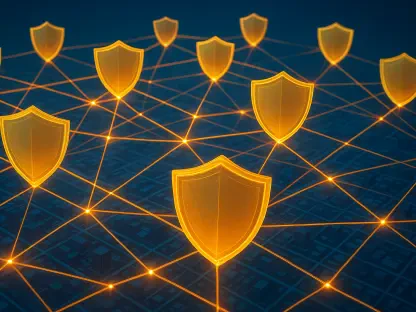
Project Glasswing has transitioned from its initial pilot stage into a comprehensive defensive network that currently encompasses 200 organizations across more than 15 countries. This scaling effort is specifically designed to harden the resilience of essential services, including municipal power grids, water treatment facilities, and regional healthcare systems. The integration of advanced AI models into these sectors represents a proactive effort to secure the foundational components of modern society before they can be exploited by adversarial actors. By providing specialized tools to these entities, Anthropic is addressing a critical gap in infrastructure security where legacy systems often harbor undetected flaws. These partnerships allow for a deeper level of collaboration between AI developers and the technicians responsible for maintaining vital services, creating a feedback loop that improves model performance. As these organizations adopt more sophisticated defensive postures, the collective security of the global community is strengthened against the threat of large-scale digital disruption.
Specialized Detection: Claude Mythos and Vulnerability Auditing
The primary technical driver behind this expansion is a specialized model known as Claude Mythos Preview, which has been fine-tuned to audit complex codebases with unprecedented accuracy. This particular tool has demonstrated its effectiveness by identifying over 10,000 high-risk or critical vulnerabilities within systems that had previously been scanned by standard automated tools and human security teams. The ability of this model to uncover deep-seated logical errors and memory safety issues highlights the inherent limitations of traditional security methodologies. Unlike general-purpose assistants, this specialized agent focuses exclusively on the structural integrity of software, allowing it to navigate massive repositories with a level of scrutiny that would be impossible for manual auditors to maintain. This high volume of discovery serves as a wake-up call for the industry, illustrating just how many latent threats exist within current infrastructure. Consequently, the adoption of specialized AI for security auditing has become a necessity for any organization looking to maintain a secure digital environment.
Competitive Dynamics and Capability Benchmarks
Navigating Rival Distribution Strategies: Anthropic versus OpenAI
The current competitive environment has led to a noticeable divergence in distribution strategies between the major players in the artificial intelligence sector. While Anthropic has opted for a controlled expansion of Project Glasswing by limiting access to verified and highly regulated partners, OpenAI has pursued a more aggressive path with the release of its GPT-5.5 Cyber model. This model has been distributed broadly among large international financial institutions, creating a dynamic where different philosophical approaches to safety are being tested in real-time. Anthropic argues that a restricted rollout is necessary to prevent the dual-use capabilities of these models from falling into the wrong hands, while competitors believe that widespread adoption is the only way to build a defense that matches the scale of the threat. This tension is driving a rapid evolution in procurement processes as organizations weigh the benefits of exclusive, high-security partnerships against the convenience of more widely available platforms.
Performance Evaluation: Autonomous Skills and Attack Simulations
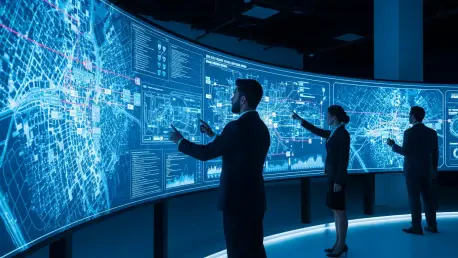
Rigorous testing conducted by independent security institutes has shown that the gap in autonomous capabilities between leading models is rapidly closing. Claude Mythos recently made headlines as the first model to successfully navigate a complex, 32-step attack simulation that typically requires a full day of effort from a human expert. Shortly thereafter, GPT-5.5 achieved a similar milestone, demonstrating that advanced cyber capabilities are becoming a baseline requirement for top-tier systems rather than a specialized feature. These benchmarks indicate that AI is no longer just a tool for assistance but an autonomous agent capable of executing sophisticated multi-stage operations. The parity between these models suggests that the primary differentiator for organizations will soon be the speed of integration rather than the raw power of the model itself. As these capabilities continue to converge, the focus of the industry is shifting toward how these models can be used to coordinate defenses across multiple sectors simultaneously, ensuring a unified response to automated threats.
Operational Bottlenecks and Automated Remediation
Overcoming the Patching Crisis: Addressing Human Latency
The speed at which AI models can now discover software flaws has created a secondary crisis known as the patching bottleneck, where human-led response cycles are unable to keep up. Regulators have expressed growing concern that identifying thousands of vulnerabilities is of little value if the process for disclosing and fixing them remains tied to slow, manual workflows. In the time it takes for a human team to verify and patch a single critical bug, an automated adversary could have already exploited hundreds of others. This disparity in operational speed represents a significant systemic risk, particularly for sectors that rely on high-availability systems where downtime must be kept to a minimum. To address this, organizations are being pressured to modernize their incident response protocols and adopt more agile frameworks for vulnerability management. The goal is to reduce the time from discovery to remediation from weeks or months down to minutes, a change that requires a complete reimagining of the traditional security lifecycle.
Autonomous Defense: Self-Healing Systems and Modernization
To solve the latency issue, participants in Project Glasswing are increasingly leveraging AI not only to find vulnerabilities but also to generate and deploy code fixes automatically. This move toward automated remediation is viewed by many industry leaders as the only viable long-term defense against machine-driven attacks. By using models to write patches and modernize legacy codebases, companies can effectively close windows of exposure before they are targeted by malicious actors. This process involves a high degree of trust in the AI’s ability to generate secure, functional code that does not introduce new errors into the system. Early results from the expansion indicate that automated patching can significantly reduce the workload on human developers, allowing them to focus on high-level strategic decisions rather than repetitive maintenance tasks. As this technology matures, the expectation is that self-healing software will become a standard feature of critical infrastructure, providing a resilient layer of protection that operates at the speed of logic.
Systemic Risks and the Future of Governance
Managing Open-Source Proliferation: The Kill Switch Debate
A major point of contention for global policymakers involves the risks associated with releasing advanced cyber-capable models into the open-source community. Unlike the proprietary systems managed by Anthropic, open-source models do not have a centralized kill switch, meaning that once they are released, they cannot be retracted if they are misused. This has sparked a fierce debate between proponents of software democratization and those who believe that the risks of unmonitored AI are too great to ignore. Critics of open-source distribution argue that providing powerful offensive tools to the general public lowers the barrier to entry for cybercriminals, potentially leading to a surge in sophisticated attacks. Conversely, supporters argue that transparency is essential for building robust defenses and that keeping these tools in the hands of a few corporations creates a different set of risks. The lack of a global consensus on this issue has led to a fragmented regulatory landscape, where different jurisdictions are adopting vastly different approaches to AI oversight.
International Coordination: Establishing Global Safety Standards
The mission to secure global infrastructure reached a turning point as leaders recognized that individual efforts were insufficient against a borderless threat. Industry stakeholders finalized new operating norms that prioritized international coordination and the deployment of machine-speed defensive architectures across all critical sectors. It was determined that the integration of AI into every layer of the security stack was the only way to counteract the rising efficiency of automated offensive tools. Organizations moved away from reactive postures and invested heavily in autonomous systems that could predict and neutralize threats before they materialized. The focus shifted toward creating a unified front where data sharing and collaborative defense became the standard for protecting public and private interests alike. Ultimately, the successful navigation of this era depended on the ability of human institutions to adapt their governance structures to match the pace of technological change. This period of rapid evolution established a foundation for a more resilient digital future where the speed of defense finally eclipsed the speed of attack.