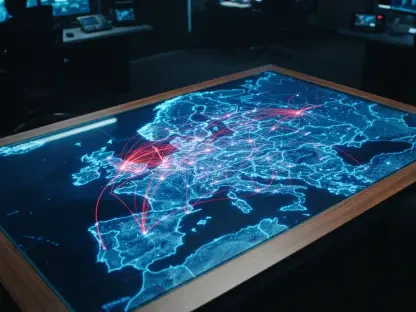

Organizational resilience is being tested by increasingly persistent threat actors who favor targeted, high-intensity strikes over the broad-spectrum harassment campaigns seen in previous years. Recent data suggests a significant shift in the landscape of Distributed Denial of Service (DDoS)

Modern enterprises face the complex challenge of granting deep network access to remote contractors who may never step foot inside a physical corporate office. As traditional perimeters dissolve, the necessity for a verifiable link between a human user and their digital credentials has moved from a

A botnet attack begins when hijacked devices register with command-and-control servers and wait for a specific campaign trigger from the operator layer. This architectural foundation represents a significant shift in the threat landscape of 2026, where the sheer density of internet-connected

Security policies can now be written once in a centralized dashboard and applied globally to ensure a uniform posture across all remote connections. This capability marks a definitive end to the era of site-specific security appliances that once defined the corporate network for decades. As we

The integration of artificial intelligence into the cyber attack lifecycle allows threat actors to efficiently identify and exploit structural weaknesses in industrial control systems. This evolution marks a departure from traditional manual exploitation toward a model where machine learning

Inference data planes form the foundation of secure agent deployments by managing the integrity of data streams and the scheduling of physical resources. As the industry moves deeper into 2026, the shift from static large language models to fully autonomous agents has necessitated a complete