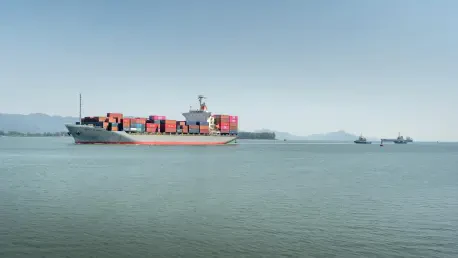

The silent hum of global commerce depends on a labyrinthine network of digital controls that, until very recently, operated under a patchwork of optional security suggestions rather than strict federal mandates. For over two decades, the maritime sector—comprising sprawling port complexes, massive cargo vessels, and isolated offshore energy platforms—relied on voluntary guidelines to fend off digital intruders. This era of discretion ended with the introduction of the first mandatory cybersecurity framework from the United States Coast Guard (USCG). This shift signifies a fundamental change in national security priorities, moving away from a “best efforts” approach toward a rigid, legally enforceable standard designed to protect the backbone of the global supply chain.
The new regulatory environment encompasses a broad scope of assets governed by the Maritime Transportation Security Act (MTSA), including everything from transoceanic ships to outer-continental shelf facilities. These rules do more than just suggest security; they require the institutionalization of defense through the appointment of dedicated officers and the implementation of rigorous annual assessments. As the industry progresses through the current 2026 milestones, the focus has moved toward a final technical deadline in 2027. This phased approach ensures that every operator, regardless of size, meets a baseline level of resilience that was previously absent across the industry.
Transitioning from Voluntary to Mandatory Maritime Cybersecurity
Transitioning away from a voluntary model was a necessary response to the evolving nature of modern warfare and organized crime. Discretionary practices often led to uneven protection, where some facilities invested heavily in defense while others left their digital doors unlocked. The USCG framework now demands consistency across the board, ensuring that a single weak link in a port does not compromise an entire regional economy. By making these practices mandatory, the government has effectively raised the cost of entry for attackers, who previously relied on the inconsistencies of maritime security to find easy targets.
This shift involves several critical pillars of implementation that operators must navigate between now and 2027. Central to this is the development of Facility Security Plans and Vessel Security Plans that specifically address cyber risks with the same rigor as physical threats. These plans are not static documents; they require continuous updates and federal oversight, creating a transparent environment where accountability is the norm. The regulatory scope is intentionally broad, ensuring that navigation systems, propulsion controls, and cargo handling software are all brought under a unified defensive umbrella.
The Imperative for Standardized Defense in Critical Infrastructure
Adopting standardized best practices is no longer just a technical requirement; it is a prerequisite for national and economic survival in an era of global volatility. In a world where supply chains are increasingly fragile, a single breach at a major container terminal can trigger a cascade of delays affecting everything from consumer electronics to medical supplies. Mandatory regulation provides a common language for security, allowing different entities to share intelligence and respond to threats with a coordinated strategy. This standardization reduces the complexity of managing third-party risks, as every participant in the maritime ecosystem is now held to the same federal expectations.
Beyond immediate protection, these rules offer long-term economic benefits by preventing the catastrophic financial losses associated with successful ransomware attacks. While the initial investment in compliance may seem high, it pale in comparison to the costs of multi-week operational shutdowns or the environmental damage caused by compromised navigation systems. By eliminating the “low-hanging fruit”—the basic vulnerabilities that state-sponsored actors and cybercriminals exploit—the USCG is forcing a professionalization of maritime IT and OT departments that is decades overdue.
Actionable Strategies for Compliance and Resilience
To meet the high bar set by federal authorities, maritime operators must move beyond superficial check-box compliance and embrace deep structural changes. The USCG’s best practices are designed to be actionable, providing a roadmap that transitions from administrative planning to hard technical enforcement. Implementation requires a multidisciplinary approach, blending the expertise of traditional maritime engineers with the specialized knowledge of cybersecurity professionals to ensure that every digital interface is accounted for and protected.
Institutionalizing Leadership through the Cybersecurity Officer (CySO)
The designation of a Cybersecurity Officer (CySO) serves as the cornerstone of the new regulatory framework. This role is distinct from a traditional Chief Information Security Officer (CISO) in that its primary function is one of federal accountability and regulatory liaison. The CySO acts as the focal point for all reporting obligations, ensuring that the facility or vessel remains in constant communication with the USCG during an incident. This leadership position is designed to bridge the gap between technical teams on the ground and the legal obligations of the organization, ensuring that security decisions are made with a full understanding of the regulatory consequences.
Implementing the CySO role effectively requires more than just a title change for an existing IT manager. It involves empowering the individual with the authority to halt operations if a critical vulnerability is detected and providing them with the resources to conduct meaningful internal audits. By creating a specific point of contact for federal authorities, the framework streamlines the reporting process and ensures that lessons learned from one incident can be quickly disseminated across the entire maritime sector to prevent recurrence.
The Evolution of Security Roles Post-9/11: Lessons for the Digital Age
The mandate for a CySO is a direct evolution of the security protocols established in the wake of the 2001 terrorist attacks. Just as the maritime world adapted to physical threats by creating the Facility Security Officer (FSO) role, the current era demands a similar prioritization of digital defense. This comparison illustrates the gravity with which the USCG views cyber threats; they are no longer seen as mere technical inconveniences but as potential vectors for large-scale sabotage and economic disruption. By treating digital systems with the same level of concern as physical gates and guards, the industry is finally acknowledging that a line of code can be just as dangerous as a physical explosive.
Hardening Infrastructure through Network Segmentation
A critical technical requirement of the current regulatory cycle is the mandatory segmentation of Information Technology (IT) and Operational Technology (OT) networks. Historically, these systems were often interconnected for the sake of convenience, allowing business offices to monitor engine performance or cargo status in real-time. However, this connectivity created a massive vulnerability, as a simple phishing email in the business office could theoretically lead to the shutdown of a vessel’s propulsion system. Implementation now requires the creation of robust digital barriers that ensure a breach in the corporate network cannot migrate to the critical systems that control the physical movement of the ship.
Lessons from the NotPetya Crisis: Why Segmentation Matters
The urgency of the 2027 segmentation deadline is rooted in the hard lessons learned from the NotPetya malware outbreak. This incident famously crippled global shipping operations by exploiting flat network architectures, where malware spread unchecked from one system to another across the globe. By mandating segmentation, the USCG is ensuring that even if a facility is breached, the damage remains contained within a non-critical segment. This “assumption of failure” strategy is a hallmark of modern resilience, acknowledging that while no system is unhackable, a well-segmented network can continue to operate safely even while under attack.
Cultivating Workforce Readiness through Integrated Training
Technology alone cannot secure the maritime sector; the human element remains the most significant variable in any security strategy. The USCG mandate includes a requirement for specialized training programs that must be completed by all personnel by the beginning of 2026. This training is designed to break down the silos between IT professionals and OT operators, ensuring that everyone from the bridge crew to the data center staff understands their role in a cyber incident. A workforce that is trained to recognize the early signs of a digital intrusion is the most effective early-warning system an organization can possess.
Mitigating GPS Spoofing and Jamming Risks: A Case for Human Intervention
The value of specialized training is most evident when dealing with sophisticated threats like GPS spoofing or jamming. While automated systems can sometimes detect navigation interference, a trained navigator who understands the digital landscape can manually verify positions and maintain control of the vessel when digital instruments fail. This human-centric approach to cybersecurity ensures that crews are not overly reliant on technology that can be manipulated by adversaries. Training programs now focus on these specific maritime scenarios, providing workers with the practical skills needed to maintain operational safety in a degraded digital environment.
Final Evaluation: Is Mandatory Regulation the Answer?
The introduction of mandatory rules by the USCG was a necessary evolution that corrected years of stagnant security practices. These regulations were designed to provide a “security floor” rather than a ceiling, forcing every maritime operator to adopt a baseline level of defense that protects the entire ecosystem. While the technical burden, particularly regarding network segmentation, was significant, the industry ultimately recognized that the cost of inaction was far greater. These rules succeeded because they moved beyond vague suggestions and provided a clear, enforceable roadmap for resilience that prioritized the most critical systems first.
Maritime operators who treated these mandates as a strategic opportunity rather than a bureaucratic hurdle gained a competitive advantage in the global market. They recognized that true resilience comes from an “assumption of failure” mindset, where systems are built to withstand and recover from breaches rather than just hoping they never occur. This approach has already begun to influence other industrial sectors, such as energy and manufacturing, which looked to the maritime framework as a blueprint for their own regulatory transitions. The standardization of reporting and leadership roles created a more transparent and responsive environment for everyone involved.
Ultimately, the transition to mandatory rules proved that government oversight is essential for protecting the infrastructure that supports modern life. The maritime sector was more secure than it had ever been because it stopped treating cybersecurity as an optional IT project and started treating it as a core component of operational safety. As the industry looks toward future threats, the lessons learned during this regulatory shift will serve as the foundation for the next generation of digital defense. The proactive steps taken during this period ensured that the global supply chain remained robust, even as the digital world became increasingly hostile.