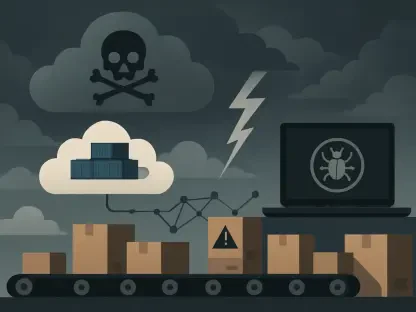

The architectural shift from client-side rendering toward server-heavy processing has inadvertently turned modern web frameworks into high-velocity pipelines for automated cyber espionage. As enterprises increasingly rely on React Server Components and frameworks like Next.js to deliver high-performance user experiences, the surface area for server-side exploitation has expanded exponentially. This evolution has moved the boundary of the web application deeper into the corporate cloud, making a single flaw in a rendering engine a direct conduit to the heart of an organization’s infrastructure.
The Modern Web Development Landscape and the Rise of React-Based Exploits
The widespread adoption of React Server Components represents a fundamental change in how data is fetched and rendered, merging the traditionally separate worlds of the frontend and the backend. While this integration offers significant performance benefits, it creates a lucrative target for attackers who recognize that these servers are no longer just delivering static assets but are actively processing sensitive logic. Next.js, as the dominant force in this ecosystem, now sits at the center of critical business operations, making any vulnerability within its core a systemic risk for the modern enterprise.
This convergence of web frameworks and cloud infrastructure means that a web server is rarely an isolated entity anymore. Today, these Node.js environments are tightly coupled with cloud providers, holding the keys to databases, file storage, and internal microservices. Consequently, a vulnerability like React2Shell is not just a web bug; it is a breach of the cloud perimeter. Global vulnerability management standards, specifically the tracking of CVE-2025-55182, reflect this reality as security teams struggle to reconcile rapid development cycles with the rigorous demands of regulatory risk assessment.
Emerging Threats and the Mechanization of Credential Harvesting
Automated Exploitation Trends and the NEXUS Listener Framework
A new breed of threat actor, identified by researchers as UAT-10608, has moved beyond the era of manual exploitation to embrace the industrialization of data theft. This group does not simply “hack” into systems; they employ a method akin to strip-mining, using a sophisticated command-and-control framework known as the NEXUS Listener. This tool is designed to automate the identification and exfiltration of sensitive assets across thousands of compromised hosts simultaneously, removing the need for a human operator to intervene during the initial stages of a breach.
What sets this campaign apart is the transformation of raw stolen data into actionable intelligence through a searchable graphical user interface. Within the NEXUS Listener environment, attackers can filter for specific cloud providers or high-value financial assets, allowing them to prioritize victims based on statistical analysis of the harvested loot. This level of mechanization signifies a shift in cyber espionage where the goal is no longer just access, but the creation of a searchable, global database of stolen corporate secrets.
Quantifying the Global Impact and Expansion Projections
The scale of this operation is staggering, with over 766 confirmed compromised hosts spanning nearly every major geographic region and industry vertical. This is not a targeted strike but a wide-net operation that captures everything from small business credentials to the SSH keys of multi-billion-dollar global enterprises. The theft of these cloud tokens and environment secrets has a direct impact on market valuations, as the long-term cost of remediating a widespread secret leak often far exceeds the initial response efforts.
Looking toward the immediate future, researchers expect a continued increase in attacks specifically targeting server-side rendering and serialized payloads. The success of the React2Shell exploitation model provides a blueprint for other threat actors to follow, suggesting that the industry will see a proliferation of frameworks designed to exploit the inherent trust placed in server-side data exchange. As more applications move toward these complex rendering models, the volume of data at risk will likely grow in tandem with the sophistication of the harvesting tools.
Overcoming Technical Obstacles in Securing Serialized Endpoints
Securing these environments remains a significant challenge because validating inbound serialized payloads in Node.js is notoriously difficult. Developers often struggle to sanitize data effectively without breaking the complex functionality that React Server Components provide. Because the vulnerability exists at the intersection of how the server interprets state and how it executes functions, simple input filtering is often insufficient to stop a determined attacker from injecting malicious objects.
Detection is equally problematic, as post-exploitation activity often mimics legitimate server processes. Attackers utilize randomized process names and standard utilities like nohup to ensure their scripts continue running even after a session is closed, effectively hiding in the noise of a busy production environment. Furthermore, the legacy patching gap remains a major hurdle, as many organizations find it difficult to update core frameworks in large-scale deployments where a single version change might break critical dependencies or disrupt user-facing services.
The Regulatory Response and Compliance in the Wake of React2Shell
The emergence of React2Shell has acted as a catalyst for a more aggressive regulatory stance on patch management and vulnerability disclosure. Governments and industry bodies are increasingly viewing the failure to secure known framework flaws as a breach of duty, especially when those flaws lead to the mass exfiltration of personal data. This has led to a stricter interpretation of existing mandates like GDPR and CCPA, where organizations are now expected to treat environment secrets and cloud tokens with the same level of protection as customer passwords.
In response, compliance frameworks are being updated to mandate zero-trust architectures and rigorous credential rotation protocols. It is no longer enough to have a secure perimeter; organizations must now prove that even if a server is compromised, the stolen secrets are either short-lived or restricted in scope. This regulatory shift is forcing a move away from static environment variables toward dynamic secret management systems, making it harder for automated tools like NEXUS Listener to find high-value, permanent access credentials.
Future Outlook: The Battle Between Framework Security and Automated Theft
The future of web security will be defined by an arms race between AI-driven scanning tools and proactive defense mechanisms. Attackers are already using automation to find vulnerable Next.js endpoints faster than humans can patch them, but defenders are beginning to counter with their own automated shielding. We are likely to see architectural changes within web frameworks themselves, moving toward secure-by-default serialization methods that eliminate the root causes of remote code execution flaws entirely.
The economic implications of these breaches extend far beyond individual companies, threatening the perceived reliability of the global cloud ecosystem. If cloud access tokens can be harvested at scale through simple web vulnerabilities, the trust between service providers and their clients is fundamentally undermined. This may lead to a restructuring of how cloud services authenticate web servers, potentially moving toward hardware-backed identity or more granular, ephemeral authorization models to mitigate the impact of framework-level compromises.
Final Assessment: Disrupting the Automated Data Theft Pipeline
The React2Shell threat demonstrated that modern web vulnerabilities serve as the primary fuel for industrial-scale data exfiltration. By weaponizing a flaw in how servers handle serialized data, threat actors successfully bypassed traditional defenses to gain deep access to corporate cloud environments. This campaign proved that the distance between a public-facing web endpoint and an organization’s most sensitive secrets has shrunk to nearly zero, requiring a total reassessment of how these frameworks are deployed and monitored.
The path forward for secure development relied on integrating security directly into the lifecycle of the application rather than treating it as an afterthought. Organizations were forced to adopt a more disciplined approach to secret management, including the rotation of all exposed keys and the implementation of robust monitoring for forensic indicators like anomalous process behavior. Ultimately, the industry learned that the only way to disrupt an automated theft pipeline was to ensure that the data being harvested was either impossible to reach or fundamentally useless to the attacker upon arrival.