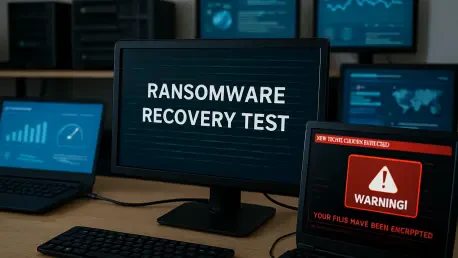

The realization that a primary backup environment has been compromised by a dormant ransomware payload is arguably the most terrifying scenario any managed service provider can encounter during a recovery operation. In the current landscape of 2026, cybercriminals have refined their techniques to ensure that once a system is breached, the infection spreads silently into the very safety nets designed to protect the data, often remaining hidden for weeks or months. This evolution in threat tactics means that a simple restoration task can inadvertently become the vehicle for a secondary, even more devastating attack if the underlying data has not been thoroughly vetted and isolated before being reintroduced to the network. Consequently, the primary objective for modern technical teams is no longer just about having a backup; it is about having a validated, clean, and tested recovery path that bypasses the traps set by malicious actors. Achieving this level of assurance requires a meticulous combination of network segmentation, behavioral analysis, and automated verification protocols that function independently of the compromised production infrastructure. By treating every recovery as a potential threat vector, providers can build a resilient defense that stands up to the pressures of high-stakes digital extortion while ensuring the long-term safety of client environments.
- Establishing Isolated Restoration Environments and Modeling Attack Patterns.
The foundation of any successful recovery test lies in the creation of a strictly detached restoration space, commonly referred to in the industry as a clean room. This environment must be entirely separated from the production network to prevent lateral movement, ensuring that if a malicious payload is triggered during the restoration process, it cannot reach other sensitive systems or client environments. Utilizing network segregation and distinct identity domains allows managed service providers to contain the restoration process within a controlled vacuum, where every action can be monitored without risk to the broader infrastructure. This isolation is critical because modern ransomware is specifically programmed to detect when it is being restored and will attempt to jump across the network to re-infect the same hosts or find new targets. By building this fortress-like testing zone, technical teams can safely execute their recovery scripts, knowing that the primary production environment remains shielded from any unintended consequences of the restoration attempt.
To ensure that these tests are effective, it is vital to mimic actual ransomware strike patterns rather than relying on simple encryption simulations that do not reflect modern adversary behavior. Security teams should implement simulations that include complex privilege escalation and persistence techniques, as these are the hallmarks of sophisticated attacks in the current digital climate. Simple file-level encryption tests often fail to trigger the defensive responses or reveal the architectural vulnerabilities that a real attacker would exploit to maintain a foothold in the system. By replicating the specific ways that ransomware moves through a network and gains administrative control, providers can identify gaps in their security posture and refine their response strategies. This realistic modeling ensures that the recovery process is prepared for the worst-case scenario, where an attacker has already compromised high-level credentials and is actively working to undermine the restoration efforts from within the system.
- Prioritizing Identity Services and Establishing Clean Recovery Points.
A common pitfall in recovery testing is failing to recognize that ransomware frequently damages the underlying software stacks and application dependencies that hold a business together. Instead of focusing solely on simple file retrieval, managed service providers must execute complete system restorations that encompass the entire environment, including configurations and intricate software layers. This holistic approach is necessary because a functional file is useless if the application that reads it has been corrupted or if the system dependencies are no longer intact. Furthermore, during this comprehensive restoration, it is essential to scan backups for dormant malware that might have been backed up alongside legitimate data. While storage immutability prevents the unauthorized deletion of backups, it does not guarantee that the data within those backups is safe for use; therefore, active scanning and integrity checks are required to prevent the reintroduction of the original threat during the reboot process.
Once the physical and virtual environments are staged, the focus must shift immediately to restoring authentication and identity services before any other workloads are brought online. Recovering identity systems such as Active Directory and DNS is the most critical step in maintaining a functionally stable environment, as these services provide the backbone for all subsequent authentication and communication. If a provider attempts to restore application servers before the identity layer is fully operational, they will inevitably face a cascade of authentication failures and service crashes that can complicate the recovery timeline. Additionally, determining the most recent untainted restore point requires moving beyond simple guesses based on backup timestamps. Technical teams must use security telemetry and detailed attack timelines to pinpoint the exact moment of infection, allowing them to select the last known clean backup with surgical precision. This data-driven approach eliminates the trial-and-error method that often leads to repeated infections and prolonged downtime.
- Validating Critical Workloads and Evaluating Recovery Solution Effectiveness.
When evaluating the performance of a recovery solution, the focus should extend beyond the mere ability to move data and instead look at the integrity of specific, critical systems through targeted workload validation. This involves not only bringing an application online but also confirming that its specific services, databases, and internal logic are operating as intended without any signs of corruption. Managed service providers should utilize comprehensive environment restoration tests that include all interconnected applications and identity services to ensure that the entire ecosystem is healthy. Because modern business operations rely on a web of cross-system dependencies, a failure in one minor service can lead to a complete work stoppage. Testing these interdependencies allows teams to verify that if an ERP system is restored, it can still communicate effectively with the associated database and authentication servers, thereby confirming that the business is truly back in operation.
The effectiveness of any chosen recovery solution is measured by its ability to provide automated restoration workflows and detailed validation checks that can run without constant human intervention. High-quality solutions should offer built-in features for spotting clean restore points by correlating backup data with existing security telemetry, which significantly reduces the time spent on forensic analysis. Moreover, the solution must provide a provision for detached recovery zones that automatically handle network isolation to prevent contamination during the testing phase. Compatibility with endpoint detection and response software is also a major factor, as it gives the recovery team better visibility into any anomalies that might appear during the restore process. Finally, having detailed logs and reporting capabilities is indispensable for satisfying compliance requirements, passing audits, and meeting the rigorous demands of cyber insurance providers who require proof of successful and regular recovery testing.
- Conducting Safe Attack Simulations and Systematic Disaster Recovery Drills.
Designing a safe ransomware attack simulation requires the use of strictly isolated or sandbox environments where all testing activities can be performed without any physical or logical links to live production systems. This total separation is the only way to eliminate the risk of an accidental outbreak while allowing the security team to replicate genuine attack behaviors, including lateral movement and persistence mechanisms. By directly linking detection alerts into the testing workflows, managed service providers can observe how their security stack reacts to the simulation in real time. This allows the team to verify that their monitoring tools are correctly configured to identify the specific indicators of compromise associated with a ransomware breach. Successfully navigating these simulations builds institutional knowledge and ensures that when a real threat emerges, the response team is already familiar with the technical nuances of the attack and the recovery process.
To maintain a state of constant readiness, disaster recovery drills should be conducted on a regular, set timeline that includes participation from IT, security, and senior leadership teams. These drills serve to validate that the human element of the recovery plan is as robust as the technical infrastructure, ensuring that communication channels remain clear and that roles are well-defined under pressure. Automating the verification of restored systems and data during these drills helps to remove human error and provides a consistent benchmark for success. Maintaining clear, comprehensive logs of all results from every drill is essential for driving continuous improvement and identifying recurring bottlenecks that could hinder a real-world recovery effort. By treating these exercises as a core part of the service delivery model, providers can demonstrate to their clients that their resilience is not just theoretical but has been tested and proven under simulated battle conditions.
- Strategic Frameworks for Reinfection Prevention and Operational Success.
The final stage of establishing a secure recovery process involves the seamless fusion of security and backup tools to synchronize data and threat intelligence into a single, unified workflow. This integration allows for a restoration process that is fully aware of malware threats, effectively preventing reinfection by scanning every block of data as it is moved from the backup repository to the clean room. For managed service providers overseeing multiple clients, a centralized management framework is necessary to maintain control across diverse environments and ensure that security policies are applied consistently. This operational efficiency is achieved through automatic verification and logging, which provides a clear audit trail and reduces the administrative burden on the technical staff. When security and backup tools work in harmony, the result is a recovery ecosystem that is not only faster but also significantly more resistant to the sophisticated persistence tactics used by modern ransomware authors.
Looking back at the development of these protocols, the integration of isolated testing and automated validation allowed organizations to move beyond hope and toward a state of verifiable readiness. By prioritizing the segregation of the recovery environment and implementing lifelike modeling of attack scenarios, technical teams successfully eliminated the guesswork that once defined post-incident response. The focus shifted toward end-to-end system coordination and malware-focused verification, ensuring that every restoration was a step toward stability rather than a risk of further contamination. Ultimately, these strategies provided a blueprint for resilience that balanced speed with security, allowing service providers to deliver on their promise of data integrity. Future operations should continue to emphasize the importance of identity-first restoration and the continuous evaluation of cross-system dependencies to stay ahead of the evolving threat landscape. Standardizing these workflows across all client environments established a high bar for excellence that transformed disaster recovery from a reactive chore into a strategic advantage.