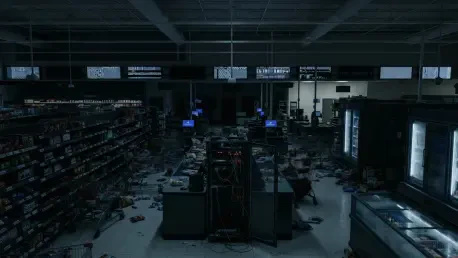

The intentional thermal spiking of supermarket freezers demonstrates how digital breaches now result in immediate, tangible, and costly physical consequences. For years, the retail sector focused primarily on protecting credit card data, but a wave of incidents across Europe has proven that the operational backbone of the industry is equally at risk. Malicious actors are no longer satisfied with simple data exfiltration; they are now weaponizing the Internet of Things to cause physical spoilage on a massive scale. By late 2024, the coordination of these attacks became alarmingly clear as major retailers in nations like Sweden, Belgium, and the Netherlands reported synchronized failures in their cooling systems. These events did not just represent a technical glitch but a deliberate attempt to cripple the food supply chain by targeting the refrigeration units that keep perishables safe for consumption. This evolution in cyber warfare necessitates a fundamental shift in how food retailers perceive and manage their digital infrastructure.
Vulnerabilities in Industrial IoT Infrastructure
Legacy Systems: The Risk of Software Obsolescence
The core of this vulnerability lies in the significant lifespan discrepancy between industrial hardware and the software that governs it. In a typical European supermarket, refrigeration controllers are designed to operate for fifteen to twenty years, providing reliable physical performance long after their initial installation. However, the firmware powering these devices is rarely updated with the same frequency as corporate IT systems, leaving them susceptible to exploits that emerged long after the hardware was deployed. Many of the affected systems were found to be running outdated protocols that lacked modern encryption or authentication measures. This technological gap creates a fertile ground for hackers who can utilize well-documented vulnerabilities to gain control over the heating and cooling cycles of industrial units. Without a proactive strategy to patch or isolate these aging components, the physical integrity of the store remains at the mercy of any actor capable of navigating through these legacy software holes.
Connectivity Risks: Unprotected Remote Access Points
The push for operational efficiency has driven the widespread adoption of remote monitoring, allowing technicians to troubleshoot cooling systems from any location via cellular or Wi-Fi networks. While this connectivity reduces maintenance costs and downtime, it also expands the attack surface of the supermarket significantly. Many of these remote access points are implemented with insufficient hardening, often relying on default administrative credentials or unencrypted communication tunnels. When a hacker identifies an exposed IP address associated with a refrigeration controller, they find a direct pathway into the store’s physical environment. These connections are frequently established outside the direct oversight of central IT departments, leading to a shadow infrastructure that lacks the rigorous monitoring applied to point-of-sale systems. The convenience of being able to check a freezer’s status on a smartphone has come at the expense of robust security protocols, providing a low-effort entry point for sophisticated regional threat actors.
Operational Technology: The New Frontier of Attack
The convergence of traditional Information Technology (IT) and Operational Technology (OT) has created a unique set of challenges that most supermarket security teams were unprepared to face. While IT systems are designed with the principles of confidentiality and integrity, OT systems—such as those managing the cold chain—prioritize availability and physical safety above all else. In the European context, this meant that security measures were often neglected to ensure that refrigeration units never stopped running. However, once these units became connected to the internet, they became susceptible to the same remote exploits that plague standard servers, but with the added risk of physical equipment damage. This shift represents a move toward the weaponization of the environment, where a digital command can lead to the destruction of inventory or the malfunctioning of heavy industrial machinery. The industry must now recognize that any device with a power switch and a network connection is a potential point of failure in their physical security perimeter.
Modernizing Defensive Strategies
Network-Level Security: Implementing AI Monitoring
Addressing the vulnerabilities of legacy IoT devices requires a strategic shift toward network-level security rather than relying solely on individual device hardening. Since many refrigeration units cannot support modern antivirus software or frequent firmware updates, the defense must occur at the point where these devices communicate with the broader world. Implementing AI-driven anomaly detection is becoming the standard for identifying the subtle signs of a breach. These systems are trained to recognize the typical communication patterns of a cooling controller, such as when it reports its temperature or receives a minor adjustment from a verified technician. If the system suddenly detects a command to raise the temperature significantly during non-operating hours, or if the device attempts to communicate with an unfamiliar external IP address, the AI can automatically flag or block the activity. This proactive approach allows for a rapid response that can prevent physical damage before it begins.
Future Safeguards: Resilience and Physical Redundancy
The response to the European supermarket crisis established a new precedent for how the cold chain was defended against digital interference. Organizations that successfully mitigated these risks moved away from reactive patching toward a more holistic, zero-trust approach to their industrial hardware. They prioritized the installation of independent, non-connected temperature alarms that provided a physical fail-safe even when the digital management systems were compromised. These organizations also conducted extensive security audits that identified every connected asset, ensuring that no legacy device remained as a hidden gateway for attackers. By integrating operational technology into their core security frameworks, retailers managed to protect their inventory and maintain consumer trust during a period of intense digital volatility. The lessons learned during this era highlighted the necessity of treating a digital breach as a physical threat, forcing a permanent change in how the global food supply chain operated and secured its most vital infrastructure.