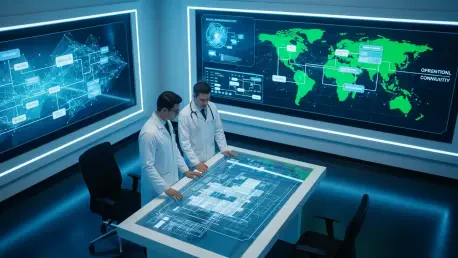

The sound of a hospital emergency department usually hums with the efficiency of integrated technology, but a ransomware attack can instantly silence the digital pulse of life-saving equipment. When clinicians lose access to diagnostic imaging and patient histories, the immediate life-or-death consequences for emergency medical decisions become a harrowing reality for every staff member on the floor. These disruptions frequently extend for weeks rather than hours, forcing facilities to divert critical cases to distant hospitals and overwhelming regional trauma networks. Statistical evidence suggests a rise in patient mortality rates during the initial phases of these attacks, highlighting the direct threat to the core mission of healthcare organizations everywhere. Moving past basic prevention, modern resilience strategies prioritize the ability to maintain clinical operations under extreme digital duress. By focusing on continuity of care, hospitals can mitigate the most severe impacts of a breach while protecting patients from technical failures.
1. The Human Cost: Evaluating Clinical Disruption and Mortality
The statistical rise in patient mortality during major cyber incidents underscores the gravity of digital warfare in the medical sector. When a network is paralyzed, doctors are often forced to rely on memory or incomplete paper records, which increases the likelihood of medication errors and diagnostic delays. Clinical disruptions that last for several weeks create a ripple effect throughout the entire healthcare ecosystem, as surgical schedules are cleared and outpatient services are suspended indefinitely. This environment poses a direct threat to the core mission of any medical provider, transforming a technical problem into a public health crisis that requires more than just a typical IT response. The immediate pressure on emergency medical decisions means that every second of downtime contributes to a declining standard of care. Because modern medicine is so deeply intertwined with real-time data, the absence of accessible information can be just as lethal as the malware itself.
Traditional disaster recovery plans often fall short because they were originally designed for physical catastrophes like fires or floods rather than sophisticated digital breaches. These legacy models frequently rely on geographic dispersion, assuming that a secondary site remains untainted, yet modern ransomware propagates across interconnected systems with terrifying speed. Furthermore, the total loss of trust in integrated systems makes it impossible to simply “flip a switch” to a backup data center without the risk of re-infecting the entire environment. Many organizations discovered that even their so-called immutable backups were vulnerable to attackers who had obtained high-level administrative credentials to delete or encrypt the very files intended for recovery. Relying on paper-based fallbacks is no longer a viable option in a world of high-volume specialty care where automated pharmacy systems and robotic surgery platforms are the standard. Modern medicine demands a digital-first recovery strategy.
2. Architectural Resilience: Beyond Traditional Perimeter Defenses
Building true cyber resilience requires a fundamental shift away from an over-reliance on perimeter defenses toward a mindset of inevitable breach and rapid recovery. Instead of only focusing on stopping the initial intrusion, healthcare organizations must establish an isolated recovery environment (IRE) that functions as a clean room for critical operations. This environment allows the hospital to maintain essential clinical functions and access vital patient data even while a forensic investigation is still underway on the primary network. By decoupling the recovery infrastructure from the infected production environment, IT teams can provide a “minimum viable hospital” experience for the medical staff. This approach ensures that life-saving decisions are supported by accurate data even when the main systems are compromised. Investing in these air-gapped or logically isolated spaces provides a layer of protection that traditional firewalls simply cannot match in this evolving landscape.
Guaranteeing the integrity of backup data is the next critical step, necessitating a total redesign of traditional storage architectures to prevent unauthorized tampering. It is no longer sufficient to trust vendor claims of immutability without rigorous, independent validation through third-party auditors who specialize in adversarial testing. Modern storage solutions must employ multi-factor authentication for any deletion or modification of backup sets, ensuring that even a compromised administrator account cannot erase the organization’s last line of defense. By implementing a “write once, read many” (WORM) policy at the hardware level, hospitals can create a digital fortress for their most sensitive patient records and system configurations. This level of security prevents attackers from systematically destroying backups before launching their main payload, which is a common tactic used to force a ransom payment. Resilience is built on the certainty that data exists and remains uncorrupted.
3. Strategic Restoration: Prioritizing Safety and Operational Continuity
Rapid malware detection within storage systems is essential to ensure that the restoration process does not inadvertently reintroduce the original threat. Teams should implement automated threat hunting across massive datasets to locate the most recent uninfected restore points, a process that requires significant computational power and specialized algorithms. Once clean data is identified, the restoration of systems must follow a predefined sequence based on clinical and operational importance rather than technical ease. Identity management and internal communication tools should always be prioritized first to allow the staff to coordinate their efforts across departments. Following these foundational layers, clinical applications like the EHR and laboratory information systems are brought back online in a controlled manner that prioritizes patient safety. Regular automated recovery tests are necessary to prove that these sequences actually work under the pressure of a real-world scenario.
Healthcare leadership finally recognized that resilience was an essential operational capability rather than just a burdensome IT expense that sat on a balance sheet. They fostered deep cross-functional collaboration between clinical, operational, and technology teams to ensure that every recovery drill reflected the actual needs of the surgical suite and the pharmacy. Success was measured not by the absence of attacks, but by the organization’s ability to maintain continuity of care and protect patient lives during a crisis. By mitigating the scale of potential disruptions, these leaders protected the financial health of their institutions and preserved the trust of the communities they served. They moved toward a model where clinical excellence was inseparable from digital durability, ensuring that the technology meant to heal did not become a source of harm. These proactive steps transformed cybersecurity from a technical hurdle into a foundational pillar of modern medical safety and ethics.