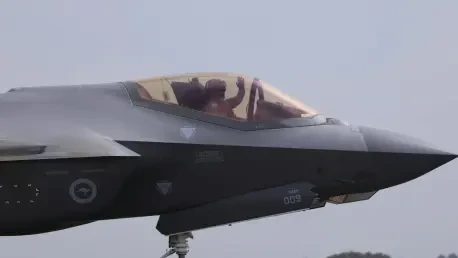

The provocative assertion that a sophisticated F-35 fighter jet could be manipulated with the same fundamental approach as an iPhone signals a profound shift in the landscape of global defense. This statement, from a high-ranking European official, is more than a technical boast; it is a declaration of intent, revealing a growing demand for technological sovereignty among America’s closest allies. The discourse it has ignited forces a dissection of its technical feasibility, an exploration of the geopolitical anxieties fueling this trend, and a critical analysis of the future of international defense partnerships in an age of inescapable technological interdependence.
The Sovereignty Imperative Examining the F-35 Dilemma
The Jailbreak Claim as a Data Point for Discontent
The central assertion from Netherlands’ Defense Secretary Gijs Tuinman—that European forces can “jailbreak” the Lockheed Martin F-35—arose from pointed questions about operational independence. Specifically, he addressed concerns over Europe’s ability to operate the advanced jet without U.S. approval, a scenario gaining traction amid questions about America’s long-term role as a steadfast ally. His claim, while technically unverified, serves as a powerful political message about self-reliance.
This statement gains its weight from the sheer scale of the F-35 program across the continent. With numerous NATO countries adopting the aircraft as the cornerstone of their future air power, the platform represents a massive investment and a deep-seated technological reliance on the United States. This widespread adoption has created a paradoxical situation where enhanced capability is directly tied to diminished national control, a tension that leaders are now publicly confronting.
Real-World Applications of Control and Autonomy
A singular exception highlights what is possible when strategic autonomy is non-negotiable. Israel is the only F-35 operator officially permitted to install and run its own proprietary software on its F-35I “Adir” fleet. This unique arrangement, a result of direct and high-stakes negotiations with the U.S., allows Israel to integrate its own command, control, and electronic warfare systems, demonstrating a level of independence no other partner nation possesses.
In stark contrast, all other operators exist within a highly controlled technological ecosystem. The F-35’s complex software is managed through the Autonomic Logistics Information System (ALIS), with updates and patches delivered in structured service packs overseen by the U.S. This centralized model ensures standardization and security but also reinforces American oversight, leaving allies dependent on a U.S.-managed timeline for critical upgrades. The very real consequences of these dependency fears have already influenced billion-dollar decisions, as seen when Portugal reportedly abandoned its F-35 procurement plans over political concerns tied to a lack of sovereign control.
Expert Perspectives Technical Feasibility vs Political Reality
A Security Researchers Reality Check
The audacious “jailbreak” claim meets a sober counter-argument from aviation security experts. Ken Munro, a prominent security researcher, clarifies that manipulating an F-35 is fundamentally different and orders of magnitude more difficult than hacking a consumer device. The comparison, while politically potent, crumbles under technical scrutiny.
Munro identifies several insurmountable barriers that separate the military and consumer worlds. Chief among them is the extreme difficulty of gaining the sustained physical access required for reverse-engineering and research. Furthermore, unlike the iPhone, the F-35 lacks a global community of public researchers or the commercial incentives that drive the discovery of vulnerabilities in consumer technology. These factors make the prospect of a true “jailbreak” a near-impossibility without insider access or state-level resources.
The Geopolitical Drivers Behind the Rhetoric
Viewed through a political lens, Tuinman’s statement is less a technical assertion and more a reflection of broader European unease with U.S. technological control. It is a strategic communication designed to signal to both domestic audiences and international partners that European nations are not passive recipients of foreign technology but are actively seeking to assert their sovereignty.
This sentiment is not new. It taps into a long-standing fear of a remote “kill switch,” a concept once floated by a German defense contractor suggesting the U.S. could theoretically disable European F-35 fleets. These anxieties have been amplified by shifts in U.S. foreign policy, which have spurred allies to re-evaluate the risks of over-reliance on any single nation for technology that underpins their national security.
The Future Trajectory Autonomy Alliances and Interdependence
Potential Pathways to Technological Independence
Looking ahead, this drive for autonomy is likely to manifest in several ways. One path involves increased European investment in indigenous defense programs, such as the Future Combat Air System (FCAS), designed from the ground up to be free of U.S. proprietary constraints. Another involves allies demanding more open-architecture systems in future procurement contracts with U.S. firms, ensuring they can integrate their own technologies.
The primary benefit of this pursuit is clear: achieving greater strategic autonomy. This allows for operational flexibility and mitigates the risk of being politically constrained by the technology’s provider during a crisis. However, the challenges remain immense. The exorbitant cost, decades-long development cycles, and immense technological hurdles required to create a viable alternative to a mature platform like the F-35 are significant barriers for even the most determined nations.
The Broader Implications for Global Defense Partnerships
This trend toward technological sovereignty could profoundly reshape defense alliances like NATO. A worst-case scenario might see a fractured alliance, where interoperability, the bedrock of collective defense, is compromised as nations pursue divergent and incompatible technological paths. In this future, technological divides could easily mirror and exacerbate political ones.
Conversely, this evolution could yield a positive outcome. A more technologically self-sufficient European defense apparatus could emerge as a stronger, more independent, and ultimately more capable partner to the United States. Such a shift would transform the alliance from one of dependency to one of genuine partnership between equals, enhancing the overall resilience of the Western security architecture.
Conclusion: More Than a Technical Claim A Political Declaration
The Dutch defense secretary’s “jailbreak” comment, while technically dubious, has served as a powerful symbol of a larger geopolitical movement. It underscored that for modern nations, the quest for security is no longer just about acquiring the best hardware but about retaining the sovereign right to use it without external permission or oversight. As the complexities of 21st-century warfare continue to evolve, the inherent tension between allied interdependence and national autonomy will increasingly define the future of international security. The ultimate challenge was never merely about controlling the jet but about securing the freedom to act.