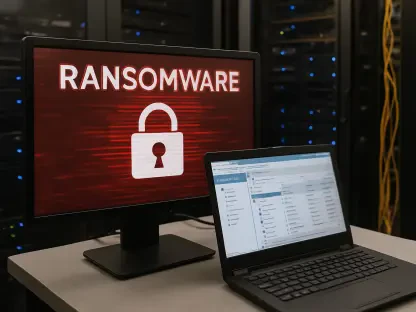

Decentralized security systems across multiple school buildings create significant administrative friction and slow down critical response times during active attacks. Modern K-12 school districts are no longer just places of physical learning; they are complex digital ecosystems. As classrooms increasingly rely on cloud-based applications and expansive networks, the focus of IT security must shift from merely trying to block threats to building true organizational resilience. Achieving this requires a transition toward frameworks that can quickly identify and neutralize sophisticated attacks like ransomware. By prioritizing rapid incident response, schools can ensure that their essential functions—from grading to payroll—remain operational even when faced with aggressive digital adversaries. This shift in mindset involves recognizing that technological infrastructure is the backbone of the modern educational experience, necessitating a defense strategy that is as agile and interconnected as the systems it protects.
Analyzing the Threat Landscape: AI and Visibility Gaps
Educational institutions face a relentless barrage of cyber activity, particularly at the start of the academic year when digital traffic peaks. Hackers are now using generative artificial intelligence to create highly deceptive phishing campaigns that easily bypass traditional security filters. These automated, realistic scams result in an average of 1,200 malicious emails hitting school networks every day. Because these threats are constantly evolving, districts can no longer rely on static defense measures that fail to account for the speed and variety of modern social engineering. The sophistication of these AI-generated messages means that even well-trained staff members might struggle to distinguish a legitimate request from a fraudulent one. This shift in attacker methodology demands a more dynamic approach to email security, where behavioral analysis replaces simple blacklisting of known bad domains. Without this evolution, the volume of successful initial access attempts will continue to rise unchecked.
The consequences of a successful breach are often devastating, as seen in recent high-profile cases where districts had to take critical services offline for days. K-12 schools are statistically more likely to suffer from visibility gaps, often remaining unaware that an intruder has entered the network until significant damage is done. Furthermore, recovery times in the education sector lag behind other industries, frequently taking a full week to restore normal operations. This delay is compounded by a lack of specialized cybersecurity staff and the challenge of managing thousands of accounts across multiple campus locations. In comparison to the private sector, educational IT departments are often underfunded and overstretched, leading to a situation where the mean time to detect a breach is significantly higher. This dwell time allows attackers to exfiltrate sensitive student data or deploy encryption software without resistance. Closing this detection gap is the first hurdle in establishing a more resilient posture.
Modernizing Infrastructure: Centralization and Evidence-Based Investment
To close these security gaps, IT leaders must move away from fragmented, site-by-site management and toward a centralized defense architecture. When a threat is detected, time is the most valuable resource; having a single-pane-of-glass dashboard allows administrators to see the entire network at once. This centralized visibility enables them to isolate affected segments remotely and push out security updates across the whole district instantly. By removing the need to manually log into different systems at various locations, schools can drastically reduce the time it takes to contain a live threat. Furthermore, a unified management layer simplifies the enforcement of security policies, ensuring that a patch applied in one high school is simultaneously active in every elementary building. This level of synchronization is essential for preventing lateral movement by an attacker who might try to jump from a less-secured local server to the main district database where sensitive payroll information is stored.
Securing the budget for these technological upgrades requires a shift toward evidence-based investment strategies. School boards are more likely to approve funding when presented with objective data from third-party security audits and localized risk assessments. These independent evaluations help identify specific vulnerabilities, such as weak backup protocols or data protection gaps, that are unique to a district’s specific needs. By creating tailored incident playbooks based on hard data rather than generic industry fears, IT departments can build a more persuasive case for the resources necessary to protect their community. These assessments also provide a benchmark for progress, allowing administrators to demonstrate the tangible return on investment as security metrics improve over time. Instead of asking for funds for vague cybersecurity, IT directors can point to specific gaps in their disaster recovery plans that, if unaddressed, could lead to weeks of school closures and significant financial loss from state funding tied to attendance.
Implementing Strategic Controls: Automation and Zero Trust Architecture
The implementation of AI-driven automation has become a critical factor for districts that successfully mitigate large-scale threats. Artificial intelligence acts as a force multiplier by automatically detecting anomalies, such as unusual data access or lateral movement, and purging malicious messages in real-time. This technology handles the repetitive, high-volume tasks of remediation, allowing human staff to focus on high-level forensic analysis and long-term strategy. Automation is a top priority for education IT professionals who recognize that human speed alone cannot match the pace of AI-powered attackers. By delegating the initial response—such as locking a compromised account or quarantining a suspicious file—to an automated system, districts stop breaches in seconds rather than hours. This proactive stance significantly lowers the risk of ransomware deployment, as most encryption processes require a specific window of time to execute across the entire network.
Districts are also moving beyond traditional perimeter defenses and adopting a Zero Trust security model to protect sensitive information. Old methods like Virtual Private Networks often grant too much access, allowing an attacker to move freely through a network once they steal a single set of credentials. A Zero Trust approach enforces continuous identity verification and the principle of least privilege, ensuring that users only access what they absolutely need. If a phishing attack is successful, this architecture restricts the damage to a tiny portion of the network, making the containment and recovery process much faster and less disruptive to student learning. This shift represents a fundamental change in philosophy, moving from “trust but verify” to “never trust, always verify.” By requiring multi-factor authentication for every access attempt and segmenting the network by user role, districts ensure that a student’s compromised login cannot be used to access the superintendent’s email or financial records.