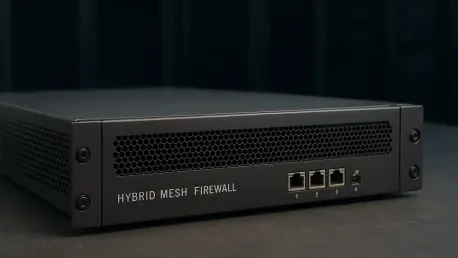

The modern firewall has evolved from a simple gatekeeper into a distributed policy enforcement solution that connects cloud security with operational technology. This fundamental shift is central to the latest analysis by Gartner, which recently placed Fortinet as a Leader in the 2026 Magic Quadrant for Hybrid Mesh Firewall. For the second consecutive year, the Sunnyvale-based cybersecurity giant achieved the highest position for its ability to execute, reflecting its dominance in a market that increasingly favors unified architectural strategies over isolated point products. As corporate infrastructures become more decentralized, the move toward a hybrid mesh model allows organizations to maintain consistent protection across physical data centers, cloud environments, and remote branches. This recognition highlights how Fortinet’s approach addresses the mounting complexity of modern digital footprints. By focusing on a single, cohesive fabric, the platform provides a scalable way to secure the entire attack surface while ensuring that performance remains high.
Architectural Evolution: Converging Security and Networking
Navigating Distributed Environments with Hybrid Mesh
Navigating the complexities of highly distributed corporate environments requires a departure from the traditional network perimeter. Today’s infrastructures are no longer confined to a single building; they span massive data centers, global campus networks, and diverse remote offices. Fortinet’s Hybrid Mesh Firewall solutions are specifically engineered to provide flexible security enforcement that adapts to these varied locations and their specific performance needs. By coordinating inspection through a mesh architecture, organizations can choose the most efficient enforcement point, whether it is a local FortiGate appliance for heavy on-premises traffic or a cloud-delivered service via FortiSASE for mobile users. This flexibility is critical for maintaining low latency and a high-quality user experience while ensuring strict compliance with local data sovereignty laws. This approach allows security teams to move away from rigid, one-size-fits-all models toward a more dynamic and responsive strategy that prioritizes business continuity and operational integrity.
Integrating Networking and Security for Operational Efficiency
A primary trend shaping the current cybersecurity landscape is the deliberate merging of networking and security into a single platform. Historically, these two domains were managed by separate departments using disjointed tools, which often created vendor sprawl and dangerous visibility gaps. Fortinet has addressed this by integrating enterprise-grade routing, secure SD-WAN, and next-generation firewall capabilities into its core operating system, FortiOS. This consolidation allows networking and security teams to work from a shared perspective, significantly improving collaboration and reducing the time required to identify and mitigate threats. By automating routine configuration tasks and centralizing management, a unified fabric enhances the overall resilience of the organization. This synergy ensures that the network is inherently secure, rather than treating security as an afterthought. This strategy not only reduces complexity but also allows organizations to scale their operations more efficiently as their digital requirements grow.
Strategic Innovations: Future-Proofing the Digital Enterprise
Incorporating AI-Driven Operations and Quantum Resilience
To meet the sophisticated challenges of the late 2020s, the focus has shifted toward integrating advanced automation and new cryptographic standards. The use of AI-driven analytics within the security fabric enables IT departments to manage complex policy sets with unprecedented precision. These tools provide deep insights into traffic patterns, helping administrators to proactively close vulnerabilities before they are exploited. Furthermore, as quantum computing begins to pose a theoretical threat to traditional encryption, the inclusion of Post-Quantum Cryptography (PQC) has become a priority. Fortinet is actively incorporating these advanced standards into its systems to ensure that long-term data assets remain protected against future cryptographic risks. This forward-looking commitment to cryptographic agility is essential for high-stakes industries like finance and government, where data integrity is paramount. By blending artificial intelligence with resilient encryption, the platform provides a robust foundation for the next decade of secure digital growth.
Comprehensive Visibility for IoT and Industrial Assets
The rapid expansion of the Internet of Things and the modernization of industrial systems have created a vast array of new vulnerabilities for critical infrastructure. Fortinet’s Hybrid Mesh Firewall addresses these risks by providing comprehensive passive and active device discovery, allowing organizations to identify connected assets with granular detail. By cataloging devices by manufacturer, model, and firmware version, the system creates the visibility necessary to implement effective zero-trust policies. This level of control is vital for protecting cyber-physical systems from unauthorized modifications or external attacks that could disrupt physical operations. For organizations managing utility grids or manufacturing plants, the ability to monitor and secure operational technology alongside traditional IT assets is a significant advantage. By offering a distributed policy and enforcement solution that bridges the gap between digital and physical security, Fortinet provides a clear path forward for securing the interconnected world of the future while maintaining operational uptime.
Proactive Steps for Modern Infrastructure Management
The transition to a hybrid mesh architecture proved to be a decisive factor for organizations aiming to secure a decentralized enterprise. IT leaders who moved away from fragmented point solutions in favor of a unified security fabric achieved significantly better visibility and faster response times during security incidents. The most effective next step for businesses involved a comprehensive transition to a single operating system environment, which reduced the friction between cloud and on-premises security management. Consolidating networking and security into a single logical entity allowed for a measurable reduction in operational costs and a streamlined approach to compliance auditing. Future considerations should focus on the ongoing integration of post-quantum ready standards and the expansion of automated threat intelligence across all network segments. Ultimately, those who prioritized architectural consistency over temporary point-product fixes were better positioned to navigate the evolving risk landscape. This shift successfully transformed security from a bottleneck into a resilient enabler of global business operations.