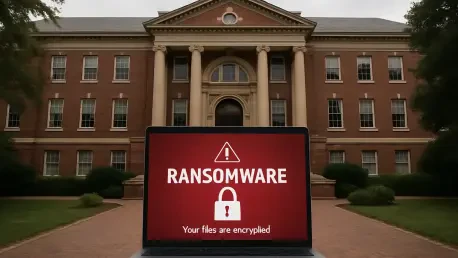

The digital perimeter of higher education has become a primary theater for cyber warfare, where the balance between academic collaboration and data security often tilts toward catastrophic failure during targeted strikes. This reality was made painfully clear when the University of Texas at Arlington faced a sophisticated intrusion orchestrated by the Qilin ransomware syndicate, a group known for its ruthless efficiency and technological prowess. By targeting decentralized administrative systems, the attackers managed to bypass traditional safeguards that many institutions still rely on for their daily operations. The incident, which initially surfaced in late 2024 and continues to influence security policies in 2026, serves as a critical case study in how modern threat actors exploit the specific structural weaknesses of large public universities. As these institutions manage vast amounts of personal data across multiple departments, they remain prime targets for groups seeking high-value information and significant extortion leverage.
Analyzing the Mechanics of the Intrusion
Exploiting Vulnerabilities: The Web Infrastructure Breach
The security breach at the University of Texas at Arlington centered on the exploitation of several campus web servers that hosted a widespread deployment of MachForms, a popular self-hosted platform. This software, built on PHP and MySQL, is frequently adopted by various university departments to streamline the creation and management of online web forms for essential administrative functions. Because the platform is relatively easy to deploy, it often proliferates across a large institution without the rigorous security oversight that a centralized database might receive. In this specific instance, the attackers identified that the university was using MachForms for a range of high-stakes activities, from student housing applications to scholarship reviews and travel reimbursements. By gaining access to this specific application layer, the Qilin actors were able to intercept the flow of data at its most vulnerable point, bypassing much of the perimeter security designed to protect the core network.
The compromise of the MachForms databases provided the adversaries with a significant cache of longitudinal student records and sensitive personally identifiable information. Because these forms were integrated into critical services like disability assistance and financial aid evaluations, the data exfiltrated was far more sensitive than simple contact information. The records contained detailed personal histories, financial backgrounds, and institutional interactions that had been collected over several years of academic cycles. For a threat actor, this type of data is invaluable because it allows for the construction of highly convincing phishing campaigns or the sale of identity profiles on the dark web. The university’s reliance on third-party scripts that were not consistently patched or audited across all departments created a silent vulnerability that persisted for months. This lack of a unified patch management strategy meant that while the main university systems were secure, the departmental fringe remained open.
Technical Maneuvers: PHP and SQL Injection Risks
Technical forensic analysis of the intrusion indicates that the Qilin syndicate utilized a multi-stage attack vector to infiltrate the university’s digital ecosystem. The initial entry was likely achieved through a combination of unpatched PHP file upload vulnerabilities and sophisticated SQL injection techniques that allowed the attackers to deposit web shells on the perimeter application gateway. Once these shells were active, the adversaries began a methodical process of reconnaissance, scanning the internal environment to identify the location of the underlying MySQL repositories. By exploiting weaknesses in how the web application communicated with its database, the actors managed to extract plaintext credentials directly from local configuration files. This maneuver was particularly effective because it allowed the attackers to move from a standard user-level access point to a position where they had administrative control over the data management systems, effectively rendering traditional firewalls useless.
Following the establishment of their initial foothold, the threat actors maintained a significant dwell time within the university network, allowing them to operate undetected for an extended period. During this phase, the syndicate focused on lateral movement, attempting to bridge the gap between the compromised web hosts and more sensitive campus subnets. By navigating the internal architecture, they sought to identify high-value targets, such as faculty research servers or administrative payroll databases, that could be used to increase their extortion leverage. The attackers were careful to mimic legitimate administrative traffic, which delayed the triggering of automated egress alarms and intrusion detection systems. This level of stealth is a hallmark of the Qilin group, which prioritizes thorough data exfiltration before initiating the final encryption phase of their attack. The ability to move silently through a decentralized network highlights the urgent need for better internal segmentation and monitoring.
Understanding the Threat Actor Profile
Syndicate Sophistication: Rust and Golang Malware
The Qilin syndicate, which evolved from its earlier iteration known as Agenda, represents a new tier of Ransomware-as-a-Service operations that prioritize technical sophistication. One of the group’s most defining characteristics is the use of modern programming languages like Rust and Golang to develop their malicious payloads. These languages allow for the creation of high-performance, cross-platform code that is inherently more difficult for legacy signature-based antivirus tools to detect and analyze. By leveraging the unique memory management features of Rust, the group can build stable and fast encryption routines that minimize the chance of system crashes during the attack. Furthermore, their malware is programmed with aggressive process-killing instructions designed to specifically target and terminate security agents, backup services, and volume shadow copies. This ensures that the encryption process remains uninterrupted and that the victim’s ability to recover from local backups is almost entirely eliminated.
The group operates through a double-extortion business model that has become the standard for high-level cybercrime organizations seeking to maximize their financial returns. In this model, the encryption of the victim’s files is secondary to the theft of sensitive data, which is held hostage to ensure payment. Qilin has gained international notoriety for its willingness to target critical infrastructure and public sector entities, as seen in its disruptive actions against the National Health Service in London. Their attack on Synnovis, which crippled essential pathology services, demonstrated a disregard for the humanitarian consequences of their operations. By focusing on institutions like the University of Texas at Arlington, the syndicate exploits the high reputational cost of a data breach in the education sector. They understand that universities are under immense pressure to protect student privacy, making them more likely to engage in negotiations to prevent the public release of data.
Double Extortion: Pressure Tactics and Data Leaks
By publishing proof-of-compromise samples on underground telemetry feeds and Tor-based leak blogs, the Qilin syndicate effectively weaponized the stolen data to exert maximum pressure. This public phase of the extortion campaign is designed to create immediate legal and financial crises for university leadership, forcing them to weigh the cost of the ransom against the potential fallout of a massive data breach. The leaked tranches often contain highly sensitive financial records, internal operational documents, and personal details of thousands of students and faculty members. Once this information is released into the public domain, it cannot be retracted, leading to long-term reputational damage and a loss of trust within the campus community. The syndicate uses these leaks as a marketing tool to show future victims that they are willing to follow through on their threats. This creates a cycle of fear that the group exploits to maintain its position as a dominant force in the global ransomware landscape.
One of the most insidious long-term risks associated with the UTA breach is the potential for the exfiltrated data to fuel a secondary wave of cyberattacks targeting the same victims. Stolen academic credentials and personal identifiers frequently circulate on dark web forums, where they are purchased by other criminal groups for use in automated credential-stuffing campaigns. Because many individuals reuse passwords across multiple platforms, a single breach at a university can lead to unauthorized access to personal bank accounts, medical portals, and corporate enterprise systems. This creates a ripple effect that extends far beyond the initial incident, placing a permanent target on the backs of affected students and faculty. Furthermore, the detailed information found in administrative forms can be used to craft highly personalized social engineering attacks. These targeted attempts at fraud are much more difficult to detect than generic phishing, as they utilize specific institutional knowledge to deceive the victim.
Addressing Systemic Risks and Remediation
Shadow IT: The Vulnerability of Decentralization
The security challenges faced by the University of Texas at Arlington are indicative of a systemic issue within the architecture of large, decentralized educational institutions. In many academic environments, individual departments or specialized research offices often host their own standalone web tools and applications without direct oversight from a centralized IT department. This phenomenon, commonly referred to as shadow IT, leads to the accumulation of sensitive data on servers that may not be subject to the same rigorous patching and monitoring protocols as the university’s core infrastructure. When departmental autonomy is prioritized over unified security governance, it creates a fragmented and inconsistent attack surface. Sophisticated threat actors like the Qilin syndicate are experts at identifying these weak links in the chain. By finding one unmonitored server running outdated software, they can gain the foothold necessary to launch a much larger campaign that threatens the entire digital ecosystem.
The UTA incident closely mirrors other high-profile breaches at major institutions, such as York University, where forgotten departmental webforms exposed thousands of records over several years. These cases highlight a critical consensus among cybersecurity professionals: the need for centralized visibility and governance is no longer optional for public sector entities. As a public institution within the University of Texas System, UTA is also navigating a complex web of regulatory compliance and mandatory reporting requirements. Under the Texas Business and Commerce Code, the university is legally bound to disclose any security breaches to affected individuals and the state attorney general without unreasonable delay. These statutory mandates are designed to ensure transparency, but they also highlight the massive administrative burden that a successful ransomware attack places on an organization. The cost of legal counsel, forensic investigators, and public relations far exceeds the initial technical fix.
Defensive Directives: Hardening the Institutional Perimeter
In response to the Qilin breach, cybersecurity specialists have emphasized the immediate need for a multi-layered defensive strategy to prevent future incursions. The first critical directive involves the absolute isolation of compromised infrastructure by severing external internet access to all MachForms application servers and restricting database administration to internal, secured management subnets. This stop-gap measure prevents the attackers from continuing their exfiltration activities or sending new commands to existing web shells. Following isolation, a comprehensive credential revocation process must be initiated across the entire university network. This includes the rotation of all application secrets, database passwords, and service account tokens that were connected to the compromised repositories. By resetting the administrative environment, the university can ensure that any harvested credentials held by the syndicate are rendered useless, effectively locking the doors that were previously left open.
Beyond immediate remediation, the university must implement advanced monitoring techniques, such as egress telemetry auditing and behavioral detection systems. Egress auditing involves a deep-dive analysis of firewall session logs and NetFlow records to identify abnormal outbound data streams directed toward known malicious IP addresses or unconventional cloud storage services. This allows security teams to detect the early signs of data exfiltration before a large-scale breach occurs. Simultaneously, the deployment of Endpoint Detection and Response tools can help identify the execution of suspicious Rust or Golang binaries associated with the Qilin toolkit. These systems use behavioral heuristics to block unauthorized PowerShell commands and terminate malicious processes in real-time, even if a specific signature for the malware does not yet exist. By shifting from a reactive to a proactive security posture, institutions can create a more resilient environment that is capable of withstanding the next generation of threats.
The breach at the University of Texas at Arlington underscored the lethal efficiency of the Qilin ransomware syndicate when targeting the structural gaps of decentralized higher education networks. While the immediate crisis was managed through technical isolation and legal compliance, the incident revealed that traditional perimeter security was no longer sufficient against adversaries using modern programming languages and double-extortion tactics. Moving forward, the most effective defense for universities involves the aggressive consolidation of departmental shadow IT into a unified, monitored governance framework that prioritizes application-layer security. Institutions must also invest in continuous threat hunting and automated behavioral detection to close the dwell-time window that attackers exploit. Ultimately, the recovery process demonstrated that the cost of proactive security is significantly lower than the legal and reputational fallout of a successful ransomware strike.