
The rapid adoption of the Model Context Protocol has fundamentally transformed how large language models interact with local and remote data sources, yet this seamless integration introduces a significant surface area for potential exploitation that many organizations have yet to fully address. When an AI agent is granted the ability to query a database or read local files via an MCP server, it essentially acts as a bridge between a non-deterministic generative engine and a deterministic data repository. This connection is vital for reducing hallucinations and providing up-to-date information, but it also bypasses traditional user-interface-based security controls that were originally designed for human interaction. Consequently, the security of the entire ecosystem now rests on the robustness of a relatively new and evolving standard that handles sensitive credentials and data flows. Without a centralized method for auditing these specific interactions, security teams find themselves struggling to maintain visibility over what the AI is actually accessing and why.
Structural Vulnerabilities of Connected Systems
Mechanics of Permission Delegation
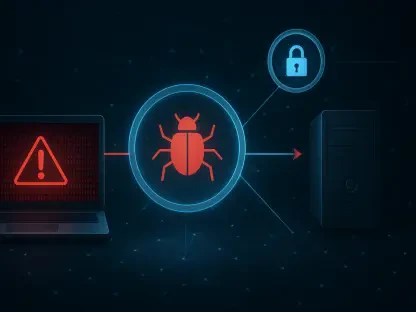
The core issue with many current implementations involves how permissions are handled when a model requests data from an external resource through a standardized interface. Typically, the MCP server operates with a specific set of credentials that allow it to read from a filesystem or interface with a cloud service on behalf of the user. However, if the model is compromised through an indirect prompt injection—where a malicious document or email contains hidden instructions—the model may inadvertently use its delegated authority to perform unauthorized actions. This scenario effectively turns the AI into a powerful tool for a remote attacker who can now traverse the internal network through the model’s established context channels. Because the MCP server often trusts the requests coming from the host application, it lacks the contextual awareness to distinguish between a legitimate user query and a manipulated instruction that aims to exfiltrate proprietary source code or financial data.
Risks of Data Exposure in Shared Environments
In complex enterprise environments where multiple users share access to a centralized AI platform, the risk of cross-tenant data leakage via MCP servers becomes a primary concern for IT departments. When a server is configured to provide context to various users, there is a possibility that sensitive information retrieved for one individual might linger in the model’s memory or the server’s local cache, potentially exposing it to another user during a subsequent session. This issue is particularly acute when servers do not strictly enforce identity-aware access controls for every single request made by the AI agent. Without a robust mechanism to verify that the person prompting the model has the actual rights to see the data being pulled by the server, the system risks violating privacy regulations and internal data governance policies. The complexity of mapping individual user identities to automated context retrieval calls remains a significant hurdle for maintaining a truly secure multi-user AI environment.
Mitigation Strategies and Implementation
Hardening the Connection Layer
To effectively secure these gateways, engineers are turning toward containerization and isolated execution environments to ensure that each MCP server instance runs in a strictly controlled sandbox. By limiting the server’s reach to only the specific directories or network endpoints required for its immediate task, the potential damage from a successful compromise can be greatly contained. This approach involves defining explicit allow-lists for file paths and API calls, ensuring that even if the AI is tricked into requesting sensitive system files, the underlying server simply lacks the physical access to fulfill that request. Additionally, implementing short-lived, session-based tokens instead of long-lived API keys adds an extra layer of protection, as any stolen credentials would quickly become useless to an adversary. This shift toward a zero-trust architecture for AI connectivity ensures that every single interaction is verified and authorized, regardless of whether it originated from a trusted user or a sophisticated agent.
Evolution Toward Resilient Context Architectures
Ultimately, the realization that MCP servers were a potential weak link drove significant improvements in the way organizations deployed their AI infrastructure. Decision-makers began to treat these connection points with the same level of scrutiny as they would any other critical middleware, leading to the widespread adoption of cryptographic verification for every context exchange. The transition to more secure architectures allowed for the safe expansion of AI capabilities, ensuring that automated agents could perform complex tasks without exposing the underlying systems to unnecessary risks. Security professionals successfully integrated specialized auditing tools that tracked every piece of data retrieved by the model, providing a clear trail of accountability for all automated actions. This shift in strategy ensured that the power of interconnected AI was harnessed responsibly, paving the way for more robust and trustworthy systems that balanced performance with an uncompromising commitment to information security.