
The rapid decentralization of clinical and professional environments has turned the standard IT service desk into a high-stakes gatekeeper for organizational integrity. No longer can administrators rely on the physical presence of an employee or the familiar sound of a colleague’s voice to grant access to sensitive systems. Mobile workforce identity verification has emerged not just as a tool, but as a fundamental shift in how trust is established within fluid ecosystems. This review examines how these systems replace human vulnerability with cryptographic certainty, ensuring that mobility does not become a synonym for insecurity. The purpose of this analysis is to provide a thorough understanding of the technology, its current capabilities, and its potential development in a landscape where traditional perimeters no longer exist.
The Evolution of Professional Identity in Fluid Workspaces
Historically, identity was tethered to a desk, a physical badge, or a local manager’s recognition. As professionals transitioned into remote and field-based roles, the perimeter shifted to the individual. Identity verification technology has undergone a transition from static, office-based protocols to dynamic systems designed specifically for mobile professionals. This change acknowledges that a user’s location is no longer a reliable indicator of their legitimacy. Consequently, organizations have moved away from trust-by-default models toward zero-trust architectures where every request is treated as a potential breach.
The core principle of this evolution is “forced user verification.” This strategy replaces subjective human judgment with objective cryptographic proof. By mandating that every service desk interaction begins with a technical handshake, organizations remove the possibility of an agent being swayed by social engineering tactics. This shift is particularly relevant in the broader technological landscape, specifically regarding the protection of service desks against sophisticated actors who target the psychological vulnerabilities of IT staff. By automating the verification process, the system ensures that the identity of the professional is as secure in a hospital ward as it is in a corporate headquarters.
Core Technical Pillars of Modern Verification Systems
Diversified Multi-Factor Authentication Integration
A key strength of modern systems is their ability to bridge existing security investments with new verification needs. By integrating factors from established providers such as Duo, Okta, and PingID, organizations avoid the friction of starting from scratch. These platforms support an expansive range of over 15 different multi-factor authentication factors. This diversity is crucial for professionals who may be in sterile clinical environments without smartphones or field workers in low-connectivity areas who require hardware tokens or SMS-based codes. The system acts as a central hub, ensuring a seamless transition for the workforce while maintaining high security standards.
Automated Security Actions and Cryptographic Proof
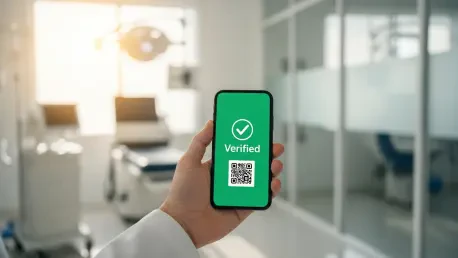
True efficiency is found in the automation of high-risk tasks like account unlocking and password resets. Once a “hard” factor, such as a push notification or a hardware key, is validated, the system can automatically execute these actions. This removes the service desk agent from the loop, eliminating the possibility of a temporary password being intercepted or handed over to an unauthorized caller. To maintain a tight security chain, the platform forces a password change at the next sign-in. This ensures that the temporary reset remains a one-time event, effectively closing the window of opportunity for an attacker to gain a permanent foothold.
Centralized Audit Trails and Governance Frameworks
The technical oversight provided by modern Event APIs ensures that every interaction is logged and visible to security teams. This data provides clear audit trails that are essential for meeting strict data protection regulations. Integration with Security Information and Event Management (SIEM) systems and Security Operations Center (SOC) workflows allows for the real-time detection of anomalies. If a specific account shows multiple failed verification attempts across different geographical sites, the system can trigger an automated lockout. This transformation turns the service desk from a potential vulnerability into a transparent and measurable component of the overall security architecture.
Emerging Threats and the Influence of Artificial Intelligence
The threat landscape is no longer dominated by amateurish attempts but by AI-powered precision. Threat actors use artificial intelligence to refine their reconnaissance and execute “smarter” social engineering. This evolution is characterized by the production of polished, context-aware communications that mirror internal jargon perfectly. AI tools can now produce messages that are indistinguishable from professional correspondence, rendering traditional warning signs like poor spelling or awkward phrasing nearly obsolete. The sophistication of these attacks means that even the most well-trained human agent is at a significant disadvantage when relying solely on intuition.
Voice cloning, often referred to as vishing, represents a particularly alarming frontier in this landscape. By using short samples of a legitimate employee’s voice harvested from social media or public speeches, attackers can clone voices to perform deceptive calls. These clones are frequently effective enough to deceive an agent, especially when the attacker provides a plausible excuse for minor vocal inconsistencies. This shift in industry behavior has forced a move away from human-centric verification toward automated technical solutions. By requiring an objective cryptographic response, the system bypasses the auditory deception entirely and protects the organization from the latest advancements in artificial intelligence.
Sector-Specific Deployment and Real-World Applications
In the National Health Service, the challenge of a mobile workforce is magnified by the constant movement of locums and temporary contractors. These professionals often span multiple trusts and departments, creating a fragmented identity footprint. Standardizing verification across these silos is critical for operational continuity. A centralized platform allows a doctor moving from a clinical ward in one city to a surgical unit in another to remain verified without the need for redundant administrative hurdles. This de-siloed approach to identity management ensures that security does not become an obstacle to delivering patient care.
Real-world applications demonstrate how “joiners, movers, and leavers” cycles are managed through these centralized platforms. When a temporary worker joins a team with little notice, the system can leverage their existing, verified MFA factors to grant immediate access. Conversely, when a contractor leaves, the centralized nature of the system allows for an instant revocation of access across all departmental silos. This level of control is essential for maintaining security in high-stakes environments where staff frequently move between wards and geographical sites.
Critical Vulnerabilities and Adoption Obstacles
The persistence of legacy methods remains a significant hurdle for many organizations. Knowledge-Based Authentication, which relies on static secrets like an employee ID or personal details, is fundamentally compromised. Much of this data is readily available via social media or historical data breaches on the dark web. Similarly, email-based verification is often circular and insecure; if a user is locked out, a code sent to that account is useless, while codes sent to personal accounts break the professional chain of custody. These flaws highlight the urgent need for transition toward more robust MFA frameworks.
Technical hurdles also exist in managing fragmented digital records for a mobile workforce that lacks a static home base. Information availability on the dark web continues to fuel sophisticated impersonation attempts, making it difficult for legacy systems to distinguish between a legitimate user and an attacker. Ongoing development efforts focus on mitigating these risks by ensuring that the verification process is tied to a device or a physical token rather than a piece of information. Addressing these vulnerabilities is the primary challenge for organizations currently relying on outdated security protocols.
The Future Landscape of Mobile Workforce Security
Looking ahead, the movement toward a completely passwordless workforce is gaining momentum. Future developments in AI-driven defense mechanisms will play a larger role in detecting subtle patterns of fraudulent behavior before a verification request is even initiated. Biometric synchronization across different organizational trusts could allow a professional to carry their identity seamlessly from one employer to another without the need for re-enrollment. This evolution will further reduce administrative friction while hardening the institutional core against unauthorized access.
The long-term impact of objective verification will be a significant reduction in the administrative burden on IT departments. As systems become more autonomous, the reliance on human intervention for routine identity tasks will diminish. This will allow security teams to focus on high-level strategy rather than firefighting manual resets. The synchronization of identities across platforms will create a more unified and secure experience for the professional, ensuring that the technology supports rather than hinders the fluidity of the modern workspace.
Summary of Findings and Final Evaluation
The transition from “informal” verification to robust, multi-factor authentication frameworks represents a necessary evolution in cybersecurity. This review determined that the modernization of the service desk successfully addressed the “weak link” that social engineering previously targeted. The implementation of forced verification protocols proved that objective technical proof could outweigh the most convincing deceptive tactics. By removing human intuition from the equation, organizations protected their sensitive data and maintained operational continuity in high-stakes environments. The technology demonstrated a clear ability to secure a mobile workforce without compromising the speed of access.
The analysis of these advancements suggested that a secure service desk must be built on the pillars of consistency and integration. The shift toward automated frameworks reduced the overall friction for legitimate users while creating a formidable barrier against impersonation. Ultimately, the adoption of these modern identity verification systems provided the stability needed for a workforce that was increasingly on the move. These changes ensured that the integrity of professional identities remained intact regardless of the physical location of the employee. This proactive approach safeguarded organizational assets and supported the long-term resilience of the institutional infrastructure.