
A legacy HVAC sensor from five years ago remains plugged into a server room wall, unnoticed by current IT staff yet still broadcasting on the corporate network. This device represents more than just a piece of outdated hardware; it is a permanent bridge over the perimeter defenses that companies spend millions to fortify. In many modern office buildings, these abandoned endpoints form a “shadow infrastructure” that operates beyond the visibility of security operations centers. Because they continue to function and fulfill their primary purpose—monitoring temperature or humidity—they are often ignored during routine hardware refreshes. This neglect creates a persistent vulnerability that can be exploited by threat actors who specialize in low-and-slow infiltration tactics. The danger lies not just in the device itself, but in its connection to the wider digital environment, where it can serve as a jumping-off point for more destructive activities within the core network.
The Hidden Proliferation: Growth of Shadow Infrastructure
The current landscape is defined by an unprecedented expansion of connected hardware, with global device counts projected to climb from approximately 21 billion in 2025 to nearly 40 billion by 2030. This exponential growth is not limited to consumer gadgets but is deeply embedded in the core operations of critical sectors like manufacturing, healthcare, and logistics. In industrial environments, sensors and controllers are deployed to optimize supply chains or monitor patient health, often without a corresponding plan for their eventual decommissioning. As organizations rush to embrace the benefits of digital transformation, the sheer volume of these devices quickly outpaces the capacity of manual inventory systems to track them. This leads to a situation where the network grows increasingly complex and opaque, filled with nodes that have been forgotten by the very teams responsible for securing them. The result is a sprawling, unmanaged attack surface that offers attackers entry.
A fundamental driver behind the risk of abandoned endpoints is the prevailing “set and forget” mentality that dominates many business operations today. Once a device is installed and begins performing its intended task, there is often very little financial or operational incentive for a company to replace it, even if the manufacturer has discontinued support. Unlike smartphones or laptops, which are refreshed every few years due to performance degradation or user demand, industrial and commercial IoT hardware is built to last for a decade or more. This physical durability stands in stark contrast to the short lifecycle of software security patches, which may stop being issued just a few years after a product’s launch. Consequently, many businesses are running critical operations on hardware that is physically robust but digitally obsolete. This disconnect creates a massive window of opportunity for cybercriminals who can exploit vulnerabilities that have been publicly known for years on end.
Operational Blind Spots: Organizational Silos and Ownership
The invisibility of IoT endpoints is frequently a byproduct of organizational fragmentation where different departments operate with independent budgets and goals. Facilities management teams might install smart building controllers or security cameras through third-party contractors, while operations departments deploy industrial sensors to track machinery performance. These installations often happen outside the direct supervision of the central IT department, meaning the devices are never integrated into the primary network security architecture. Because they are categorized as building equipment rather than IT assets, they lack the standardized security protocols applied to servers and workstations. This ownership gap ensures that when security audits occur, these devices are systematically overlooked, as no single department feels responsible for their digital upkeep. Without a unified governance strategy, these “shadow” devices will continue to exist in a dangerous technical vacuum.
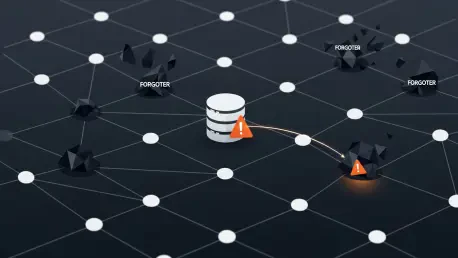
Over time, the institutional memory regarding specific hardware installations begins to fade as companies undergo mergers, acquisitions, or significant staff turnover. When the original project manager who oversaw a sensor deployment leaves the company, the knowledge of where those devices are located and what they do often disappears with them. In large, complex environments, this leads to the accumulation of “ghost assets” that remain powered on and connected but are no longer mapped to any active business process or inventory list. These forgotten units continue to communicate over the network, drawing power and occupying IP addresses, yet they lack a designated caretaker to monitor their health or update their credentials. As office layouts are remodeled and network configurations evolve, these devices may end up hidden behind walls or in ceiling voids, physically inaccessible but still digitally present. This loss of oversight transforms once-useful tools into dangerous risks.
Technical Weaknesses: Vulnerabilities and Lateral Movement
From a technical perspective, abandoned IoT devices are particularly dangerous because they were rarely designed with the robust security features found in modern enterprise hardware. Many of these units operate on limited processing power and memory, making it impossible to install endpoint detection and response software or complex encryption protocols. They often rely on ancient versions of Linux or proprietary operating systems that contain well-documented vulnerabilities that can be exploited with simple, automated tools. Furthermore, many of these devices still utilize factory-default passwords that were never changed during the initial installation phase, providing a direct path for attackers to gain administrative access. Because these endpoints are often excluded from the regular scanning and patching cycles that protect the rest of the network, they remain vulnerable to exploits. This makes them the path of least resistance for any threat actor looking to establish a foothold.
The primary risk associated with a compromised IoT device is not necessarily the loss of the device itself, but its potential to serve as a gateway for lateral movement throughout the network. Once an attacker gains control of a forgotten environmental sensor or a smart printer, they can use that position to scan the internal network for more high-value targets. Since many legacy IoT devices lack the ability to authenticate themselves properly to the network, they are often granted overly broad access permissions that allow them to communicate with sensitive servers or databases. An attacker can sit undetected on a low-power device for months, quietly capturing credentials or mapping out the internal architecture of the organization. This capability to pivot from an insignificant, abandoned endpoint to a core domain controller is what makes shadow infrastructure so lethal. By bypassing traditional perimeter defenses, threat actors can operate from within the trusted zone.
Strategic Resilience: Containment and Lifecycle Management
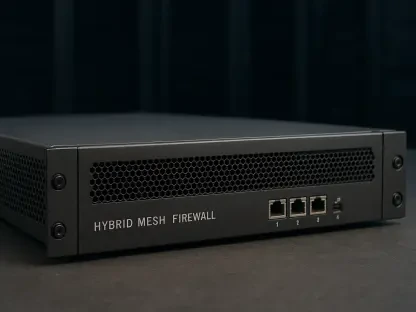
To mitigate the risks posed by these abandoned endpoints, security professionals are increasingly turning to strategic containment through aggressive network segmentation and automated discovery. Since the physical removal of every legacy device is often too expensive or logistically complex, the goal is to isolate these assets so that a compromise cannot spread to the rest of the infrastructure. By placing IoT devices on their own dedicated subnets with strictly controlled ingress and egress rules, organizations can ensure that a breach of a single sensor remains localized. This technical strategy is supported by the deployment of specialized discovery tools that use passive traffic analysis to identify every communicating device on the network, regardless of whether it is officially inventoried. These tools provide the visibility needed to begin the hard work of re-assigning ownership and decommissioning hardware that no longer serves any specific business purpose today.
Addressing the inherent dangers of abandoned IoT endpoints required a fundamental shift in how organizations managed the entire lifecycle of their physical hardware. It was no longer sufficient to treat small sensors as disposable electronics; instead, they had to be viewed as critical components of the broader infrastructure that demanded long-term planning and accountability. Successful companies implemented rigorous asset tracking systems that linked every hardware purchase to a specific department and a decommissioning schedule. They also integrated facility management systems with central security platforms to ensure that any new device added to the building was automatically flagged for IT review. By establishing clear policies for hardware retirement and maintaining a continuous discovery process, organizations were able to close the open doors that had been left by their legacy equipment. This proactive approach secured the environment against the risks of a connected world.