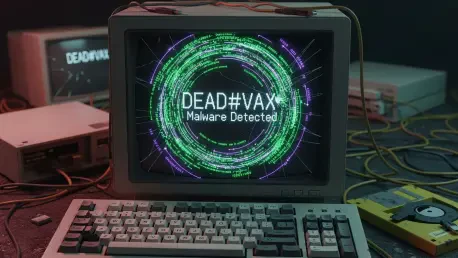

The seemingly innocuous act of opening what appears to be a routine business document has quietly become a critical vulnerability, a digital front door that threat actors are unlocking using the very tools designed to maintain system integrity. A sophisticated malware campaign, dubbed DEAD#VAX, exemplifies this dangerous paradigm by turning trusted system functions into weapons. This operation bypasses security alarms not by breaking down the door, but by using a key it found under the mat, leveraging native Windows features to carry out its attack and making it a uniquely challenging threat to detect and neutralize.
When Your System’s Own Tools Turn Against It
The core philosophy behind the DEAD#VAX campaign is the principle of “living off the land,” a technique where attackers utilize pre-installed, legitimate system tools to execute malicious operations. Instead of introducing foreign executables that could trigger immediate alerts, the malware co-opts trusted scripting engines like PowerShell and Windows Script Host. This approach allows it to masquerade its activities as benign administrative tasks, effectively blending into the background noise of a typical operating system.
By weaponizing these native components, the threat actors ensure their initial actions raise minimal suspicion. Security software is often configured to trust processes signed by Microsoft, and DEAD#VAX exploits this trust implicitly. The attack’s initial stages—from mounting a virtual disk to running a script—are all legitimate system functions. This manipulation turns a computer’s own toolset into a liability, creating a blind spot that traditional antivirus solutions struggle to monitor effectively.
The New Normal Why Sophisticated Evasion Matters
The era of simple, disruptive viruses has decisively given way to a landscape dominated by disciplined, multi-stage attacks designed to mimic legitimate activity for as long as possible. DEAD#VAX is a prime example of this evolution, serving as a stealthy delivery vehicle for the powerful AsyncRAT trojan. The ultimate goal is not just infection but complete and persistent control, enabling attackers to steal data, capture keystrokes, and command a system remotely without the owner’s knowledge.
For organizations and individuals alike, understanding these advanced infection methods is no longer optional; it is the first and most critical step in building a resilient defense. The rise of fileless, memory-resident threats means that security strategies must evolve beyond simply scanning files on a hard drive. The new front line in cybersecurity is behavioral analysis and memory monitoring, where the focus is on what a process does, not just what it is.
A Step by Step Breakdown of DEAD#VAX’s Evasion Playbook
The malware’s strength lies in a meticulously crafted infection chain, where each step is engineered to abuse trust and avoid scrutiny. The attack begins not with a typical malicious executable but with a Virtual Hard Disk (VHD) file, often disguised as a purchase order or invoice. This file is hosted on the decentralized IPFS network, which makes it incredibly resilient to takedown efforts. When a user double-clicks the VHD, Windows mounts it as a new drive—a native function that can sidestep initial security scans that focus on email attachments.
Once the virtual drive is mounted, a Windows Script File (WSF) tricks the user into initiating the next stage. This script launches a heavily obfuscated batch file that, in turn, calls a self-parsing PowerShell loader. By relying on the system’s own scripting engines, the malware avoids introducing obviously malicious files early in the infection process. This multi-layered script execution is a deliberate tactic to confuse and defeat automated analysis tools that may only examine one component in isolation.
The core of DEAD#VAX’s stealth lies in its final delivery mechanism. The PowerShell loader never writes the final AsyncRAT payload to the disk. Instead, it injects encrypted shellcode directly into the memory of a trusted, Microsoft-signed process like RuntimeBroker.exe or OneDrive.exe. This fileless technique effectively hides its malicious operations within a legitimate program. To further evade detection, the malware performs anti-sandboxing checks and deliberately throttles its own execution with “sleep” intervals, reducing CPU usage and avoiding the suspicious patterns that behavioral detection systems are designed to flag.
Insights from the Front Lines of Malware Analysis
Security researchers tracking the DEAD#VAX campaign consistently highlight that the attack pipeline is intentionally fragmented. Each individual component—the VHD container, the WSF script, the batch file, and the PowerShell loader—is designed to appear benign when analyzed out of context. This disciplined tradecraft is part of an overarching trend where attackers construct complex execution chains specifically to defeat security tools that only examine one piece of the puzzle at a time.
The campaign’s fileless execution model presents a significant challenge for digital forensics. Traditional incident response often relies on finding malicious artifacts left on a hard drive, such as executable files or logs. However, because DEAD#VAX operates almost entirely within system memory, it leaves a minimal forensic footprint. This makes it exceptionally difficult to detect an ongoing intrusion or to piece together the full scope of a breach after the fact.
Strategies for Defending Against Memory Resident Threats
Combating a threat that never touches the disk required a fundamental shift from traditional prevention to modern, behavior-focused detection and response. A primary defensive measure is to restrict and monitor scripting engines. Implementing strict PowerShell execution policies and enabling comprehensive script block logging creates a detailed audit trail of all script-based activity, making it far easier to spot the initial stages of a fileless attack before it can escalate.
Furthermore, organizations should consider policies to control the mounting of disk image files. Configuring systems to block or alert on the mounting of VHD and other image files downloaded from the internet or received via email can neutralize this entire attack vector, as most end-users do not require this functionality for their daily tasks. Endpoint Detection and Response (EDR) solutions are also crucial, as they can monitor process memory and parent-child process relationships to identify anomalies, such as a trusted system process suddenly initiating a suspicious network connection—a key indicator of in-memory code injection. The DEAD#VAX campaign ultimately underscored the critical importance of a defense-in-depth strategy that moved beyond file-based detection and embraced real-time behavioral monitoring.