
Rupert Marais has spent years in the trenches of Windows defense and incident response, with a focus on endpoint hardening, device security, and network controls. In this conversation, he unpacks how an architectural blind spot in RPC can let a low-privileged process ride a legitimate connection straight into SYSTEM, why SeImpersonatePrivilege is both a guardrail and a trap, and what it means that the issue was labeled “moderate” without a CVE. We cover lab validation on Windows Server 2022 and 2025, practical detection using Event Tracing for Windows, and a measured path to mitigation that won’t break legacy apps. Along the way, he frames five exploit paths by preconditions and blast radius, shares triage playbooks for suspected endpoint hijacking, and closes with a pragmatic forecast for the next 12–18 months of Windows privilege escalation.
In simple terms, how does abusing unavailable RPC services enable a low-privileged process to impersonate higher-privileged clients; can you walk us through a concrete example from initial foothold to obtaining a SYSTEM token, including pitfalls that commonly break the chain?
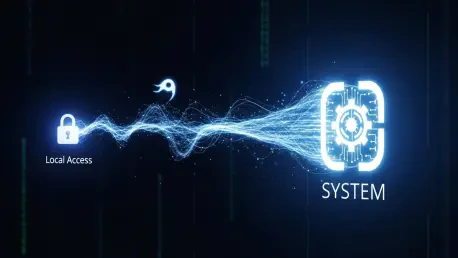
Think of RPC endpoints like phone numbers in a switchboard: if the real owner isn’t “on the line,” Windows will still let someone else answer that number. If a legitimate service is stopped, a low-privileged process can register the same RPC endpoint, wait for a privileged client to dial in, and—if it holds SeImpersonatePrivilege—impersonate the caller to mint a SYSTEM token. A concrete path looks like this: initial foothold under Network Service, enumerate known endpoints used by a stopped service, bind a malicious RPC server to that endpoint, wait for a SYSTEM-level client to connect, then call Impersonate and duplicate the token. Pitfalls are everywhere: if the real service is running, you never get the call; if the client doesn’t present an impersonation-capable security context, your call fails; and if your process lacks SeImpersonatePrivilege, the chain snaps. I’ve also seen timing kill the exploit when service managers auto-restart the legitimate service before your fake server is listening. Finally, noisy endpoint registration and failed RPC calls will light up ETW if defenders are watching, so stealth and timing matter as much as technique.
When an attacker registers an RPC endpoint that a legitimate service would normally use, what specific conditions must be true for the impersonation to succeed; how would you validate in a lab that those conditions hold on Windows Server 2022 or 2025?
Three things need to line up. First, the legitimate service’s RPC endpoint must be unavailable—stopped or not yet started—so your process can register the same endpoint. Second, a higher-privileged client must attempt a call using that endpoint, and the call must carry a security context that allows impersonation. Third, your hosting process must have SeImpersonatePrivilege so the token handoff isn’t blocked. In a Server 2022 or 2025 lab, I’d create a clean VM, stop the target service, and register a test RPC server on the expected endpoint, then trigger the legitimate client behavior and capture whether the connection hits my fake server. I’d verify token operations from the low-privileged context and confirm escalation by spawning a child process with the duplicated SYSTEM token. Finally, I’d record everything with ETW so I can correlate “server unavailable” exceptions and endpoint registration timing to prove the preconditions are real.
SeImpersonatePrivilege is often cited as the gating factor; which built-in accounts or common service configurations typically hold it by default, and what real-world misconfigurations most frequently expand its reach to custom or third-party processes?
Windows assigns SeImpersonatePrivilege to accounts that genuinely need to broker user work on the system, and that list often includes built-in service identities like Network Service and Local Service. That’s why the research calls out those two as viable starting points for escalation. In the real world, the danger grows when teams grant that privilege to custom or third-party services “just to make it work,” and never circle back to tighten it down. I routinely see security software, deployment agents, or legacy app wrappers running under broad service accounts that inherit SeImpersonatePrivilege through group policy. Another common misstep is cloning service templates from a powerful baseline and forgetting to strip privileges. Each of those changes quietly widens the blast radius from one or two services to dozens of processes.
Five distinct exploit paths have been described; how would you categorize them by preconditions, likelihood, and blast radius, and which one do you see as most practical for an intruder operating under Network Service or Local Service?
I’d group them by how much the environment has to “help” the attacker. High-likelihood paths are those where widely deployed services expose well-known RPC endpoints and are periodically stopped—maintenance windows, crashes, or delayed starts—so registering a fake server is trivial. Medium-likelihood paths hinge on specific service-client choreography, like a management agent polling during boot; the preconditions are narrower but still show up weekly in enterprise fleets. Low-likelihood paths require careful timing, niche endpoints, or clients that rarely connect; the blast radius can still be big if the client runs as SYSTEM. From a Network Service or Local Service foothold, the most practical play is the high-likelihood path: hijack a common endpoint when the legitimate service is down, wait for a SYSTEM call, impersonate, and convert to a SYSTEM token. Because there are five paths, defenders can’t fixate on a single service—they need to harden the privilege boundary and watch for endpoint lookalikes across the board.
Microsoft labeled the risk as moderate and issued no CVE; in your experience, how should defenders interpret that classification, and what metrics or test cases would you use to independently assess severity and prioritize mitigations?
“Moderate” here reflects that an attacker already needs local code execution and, in most cases, SeImpersonatePrivilege. It doesn’t mean the impact is mild; a clean SYSTEM token is game over on a host. I’d score severity by reproducibility across Server 2022 and 2025 in your environment, time-to-SYSTEM from a Network Service foothold, and the percentage of endpoints where key services are routinely offline. Use test cases that mirror reality: scheduled service restarts, crash/auto-recover cycles, and delayed-start conditions during boot. Track success rates over several runs and correlate with ETW indicators for unavailable RPC servers. If you see consistent escalation in under a minute during maintenance windows, that’s a high operational risk even if the upstream label is “moderate.”
If a blue team suspects malicious RPC endpoint registration, what step-by-step triage process would you follow—events to pull, commands to run, handles to inspect, and artifacts to preserve—to confirm or refute an active impersonation attempt?
Start with timeboxing: identify the minute when a legitimate service was expected to be up but wasn’t. Pull ETW traces or logs that capture RPC client exceptions to unavailable servers and note repeated connection attempts. On the host, enumerate active RPC endpoints and map them to owning processes; if you see a low-privileged process holding an endpoint that belongs to a stopped service, that’s a red flag. Inspect tokens on that process and its children to catch a newly minted SYSTEM token. Snapshot service state and configuration, capture memory or a minidump of the suspicious process, and preserve the endpoint registration timeline. Finally, collect process lineage and command lines, and export SCM and scheduled task events to understand why the legitimate service went down in the first place—was it a crash, a manual stop, or deliberate manipulation?
Event Tracing for Windows can surface RPC exceptions to unavailable servers; which ETW providers, event IDs, and filters do you recommend, and how would you tune baselines to differentiate benign service restarts from adversarial endpoint hijacking?
Focus on providers that record RPC client errors and endpoint registration activity, then filter for sequences where a “server unavailable” pattern is immediately followed by a fresh endpoint registration from an unexpected process. Tune baselines per host role: legitimate service restarts come in predictable windows—patch nights and controlled deployments—while adversarial patterns are ragged, frequent, and often paired with unusual parent processes. Add filters for identity shifts: a low-privileged process that suddenly handles privileged RPC connections stands out when you correlate token data and process ancestry. Over a few maintenance cycles, capture the normal cadence of restarts and registration bursts; anything outside those envelopes deserves scrutiny. Even without naming specific IDs, the key is correlation across time: unavailable server errors, endpoint claimed by the wrong process, then a token duplication event or a privileged child process.
Enabling certain services can preempt endpoint hijacking by occupying their RPC endpoints; which services are the highest-value to keep running, and how do you balance uptime, performance impact, and potential attack surface introduced by turning them on?
Prioritize services whose clients run as SYSTEM or administrators and that are known to receive frequent RPC traffic. Keeping them up denies attackers the chance to register their endpoints during gaps. To balance risk, enable only the subset you genuinely use, monitor their health to avoid frequent crashes, and lock down their configuration so enabling them doesn’t inflate your attack surface. The article’s core advice is sound: if the corresponding service is enabled and its legitimate RPC endpoint is present, you block the hijack. I also like staged rollouts—enable on a pilot ring first, watch CPU, memory, and fault rates, then scale out once you’re confident you’re not trading one problem for another.
In environments with strict change control, how would you reduce exposure without broad configuration shifts—group policy tweaks, constrained delegation, or service isolation—and what rollback plan would you keep ready if something degrades?
Start narrow: use group policy to remove SeImpersonatePrivilege from custom and third-party services that don’t need it, and do it in a tiered scope—pilot OU, then broader deployment. Apply service isolation so low-privileged services can’t mingle tokens or endpoints with more privileged neighbors. For accounts that must interact across hosts, prefer constrained delegation with documented flows, and audit that path regularly. Keep a rollback kit: a signed policy backup, a script to restore previous privilege assignments, and maintenance windows with on-call coverage. If anything wobbles—services fail to start or clients time out—revert within minutes, document the impact, and iterate with a smaller blast radius next time.
Many organizations run mixed Windows versions and legacy apps; what compatibility landmines should teams watch for when tightening SeImpersonatePrivilege or RPC-related settings, and how do you stage testing to avoid outages?
Legacy apps often “borrow” SeImpersonatePrivilege because their installers or operators took the shortest path to green. Tightening that privilege can break background tasks that spawn under service identities like Network Service or Local Service. RPC quirks also emerge when older clients expect a service to be reachable during boot and you’ve introduced delays or stricter startup ordering. To stay safe, mirror production: stand up Server 2022 and 2025 images, replay real maintenance patterns, and observe whether legacy apps misbehave when services restart. Test with synthetic but realistic accounts, and don’t forget the edge cases—delayed start, crash/recover, and high-latency conditions. Only after a full maintenance cycle without surprises do you promote changes to production.
For detection engineering, what heuristics or signatures would you write to catch a low-privileged process suddenly receiving privileged RPC connections, and how would you enrich alerts with process lineage, tokens, and SAM/LSA data?
I’d key on three signals in sequence: a service expected to own an endpoint goes down, a different low-privileged process binds to that endpoint, and a privileged client connects to it shortly after. The signature should alert when the receiving process’s logon session and token show SeImpersonatePrivilege and the creation of a higher-privileged token or child process. Enrich with process lineage—who launched the server, from which path, with what command line—and tie in SAM/LSA lookups to resolve group memberships at the time of connection. Include a short history: has this process ever held that endpoint before, or is this a first-time anomaly? A good alert reads like a mini-timeline so an analyst can decide in under a minute whether to isolate the host or keep watching.
If you were red-teaming this weakness, what operational security steps would you take to stay quiet—parent process spoofing, endpoint cleanup, token handling—and what telemetry typically gives attackers away despite those measures?
I’d blend into whatever usually manages services on the box—spawn under a maintenance tool’s parent or a legitimate service host so my process tree looks familiar. I’d register the endpoint right before I expect a client call and tear it down immediately after to minimize dwell time. Token handling would be surgical: duplicate the SYSTEM token, spawn a short-lived child to do the work, then destroy handles and revert to self. Despite that, telemetry still bites: those “server unavailable” RPC errors are noisy if ETW is on, and the moment a low-privileged process serves a privileged client, correlations across token changes and process ancestry will surface the oddity. Repeated attempts are even worse—analysts spot the rhythm. In short, timing helps, but the architecture’s misbehavior leaves footprints.
Backup and recovery often get overlooked in privilege escalation planning; how would you design containment and recovery steps once SYSTEM-level compromise is confirmed, including credential hygiene, service hardening, and post-incident validation?
Once you confirm a SYSTEM token was abused, isolate the host and snapshot volatile data—process lists, endpoint registrations, and tokens—before rebooting. Assume credential material touched by SYSTEM is at risk: rotate local administrator secrets, service account credentials, and anything cached that SYSTEM could read. Harden in-place: ensure the legitimate services are enabled and stable so their RPC endpoints are never free, and strip SeImpersonatePrivilege from any nonessential services you discovered. Restore from known-good backups if system integrity is in doubt, but only after you validate the restored image won’t recreate the same exposure. Post-incident, replay ETW traces to prove the hijack path is closed, and run a controlled PoC in a lab to confirm you no longer reach SYSTEM from a Network Service or Local Service foothold. Finally, document the timeline and fold new detections into your SIEM so you catch the next attempt faster.
Proof-of-concept code exists publicly; how should defenders use it responsibly to validate exposure, and what safeguards—network isolation, synthetic accounts, logging gates—should be in place during testing to prevent collateral impact?
Treat PoC runs like live ammo. Execute only in an isolated lab or a tightly segmented pilot ring with no production data paths. Use synthetic accounts and test services that mirror your real configurations, and make sure you’ve got logging gates fully open—capture ETW, service control events, and token operations—so you learn from each run. If you test on Server 2022 or 2025 images built from production templates, disable any outbound connectors and register the PoC endpoints under unique names so you don’t collide with real services. After each test, clean up endpoints, revert snapshots, and review whether any privileged tokens were minted outside the plan. The goal is proof, not disruption.
What is your forecast for Windows privilege escalation techniques over the next 12–18 months, especially around RPC and token abuse, and how should security teams evolve their hardening, monitoring, and incident response playbooks to keep pace?
The architectural nature of this weakness means we’ll see more creativity around “who answers the phone” rather than pure memory corruption. Expect copycat techniques that watch for services to dip offline, then harvest privileged connections in those brief windows. With more than half of 165 vulnerabilities in a recent month being privilege escalations, the drumbeat isn’t slowing; attackers love reliable paths that turn local code exec into SYSTEM in under a minute. Defenders should lean into least privilege—tighten SeImpersonatePrivilege to only what’s necessary—and stand up ETW-based baselines so “server unavailable” patterns and endpoint swaps jump out. On the response side, make token-centric triage muscle memory: confirm which process held which endpoint when, and whether a SYSTEM token appeared. If you do that, you won’t eliminate every path, but you’ll make the five known ones noisy, fragile, and costly to run.
What is your forecast for Windows privilege escalation techniques over the next 12–18 months?
For readers, plan for a world where architectural abuse—RPC, token brokering, and service timing—edges out flashy exploits. Your best moves are concrete: reduce who holds SeImpersonatePrivilege, keep high-value services reliably running so their endpoints aren’t free, and wire up ETW to spot unavailable-server patterns in real time. Validate on Windows Server 2022 and 2025 with a controlled PoC, document what you see, and treat a consistent path-to-SYSTEM as a P1 even if someone else calls it “moderate.” If you invest in those habits now, the next 12–18 months will bring fewer surprises and faster, calmer responses when something does slip through.