
Background and Context for Wireless Attack Surfaces in EV Micromobility
How Bluetooth Pairing Works on Electric Motorcycles and Why It Matters
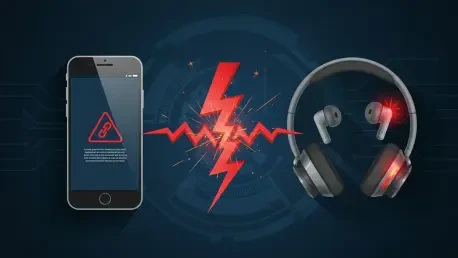
Bluetooth on electric motorcycles links a rider’s phone or service tablet to the bike for diagnostics, configuration, and firmware updates. On affected Zero Motorcycles running firmware 44 and earlier, a permissive pairing window did not verify who connected, opening the door for unauthorized associations that could pivot into the update channel. Convenience became a control path.
How Key Fob Radio Systems Operate on Electric Scooters and Their Typical Security Models
Key fobs for scooters like the Yadea T5 broadcast short radio commands to lock, unlock, or start the vehicle. Secure models rely on rolling codes or challenge–response so captured traffic cannot be reused. Where authentication is weak, an eavesdropped “lock” can reveal structure that helps craft a working “unlock” or “start,” enabling fast, hands-off theft.
Named Stakeholders and Products Referenced in This Analysis
This comparison examines Zero Motorcycles’ lineup affected by CVE-2026-1354 and Yadea’s T5 scooter under CVE-2025-70994, with CISA advisories guiding severity and mitigations. It considers riders, fleet operators, dealers, OEM engineering teams, and incident responders who must translate research into field action.
Purpose, Relevance, and Real-World Applications of These Wireless Interfaces
These radios are not bells and whistles; they anchor ownership routines. Pairing supports over-the-air updates and service workflows, while fobs deliver daily access and ignition. When security falters, seamless experiences transform into attack vectors with kinetic stakes.
Proximity-Bound Threat Model and Its Practical Implications for Riders and Thieves
Both attacks demand close presence, yet proximity limits did not equate to low risk. A thief hovering near a parked scooter can lift a fob exchange; a motivated adversary beside a motorcycle can pair, then push code. Urban density turns “nearby” into “likely.”
Side-by-Side Comparison of Attack Mechanics, Impact, and Remediation
Attack Vectors and Prerequisites
- Zero Motorcycles (CVE-2026-1354): Unauthorized Bluetooth pairing during an insecure pairing window on firmware 44 and earlier; attacker must stay within Bluetooth range and understand the pairing flow and update channel.
- Yadea T5 (CVE-2025-70994): Weak key fob authentication enables interception of a benign command (e.g., lock) to derive valid unlock/start commands; rapid replay or synthesized-command attacks in close proximity.
Impact, Severity, and Safety/Theft Outcomes
- Zero: Potential malicious firmware changes affecting torque output, regenerative braking, high-voltage contactors, and battery management; possible misuse of onboard cellular modem; CISA labels medium severity due to attack complexity.
- YadeFeasible fast theft via unlock/start without physical keys; CISA labels high severity given low complexity and high impact.
Patch Status, Mitigations, and Operational Guidance
- Zero: Patch planned for May; interim guidance to pair only in controlled environments to prevent opportunistic pairing; emphasizes secure boot and signed firmware verification pathways.
- YadeNo fix released at time of writing; highlights need for rolling codes or robust challenge–response, stronger radio-layer authentication, and secured update channels.
Challenges, Limitations, and Key Considerations for Owners, Manufacturers, and Responders
Practical Obstacles to Exploitation and Defense in the Field
Attackers need to manage timing, radio noise, and physical distance; defenders must corral pairing to garages and reduce public exposure. Fleet lots, curbside charging, and ride-share staging areas complicate both sides by concentrating targets.
Technical Hurdles in Implementing Secure Pairing, Signed Firmware, and Update Hardening
Authenticated pairing demands UX that resists spoofing without burdening riders, while signed firmware hinges on reliable secure boot, key storage, and atomic updates. Backward compatibility with dealer tools often slows adoption.
Constraints and Trade-Offs in Key Fob Security (Rolling Code vs. Challenge–Response)
Rolling codes are lightweight yet vulnerable to desynchronization and certain relay tricks; challenge–response raises security but consumes battery and silicon budget. Selecting primitives and nonces that fit tiny MCUs is a constant calibration.
Detection, Forensics, and Incident Response on Resource-Constrained Vehicles
Scooters and bikes log little. Without secure logs and tamper-evident counters, proving replay or malicious updates is difficult. Dealers need triage checklists, while fleets benefit from telemetry that flags anomalous pairings or command bursts.
Vendor Coordination, CISA Advisories, and Variability in Patch Timelines
CISA advisories standardize severity and exposure language, yet patch cadence differs by vendor tooling and supply chains. Clear rider guidance bridges the gap, but fragmented models and regional SKUs stretch remediation windows.
Conclusions and Recommendations with Product-Specific Guidance
Key Takeaways Referencing Zero Motorcycles and Yadea T5
Zero’s flaw centered on unauthenticated Bluetooth pairing that could funnel malicious firmware to safety-critical systems, whereas Yadea’s T5 enabled quick, low-effort theft via weak fob authentication. Both risks hinged on proximity but diverged in complexity and outcome.
Actionable Steps for Riders and Fleet Operators (Immediate and Near-Term)
Zero owners paired only in controlled spaces, verified software provenance, and avoided leaving bikes discoverable. Yadea riders parked under surveillance, used physical locks, and separated scooters from crowds where sniffing thrives; fleets rotated parking and monitored for unusual unlock patterns.
Engineering Priorities for OEMs and Suppliers (Zero, Yadea, and Peers)
Priorities included authenticated Bluetooth pairing with user-verifiable ceremonies, secure boot with hardware roots of trust, strict signature checks on updates, and fob schemes using rolling codes or challenge–response with robust entropy. Dealer tools needed secure channels that mirrored production safeguards.
Choosing and Evaluating Solutions: Criteria for Secure Pairing, Firmware Integrity, and Fob Authentication
Decision-makers favored radios with proximity proofs and numeric confirmation, update stacks enforcing signed artifacts end to end, and fobs employing per-command nonces resistant to replay. Procurement also weighed recovery paths, audit logs, and CISA-aligned disclosure support so safety and theft risks stayed contained.