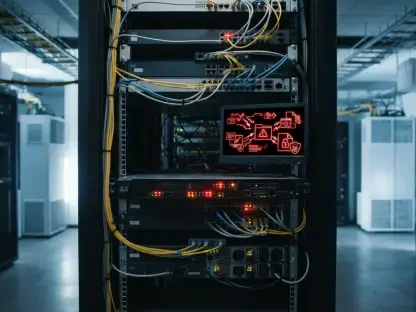

The recent security compromise involving the AI-powered coding platform Cursor has effectively shattered the perceived safety of modern integrated development environments by demonstrating how easily a single third-party vulnerability can cascade into a widespread system failure across thousands of corporate workstations. This incident, which centered on the distribution of a trojanized version of the Claude Code extension, represents a pivotal moment for software supply chain security in an era dominated by large language models. The breach was not caused by a direct flaw in the Cursor application itself but originated from a secondary service provider, highlighting a critical blind spot in how modern AI startups manage their vendor ecosystems. As organizations increasingly rely on automated coding assistants to accelerate their development cycles, the underlying infrastructure connecting these tools to inference providers remains susceptible to sophisticated actors. This failure serves as a stark warning that data privacy settings and third-party access controls are no longer optional luxuries but fundamental requirements for maintaining the integrity of professional software development environments.
Technical Analysis: Anatomy of the Infiltration
Third-Party Risks: The Fireworks AI Incident
The technical root of the intrusion was traced back to a security failure at Fireworks AI, a third-party inference provider that Cursor utilized to facilitate complex machine learning tasks. An attacker successfully obtained a specific access key that had been issued to the provider, which subsequently granted unauthorized access to a read-only storage bucket maintained by Cursor. Within this repository, the adversary discovered “coding agent traces,” which are essentially detailed logs of AI interactions and prompt histories generated by users. Most of these logs dated back to the current development cycle in 2026, capturing a wealth of contextual information regarding how developers interacted with the AI. Crucially, the exposure was limited to users who had not opted for “Privacy Mode,” a setting designed specifically to prevent data from being stored for model training purposes. This distinction proved vital, as it effectively isolated the most security-conscious developers from the initial data leak, though it could not prevent the secondary stage of the attack that targeted the broader platform infrastructure.
Malicious Payloads: The Compromised Extension
The most alarming phase of the operation materialized on October 29 when the attacker utilized their elevated access to inject a malicious version of the official Claude Code extension into the Cursor Marketplace cache. By targeting specific versions, the intruder ensured that any developer requesting an update or a new installation would receive a trojanized payload engineered to establish a persistent SSH backdoor on the host machines. This type of compromise is particularly dangerous because it provides the attacker with a permanent gateway into the local development environment, potentially allowing for the theft of local source code or the monitoring of keystrokes. The window of exposure lasted approximately eleven hours, during which time roughly 5,000 users were estimated to have downloaded the compromised code. Upon discovery, the response team at Cursor acted with significant urgency to contain the threat by taking the entire marketplace offline and initiating a coordinated effort with cloud providers to dismantle the attacker’s command-and-control infrastructure.
Industry Impact: Evaluating the Blast Radius
Systemic Failures: Uber and Notion Impacts
The breach at Fireworks AI was not limited to Cursor, as it quickly became clear that other major technology firms were suffering from similar compromises originating from the same vendor weakness. Notable organizations such as Uber and the productivity startup Notion confirmed that their accounts at the provider had also been accessed, leading to the theft of various types of sensitive internal data. In the case of Uber, the compromise resulted in the unauthorized acquisition of thousands of drivers’ license records, demonstrating that the impact of a single AI service provider’s failure can extend far beyond software code into the domain of personally identifiable information. This pattern of concurrent breaches across multiple industries illustrates the systemic risk inherent in the current AI landscape, where a small number of specialized infrastructure companies provide the backbone for a vast array of downstream applications. When one of these central pillars is compromised, the security posture of every client using that service is immediately put at risk, regardless of how robust their internal protocols might be.
Future Security: Actionable Protection Strategies
Following the resolution of the crisis, the engineering teams at Cursor implemented several infrastructure shifts to prevent a recurrence. They migrated all inference traffic away from the compromised provider and rotated all internal credentials, ensuring that the adversary was fully purged from the system. Moving forward, the most effective defense involves adopting a zero-trust architecture for AI tokens and making privacy-centric configurations the default for all development tools. Organizations should also consider multi-provider strategies for AI inference to avoid single points of failure and allow for rapid switching during vendor compromises. Regular security audits that specifically target the integration points between AI tools and their backend providers will be essential in identifying unredacted credentials before they can be harvested. By treating AI service providers with the same level of scrutiny as traditional hardware vendors, the industry can better protect the integrity of the software supply chain. These proactive steps, combined with localized data isolation, will define the next generation of secure AI integration.