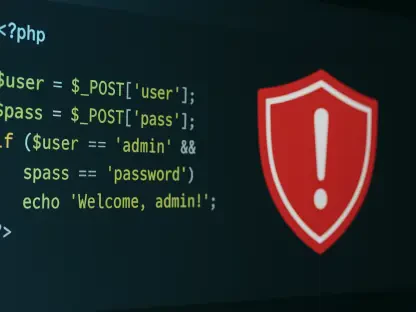

Hackers are increasingly exploiting the trust between developers and their AI coding assistants to gain unauthorized entry into corporate cloud environments. This shift marks a significant evolution in the threat landscape, where the Aoki infostealer has pivoted from traditional financial targets to the heart of the modern development workflow. Since its initial discovery, this malware has refined its capabilities to hunt for high-value intellectual property and administrative access rather than just credit card numbers. In the current landscape of 2026, the value of a single valid API session token for a large language model often exceeds the bounty found in standard retail bank logins. Security analysts have observed a tactical trend where digital adversaries prioritize the extraction of environment variables and configuration files that sit unprotected on local machines. This strategy allows attackers to move laterally through an organization by impersonating trusted engineers who hold the keys to proprietary codebases and critical infrastructure, turning a developer’s productivity tool into a gateway for large-scale corporate espionage.
Exploitation of LLM Infrastructure: The Mechanics of Theft
The technical sophistication of the recent Aoki variants reveals a deep understanding of how modern software is built. Instead of broad-spectrum data harvesting, the malware specifically scours directories for sensitive configuration files used by platforms like Anthropic’s Claude, OpenAI’s ChatGPT, and GitHub Copilot. Files such as .claude.json and config.toml are primary targets, as they often contain persistent session tokens that bypass multi-factor authentication. Once these keys are exfiltrated, attackers engage in “LLMjacking,” a practice where they utilize the victim’s paid compute resources to train their own models or perform resource-intensive tasks. This leads to immediate financial loss for the victimized company through exorbitant API usage fees. Furthermore, the malware targets Google Gemini and Cursor environments, ensuring that no matter which AI assistant a developer prefers, the risk remains constant. These stolen credentials provide a persistent foothold in cloud-native pipelines, where an attacker can modify source code or inject malicious dependencies without triggering traditional security alerts.
Strengthening Defenses: Mitigation Strategies for the Future
Organizations responded to these escalating threats by implementing stricter governance over local environment variables and secrets management. Developers moved away from storing plain-text API keys in configuration files, opting instead for hardware-based security modules or centralized vaulting solutions that offered just-in-time access. Security teams integrated real-time monitoring of LLM usage patterns to detect the anomalies associated with credential theft, such as unexpected spikes in token consumption or geographical inconsistencies in API calls. This proactive approach significantly reduced the window of opportunity for “LLMjacking” and prevented the lateral movement that once plagued software supply chains. By enforcing short-lived session tokens and mandating the encryption of local development metadata, the industry effectively neutralized the most potent vectors of the Aoki infostealer. These defensive measures ensured that the integration of artificial intelligence remained a catalyst for innovation rather than a liability, fostering a more resilient ecosystem where the convenience of AI tools was balanced by robust, automated security protocols and continuous auditing.