
A security breach in a production environment is a nightmare scenario that often stems from simple, preventable oversights in the development pipeline, leading to catastrophic financial loss and brand damage. The current economic landscape of software development suggests that fixing a security flaw during the continuous integration phase costs approximately eighty dollars, whereas the same issue can cost over seven thousand dollars once it reaches a live production setting. This staggering price gap highlights the immense importance of the shift-left security philosophy, which advocates for integrating automated checks as early as possible in the software creation process. By implementing automated security gates within GitHub Actions, development teams can identify vulnerabilities on every push or pull request without requiring manual intervention from specialized security researchers or expensive third-party auditors. This approach transforms security from a final, often overlooked checkpoint into a continuous, integral part of the development lifecycle that moves at the speed of modern coding practices. As organizations look to scale their applications throughout 2026 and beyond, the ability to catch critical bugs before they are ever compiled into a release candidate becomes a defining factor in operational success and long-term stability.
- The Core Concept: Implementing Shift Left Security
The fundamental principle of shifting security to the left involves moving defensive checks from the end of the development cycle to the very beginning, ensuring that every code change is validated before it ever reaches a staging or production server. This methodology is built on the realization that the cost and complexity of fixing a vulnerability grow exponentially as a project progresses through the stages of testing, deployment, and operation. In a traditional workflow, security is often treated as a final hurdle, which frequently leads to delays or the dangerous decision to ship insecure code to meet a deadline. By automating these gates within a GitHub Actions pipeline, developers receive immediate feedback on the security implications of their work, allowing them to address issues while the context of the code is still fresh in their minds. This proactive stance not only hardens the application against external threats but also fosters a culture of security awareness among the entire engineering team, making security a shared responsibility rather than the sole domain of a separate department.
Furthermore, adopting a shift-left approach allows organizations to secure their applications without necessarily investing in incredibly expensive enterprise-grade security software or hiring a massive team of security consultants. Many of the most effective tools for dependency scanning, container auditing, and static analysis are available as open-source projects or offer robust free tiers that are perfectly suitable for professional development environments. By leveraging these accessible technologies, teams can build a sophisticated defense-in-depth strategy that covers multiple attack vectors, from vulnerable third-party libraries to misconfigured cloud infrastructure. The integration of these tools into the standard CI/CD workflow ensures that security checks are consistent, repeatable, and transparent, providing a clear audit trail for every change made to the codebase. In 2026, where automated attacks and rapid exploitation are the norms, this level of automation is no longer an optional luxury but a core requirement for building trustworthy software that protects both company assets and user data.
- Phase 1: Identifying Risks through Dependency Scanning
Focusing on external libraries is a critical first step in securing a modern application because contemporary software is frequently composed of hundreds, if not thousands, of third-party packages that developers do not write themselves. In a typical Node.js environment, a single command might pull in a massive dependency tree where only a tiny fraction of the code is under the direct control of the primary development team, leaving the rest as a potential mystery. Each of these packages represents a potential entry point for malicious actors, especially if they contain known vulnerabilities that have already been documented in public databases like the National Vulnerability Database. By utilizing tools like npm audit, teams can automatically scan their project manifests to detect high-risk packages that have been flagged by the security community as being unsafe for production use. This process is most effective when integrated directly into the CI pipeline, ensuring that every time a developer adds a new library or updates an existing one, the system immediately checks for known security flaws before the code is merged.
While basic auditing tools provide a solid foundation for security, incorporating a more sophisticated scanning solution like Snyk provides deeper insights into the specific nature of vulnerabilities and their potential remediation paths. Snyk not only identifies the presence of a flaw but also suggests the exact version of a package that resolves the issue, often indicating whether the update is a breaking change or a minor patch that can be applied safely. This level of detail significantly reduces the time spent on manual research, allowing engineers to resolve security failures in a matter of minutes rather than hours. Furthermore, managing these vulnerabilities requires a disciplined approach to exceptions, where false positives or low-risk issues are documented rather than simply ignored or suppressed globally. Using a structured ignore file allows teams to record the rationale for bypassing a specific check, including the name of the individual who authorized the exception and a hard expiry date for future review. This creates a transparent audit trail that is invaluable during compliance reviews, ensuring that every decision made within the pipeline is justified and temporary.
- Phase 2: Protecting the Environment with Image Scanning
Security at the application layer is insufficient if the underlying operating system environment is compromised by outdated system libraries or misconfigured container settings that leave the door open for attackers. Most modern applications are deployed using container technology, which packages the application code along with a base operating system, such as Ubuntu or Alpine Linux, to ensure consistency across different hosting environments. These base images often contain standard utilities like curl, openssl, or glibc that are maintained by external parties and may harbor critical vulnerabilities independently of the actual application code being written. Integrating a tool like Trivy into the GitHub Actions workflow allows the system to perform a comprehensive scan of the entire container image before it is ever pushed to a production registry or deployed to a cluster. This ensures that any operating system-level vulnerabilities are caught before the image becomes available for deployment, effectively shielding the infrastructure from potential exploits that target the runtime environment.
To keep the development process moving efficiently, it is necessary to configure the scanner to filter out vulnerabilities that do not yet have an official patch available from the upstream maintainers. Without this configuration, a pipeline might block progress indefinitely due to a vulnerability that the development team has no power to fix, leading to frustration and the eventual temptation to disable the security gates entirely. By using specific flags to ignore unfixed issues, the team can focus their energy on remediating the high and critical risks that are actually actionable within their current sprint. Additionally, maintaining a dedicated ignore file for container-level issues serves the same purpose as it does for application dependencies, providing a space to document why certain risks are acceptable in a given context. For instance, a vulnerability that only affects a protocol not used by the application might be safely ignored until a patch is released by the vendor. This nuanced approach to container security ensures that the gates remain effective without becoming a bottleneck that hinders the rapid delivery of new features.
- Phase 3: Validating Logic through Static Analysis
Static Application Security Testing, commonly referred to as SAST, involves the deep inspection of the source code to identify dangerous programming patterns that could be exploited by malicious actors once the app is live. Unlike dependency scanning, which looks at the integrity of third-party libraries, static analysis focuses entirely on the logic and syntax written by the internal development team. Tools such as CodeQL are designed to model how data flows through an entire application, tracing input from an untrusted source, like a user-submitted web form, to a sensitive sink, such as a database query or a system command. This capability allows the scanner to detect complex vulnerabilities like SQL injection, cross-site scripting, and path traversal that a human reviewer might easily overlook during a standard code review process. By analyzing the code before it is even compiled or executed, static analysis provides a vital layer of defense that catches logical errors at the earliest possible stage, ensuring that the fundamental building blocks are secure.
Implementing these checks within GitHub Actions requires defining a workflow that targets the specific programming languages used in the repository, as each language requires a unique analysis engine to understand its nuances. Once initialized, the scanner builds a searchable representation of the code, allowing it to perform sophisticated queries that look for known-bad patterns and insecure data flows that could lead to a compromise. While these tools are incredibly powerful, they can occasionally produce false positives where the scanner identifies a potential risk that is actually mitigated by other parts of the application architecture. To handle these instances without cluttering the security reports, developers can use specific comments or configuration settings to instruct the scanner to ignore certain lines of code, provided that the reasoning is clearly documented. This interaction between the automated tool and the developer encourages a culture of security awareness, where every flagged issue becomes an opportunity to learn more about secure coding practices and the defensive measures required for modern software.
- Phase 4: Probing the Runtime with Dynamic Scanning
While static analysis is excellent for finding logical flaws in the source code, some vulnerabilities only manifest when the application is actually running and interacting with other services in a real environment. Dynamic Application Security Testing, or DAST, addresses this gap by launching a live instance of the application within the CI environment and subjecting it to a series of automated attacks. This process mimics the behavior of a real-world attacker who might try to manipulate HTTP headers, probe for hidden directories, or test for session management flaws that are only visible at the network level. Using a tool like OWASP ZAP in a GitHub Actions pipeline allows the development team to see their application from an outsider’s perspective, revealing issues that are invisible during the build or compilation phases. Because this type of testing requires a functional environment, it is typically performed after the application has been containerized, providing a final check that validates the security of the entire technology stack.
Successfully integrating dynamic scanning into an automated pipeline requires careful orchestration to ensure the application is fully operational before the security probes begin their work. Using Docker Compose within the GitHub runner is an effective way to spin up the application along with any necessary sidecar services, such as databases or caches, ensuring the environment closely resembles production. The workflow must include a mechanism to wait for the application’s health check to return a successful status, preventing the scanner from starting too early and generating errors because the service was not yet ready to receive traffic. Once the app is live, the scanner fires a barrage of requests designed to expose common runtime weaknesses, such as missing security headers or improper error handling that might leak sensitive information. By refining the scanner’s rule set to ignore non-critical warnings that are irrelevant to a local test environment, teams can reduce noise and ensure that the final security report provides clear, actionable insights into the most pressing threats.
- Phase 5: Integrating Checks into a Unified Pipeline
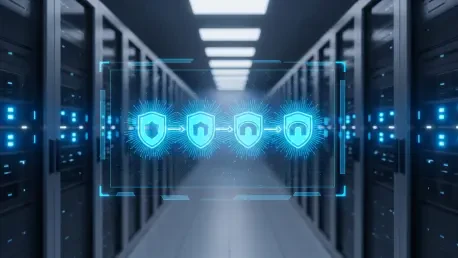
The true power of these automated security gates is realized when they are integrated into a single, cohesive pipeline that balances thoroughness with developer productivity and operational speed. Running dependency scanning, container auditing, and static analysis in parallel allows the pipeline to provide rapid feedback to the developer, as these checks can often be completed in just a few minutes. By optimizing the workflow to execute these three gates simultaneously, the system ensures that the most common vulnerabilities are identified as quickly as possible without unnecessarily extending the duration of the build process. This parallelism is essential in a high-velocity development environment where teams may be pushing code dozens of times a day and cannot afford to wait for a long, sequential security audit. If any of these initial gates detect a high-severity issue, the pipeline can be configured to fail immediately, preventing the more time-consuming dynamic scanning phase from starting and saving valuable resources.
Establishing a clear dependency between the initial scans and the dynamic runtime testing ensures that the most complex and resource-intensive checks are only performed on code that has already passed the baseline security requirements. This tiered approach creates a logical flow where the application must prove its integrity at several different levels before it is considered for deployment to any environment. By setting the pipeline to block merges or deployments if any of the four gates identify a high or critical vulnerability, the organization enforces a non-negotiable standard of security that does not rely on human memory. This automated enforcement provides peace of mind to stakeholders, knowing that no code can reach production without undergoing a rigorous multi-stage security review that covers everything from the base image to the running application. As the team continues to refine these processes through the end of 2026, the unified pipeline becomes a living component of the development lifecycle, adapting to new threats and evolving alongside the application.
- Resolving Common Challenges in Automated Security
Despite the clear benefits of automated security gates, teams may occasionally encounter technical hurdles that require careful troubleshooting to ensure the pipeline remains functional and reliable. One of the most common issues involves authentication failures, particularly when using third-party services that require API tokens to be stored as repository secrets for the pipeline to function. If these tokens are not correctly configured at the repository level, or if they expire without being replaced, the security gates may fail to execute, potentially leaving the application vulnerable to undetected risks. Additionally, connection timeouts can occur during the dynamic scanning phase if the application takes longer than expected to start or if the network configuration within the GitHub runner prevents the scanner from reaching the service. Regularly monitoring the execution logs and ensuring that all security tools are using the most current, stable versions of their respective Docker images can prevent many of these common pitfalls and ensure accuracy.
Long-term maintenance of the security pipeline also involves managing the “noise” generated by automated tools and ensuring that the repository’s history remains clean and secure for all participants. Occasionally, sensitive files like local environment configurations or large dependency folders may be accidentally committed to the repository, which can trigger constant security alerts and bloat the size of the codebase. In such cases, it is necessary to use specialized Git commands to permanently remove these files from the project’s history, ensuring that they cannot be recovered by unauthorized parties or used in future attacks. Furthermore, the ignore files used to manage false positives must be reviewed periodically to ensure that the reasons for suppressing certain alerts are still valid and that any temporary exemptions have been addressed with permanent fixes. By treating the security pipeline as a first-class citizen that requires its own maintenance and updates, development teams can avoid the accumulation of technical debt and ensure that their automated defenses remain sharp.
- Sustaining a Robust Security Posture
The implementation of four automated security gates within GitHub Actions established a robust defensive framework that prioritized the early detection of vulnerabilities across the entire stack. By shifting security left, the organization significantly reduced the potential costs associated with remediating flaws in production and fostered a culture where security was a shared responsibility among all developers. These automated checkpoints provided continuous validation of the code, dependencies, and container environments, ensuring that every release candidate met a rigorous safety standard before it could be considered for deployment. The use of structured ignore files and detailed logging allowed for a transparent and accountable process, which simplified compliance and improved the overall quality of the software. This proactive approach resulted in a more resilient application and allowed the development team to ship features with greater confidence, knowing that their pipeline was equipped to handle the complexities of modern digital security.
Looking toward the future, the focus transitioned toward refining these tools and integrating emerging security technologies to keep pace with the evolving threat landscape in a rapidly changing environment. The success of the automated gates led to the exploration of even more granular checks, such as automated secret scanning for infrastructure-as-code and enhanced observability for security events in the runtime environment. The integration of these advanced capabilities further hardened the application, providing a comprehensive view of the security posture from the first line of code to the final deployment. By maintaining a high standard of automation and refusing to compromise on security, the organization ensured its longevity and protected its users from the ever-present risks of the digital world. This journey proved that while security requires a consistent investment of time and effort, the dividends paid in terms of stability, trust, and cost savings are well worth the initial setup and ongoing maintenance of a sophisticated CI/CD pipeline.