
Relying on artificial intelligence for security monitoring introduces a dangerous blind spot because these agents lack the context to recognize when upstream data pipelines fail. As the industry moves toward 2030, the Security Operations Center is undergoing its most radical transformation since the inception of the SIEM over two decades ago. Organizations are moving away from rigid, all-in-one platforms in favor of a modular, engineering-led philosophy known as SecOps as Code. This shift mirrors the evolution of modern software development, moving from a static, tool-centric environment to a fragmented but automated ecosystem capable of scaling with the speed of modern business. The necessity for this change arises from the fact that traditional security models cannot keep pace with the massive volume of data or the velocity of sophisticated threats. By adopting software engineering principles, the SOC aims to achieve a level of reliability and agility that was previously impossible.
Dismantling the Traditional Security Stack
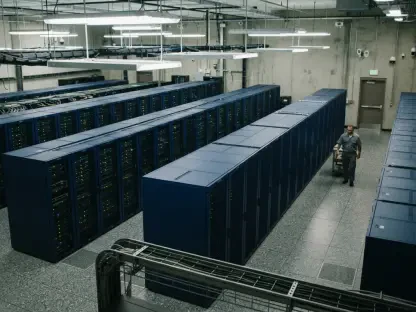
The traditional SIEM-centric era is winding down as large security teams seek better performance and cost management by unbundling their technology stacks. In this new model, decentralized data pipelines, specialized SIEMs, and cost-effective data lakes replace the old monolithic foundation. By separating these functions, organizations can handle massive data ingestion while maintaining high-stakes detections without being locked into a single vendor’s limitations or punitive pricing models. This unbundling allows for the use of federated detection engines that run across distributed architectures, effectively bringing the logic to the data rather than moving petabytes of logs into a central repository. This strategic shift ensures that high-value information is prioritized for analysis while long-term retention remains affordable. The result is a more resilient and flexible architecture that can adapt to the changing requirements of the global enterprise.
This transition to a fragmented ecosystem introduces significant technical complexity that requires a fundamental change in management strategy. Just as the world of IT infrastructure shifted from simple client-server models to Kubernetes and microservices, the SOC must now adopt DevOps-style automation. Managing these specialized components individually is impossible at scale; instead, they must be orchestrated as a unified, code-driven environment to ensure no security gaps emerge during configuration changes. The move toward modularity demands that every connection, parser, and storage bucket be defined through automation rather than manual intervention. Without this engineering rigor, the very flexibility that unbundling provides could lead to a chaotic environment where detections silently fail. Consequently, the emphasis is shifting from buying the “right” tool to building the “right” pipeline that can support a variety of interchangeable tools.
The Transition: From Analysts to Security Engineers
As routine triage and manual investigations become increasingly automated, the makeup of the modern SOC workforce is shifting toward specialized engineering roles. Future teams will be populated by pipeline, detection, and SIEM engineers who focus on the integrity of the automated flow rather than individual alerts. By 2030, engineering will become the dominant discipline within the SOC, ensuring that the infrastructure producing security outcomes remains resilient and accurate. This evolution is already visible in high-maturity organizations where the ratio of analysts to engineers has flipped significantly in favor of those who write code. These professionals do not just react to threats; they build the systems that proactively hunt and mitigate them. This shift allows the human element to focus on high-level strategy and complex problem-solving, leaving the repetitive tasks to highly tuned automated processes that function with far greater speed and precision.
While artificial intelligence is often seen as a replacement for human labor, its ultimate success depends entirely on the quality of the underlying data engineering. AI agents are highly effective at threat hunting and red-teaming but are notoriously literal, failing to recognize when upstream data formats have changed or when a log source has gone silent. This creates a dangerous scenario where an AI might report a clean bill of health simply because a broken pipeline is no longer delivering the necessary telemetry for analysis. To mitigate this, the SOC must implement rigorous validation checks that monitor the health of the data itself. Security engineers are now tasked with creating health oracles that verify the data structure before it ever reaches the AI analysis layer. This ensures that the insights generated by machine learning models are based on accurate, complete information, preventing the silent failures that often plague poorly engineered projects.
Navigating Modern Pressures: SecOps as Code
Four primary pressures are accelerating the need for an engineering-first approach: rapidly evolving threats, rising compute costs for AI tuning, high business velocity, and constant data drift. When log formats change or internal applications are deployed at high speeds, traditional security models break. SecOps as Code addresses these issues by treating every detection and data source as a versioned, testable asset that can adapt to environmental shifts in real time. For example, when a software developer updates an internal API, the security infrastructure should automatically recognize the change and update the corresponding monitoring rules. This level of synchronization is only possible when security is integrated into the continuous integration and delivery pipelines of the broader business. By automating the tuning process, organizations can also drastically reduce the financial waste associated with running complex AI models on noisy or irrelevant data.
Moving beyond simple detection as code, a comprehensive SecOps as Code strategy encompasses the entire lifecycle from the data source to the final response. This holistic approach ensures that when a change occurs at the ingestion level, the system automatically verifies if downstream detections are still functional. By defining the entire environment through code, security teams can achieve a level of observability and reliability that manual processes and spreadsheets simply cannot match. This methodology allows for the implementation of unit testing for security alerts, where synthetic data is used to prove that a rule will fire before it is deployed to production. Such rigorous testing protocols minimize the risk of false negatives and ensure that the SOC is always operating at peak efficiency. Furthermore, version control allows for quick rollbacks if a new configuration introduces unforeseen issues, providing a safety net that traditional manual changes lack.
The Operating System of the Future SOC
By 2030, the SOC will likely be governed by a centralized operating system that creates a deterministic map of all security flows. This layer will provide a ground-truth understanding of the environment, moving away from AI-driven guesswork and toward verifiable, automated testing. This infrastructure ensures that what worked yesterday continues to work today, regardless of how many vendors or data formats change in the interim. Such a system functions as a single pane of glass that does not just display alerts but actively manages the configuration and health of the entire stack. By providing a clear visualization of how data moves from a laptop or server into a detection engine and then into a response playbook, this operating system eliminates the ambiguity that often hampers incident response. It allows security leaders to see exactly where their coverage is strong and where new investments are needed, based on empirical data rather than subjective marketing metrics.
The ultimate vision for the 2030 SOC centered on a tool-agnostic environment where security engineers prioritized outcomes over maintenance. By treating the SOC as a software product, organizations successfully swapped storage tiers, detection engines, and specialized tools without disrupting the primary security mission. In this future, the most successful security teams were those that could re-engineer their infrastructure as quickly as the threats against them evolved. They achieved this by decoupling the logic of security from the underlying hardware and software platforms, allowing for a fluid and adaptable defense posture. The transition required a cultural shift, moving away from a set-it-and-forget-it mentality toward a cycle of continuous improvement and engineering excellence. Ultimately, the adoption of SecOps as Code proved to be the only viable way to manage the complexity of modern digital ecosystems, ensuring that security remained an enabler of innovation rather than a bottleneck.