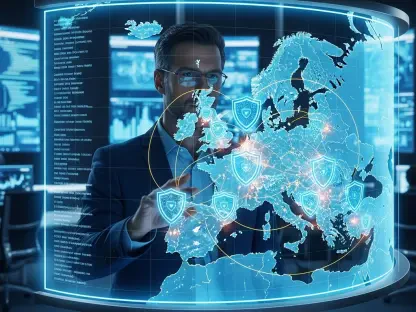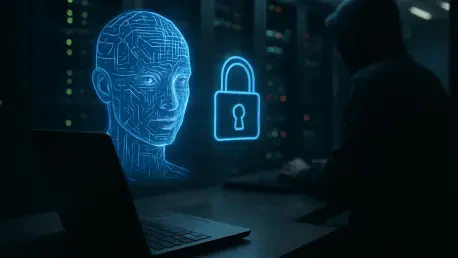

The traditional image of a cybercriminal as a masked figure hacking through a firewall has been replaced by a more unsettling reality: a high-performing remote employee who does not actually exist. This evolution of the “insider threat” is no longer a localized concern but a systemic challenge driven by state-sponsored actors, particularly from the Democratic People’s Republic of Korea. By integrating sophisticated generative intelligence into their recruitment and operational workflows, these actors have transformed basic fraud into a high-precision industry. This review examines how these digital personas are constructed and the profound risk they pose to the integrity of global corporate networks.
Evolution of AI-Driven Infiltration Tactics
The methodology of infiltrating Western organizations has shifted from crude social engineering to a highly automated, data-driven science. Historically, North Korean operatives relied on manually forged documents and broken English, which often triggered red flags during the initial screening. However, the emergence of large language models and synthetic media has leveled the playing field, allowing threat actors to bridge cultural and linguistic gaps that once served as natural barriers. This is not merely an upgrade in tools; it is a fundamental shift in strategy where the technology acts as a primary facilitator for identity fabrication.
In the current technological landscape, these tactics have matured into a persistent “threat-as-a-service” model. Organizations now face adversaries who use AI to analyze market trends, identify high-growth sectors, and tailor applications to specific corporate cultures. This context is critical because it highlights a move toward quality over quantity. Instead of mass-phishing, groups like Jasper Sleet and Coral Sleet are investing in long-term, high-value access that provides both immediate financial gain and a strategic foothold for future espionage.
Core Components of the AI-Enhanced Persona
Generative Fabrication and Market Research
At the heart of this infiltration strategy lies the use of AI for deep market intelligence and persona development. Threat actors utilize generative models to scrape platforms like Upwork and LinkedIn, extracting the precise terminology, required certifications, and soft skills currently in demand. By feeding this data back into language models, they can produce résumés that are indistinguishable from those of top-tier Western candidates. This implementation is unique because it uses the employer’s own job descriptions as a blueprint for the “perfect” fake employee, ensuring the persona fits the organizational mold perfectly.
The performance of these fabricated personas is bolstered by the AI’s ability to maintain consistency across multiple digital touchpoints. This means that an operative’s email tone, social media presence, and professional portfolio all reflect a unified, believable identity. For the attacker, this reduces the “noise” that typically alerts recruiters to fraudulent activity. By automating the research phase, North Korean clusters can deploy dozens of high-quality candidates simultaneously, drastically increasing the probability of a successful hire within a lucrative tech or defense firm.
Advanced Identity Manipulation Tools
Beyond the written word, the physical and auditory representation of these actors has seen a massive leap in sophistication. Jasper Sleet, for instance, has successfully utilized commercial face-swapping applications to overlay operative features onto stolen or synthetic identity documents. During live video interviews—once the ultimate filter for fraudulent candidates—AI-driven voice-changing software and real-time video filters allow actors to maintain their disguise. This technical capability makes the traditional “video check” nearly obsolete as a standalone verification method.
The significance of these tools lies in their ability to bypass biometric and human-centric security layers. While a competitor or a basic fraudster might use a static stolen photo, these state-sponsored groups create dynamic, responsive identities. This implementation is particularly dangerous because it exploits the trust inherent in the remote-work culture. By presenting a professional, tech-savvy facade that responds accurately in real-time, the operative secures a level of access that would be impossible through traditional external hacking methods.
Current Trends in Adaptive Threat Actor Tradecraft
Recent observations indicate a move toward “adaptive tradecraft,” where AI is used to pivot strategies in response to defensive successes. When organizations started implementing more rigorous background checks, threat actors began using AI to simulate localized knowledge, such as discussing regional sports or local weather, to pass “cultural vetting.” This indicates that the adversaries are not just using static tools but are actively training their models to overcome specific hurdles.
Moreover, there is an emerging trend toward the decentralization of these operations. We are seeing a shift where the AI does not just assist the human, but actually directs the workflow. This shift in behavior suggests that the barrier to entry is lowering even further; an operative with limited technical skills can now function as a senior developer by leveraging AI to write code and solve complex architectural problems, allowing the regime to scale its workforce without needing a proportional increase in highly trained personnel.
Real-World Exploitation and Sector Impact
The deployment of these AI-enhanced workers has had a tangible impact across the fintech, aerospace, and defense sectors. In these industries, the objective is often two-fold: generating hard currency for the regime and gaining “trusted” access to sensitive repositories. For example, once hired, an operative may be tasked with contributing to a GitHub repository where they can subtly introduce vulnerabilities or backdoors. This dual-purpose exploitation makes the threat far more resilient than a standard malware infection.
Notable implementations have been seen in the crypto-currency space, where the rapid pace of hiring and the remote-first nature of the industry provide the perfect cover. By sitting inside a company’s Slack or Teams environment, these “insiders” can conduct internal reconnaissance without triggering any external traffic alarms. This level of access is the ultimate prize in modern cyber-warfare, as it allows for the exfiltration of data through legitimate, encrypted channels that the organization’s own security tools are designed to ignore.
Challenges in Detection and Defensive Barriers
Detecting an AI-enhanced insider is notoriously difficult because their “signatures” are identical to those of legitimate employees. Technical hurdles for defenders include the lack of reliable “AI-detection” software for video and audio, which frequently yields false positives or fails against high-end state tools. Furthermore, regulatory and privacy issues often prevent companies from conducting the deep, intrusive background checks that would be necessary to unmask a sophisticated synthetic identity.
Ongoing development efforts to mitigate these risks have focused on “zero-trust” hiring. This involves verifying every aspect of a candidate’s history through out-of-band communication and physical hardware tokens. However, the market obstacle remains the “candidate experience”; overly aggressive vetting can drive away legitimate talent. Companies are forced to balance the need for security with the necessity of maintaining a competitive hiring pipeline, a friction point that North Korean actors are more than happy to exploit.
Future Outlook: Agentic AI and Autonomous Threats
The next frontier for this technology is the transition to agentic AI—systems capable of making autonomous decisions and executing complex, multi-step workflows without human intervention. In the context of insider threats, this could lead to “ghost employees” who perform their daily duties, attend meetings via synthetic avatars, and even conduct corporate espionage entirely through automated scripts. This would represent a breakthrough in efficiency, allowing a single operative to manage dozens of fake personas simultaneously.
In the long term, this trajectory suggests that the concept of “identity” in the digital workplace will need a complete overhaul. As autonomous threats become more prevalent, the industry may move toward decentralized identity protocols or blockchain-verified credentials to ensure that a person is who they claim to be. The societal impact is significant: if trust in remote hiring evaporates, it could force a massive, unwanted return to physical office environments or create a permanent underclass of workers who cannot prove their digital legitimacy.
Summary and Strategic Assessment
The rise of the AI-enhanced insider threat has fundamentally altered the risk profile of the modern enterprise. By leveraging generative fabrication and sophisticated identity manipulation, state-sponsored actors have successfully turned the recruitment process into a primary attack vector. The analysis showed that these personas are no longer easily detectable through traditional means, as they utilize the same high-end tools as legitimate professionals to blend into corporate environments. This state of affairs has rendered traditional perimeter security insufficient, as the threat now originates from within the “trusted” circle.
Strategic responses must move beyond simple resume screening and toward a continuous, multi-layered verification model. Organizations that failed to adapt their vetting processes found themselves inadvertently funding adversarial regimes and compromising their own intellectual property. The path forward required a synthesis of technical verification, such as hardware-based identity proofs, and human-centric localized vetting. Ultimately, the industry had to accept that in an era of synthetic perfection, the most suspicious trait a candidate could possess was a lack of verifiable, physical-world friction.