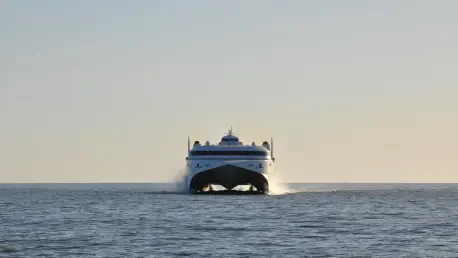

With us today is Rupert Marais, our in-house security specialist, to break down the alarming discovery of remote control malware on a passenger ferry in France. This incident, which French officials suspect is part of a broader campaign of foreign interference, brings the abstract threat of cyber warfare into the very real world of critical civilian infrastructure. We’ll explore how such an attack is orchestrated, the role of international intelligence in thwarting these plots, the disturbing use of insiders by state actors, and what it takes to secure a complex target like a ship after a breach.
The report highlights the discovery of RAT software on the ferry. Could you walk us through how this specific malware allows remote control of a ship’s systems and what vulnerabilities, from navigation to passenger data, make a ferry such a high-value target for this kind of attack?
A Remote Access Trojan, or RAT, is particularly insidious because it’s not just about stealing information; it’s about seizing control. Once this software is on a system, it effectively hands the keyboard and mouse to an attacker thousands of miles away. On a ferry, the implications are terrifying. We’re talking about the potential to manipulate the ship’s primary computer systems—everything from navigation and engine controls to the systems managing passenger manifests. A ferry is a microcosm of a city, with hundreds of people, complex logistics, and critical safety functions all run by interconnected networks. An attacker could potentially disrupt navigation, cause chaos by manipulating onboard services, or steal sensitive data on every passenger. The goal may not even be a catastrophic hijacking; simply creating a major public incident undermines faith in public safety and infrastructure.
Intelligence from Italy was key to uncovering this plot. Can you describe the typical process for this kind of international cyber-threat sharing, and what does this specific collaboration suggest about the perceived gravity and complexity of the attempted ferry hack?
This wasn’t a general warning; it was a highly specific tip-off. When intelligence services like Italy’s share actionable information with a counterpart like France’s General Directorate of Internal Security, it means the threat is credible, specific, and likely imminent. The process involves secure, established channels where vetted intelligence is passed to prevent a serious incident. The fact that Italy was able to identify not only the vessel but also the specific crew members involved—the Latvian and Bulgarian nationals—suggests a deep and sophisticated intelligence operation. This level of cooperation tells you that European security agencies view this as part of a much larger, more serious pattern of hostile activity. They treated this as a clear and present danger, not a theoretical possibility.
A Latvian crew member is charged with acting for a foreign power, with officials hinting at Russia’s “hybrid warfare.” Could you elaborate on the methods state actors use to recruit insiders for such operations and the strategic goals they aim to achieve through these cyberattacks?
Planting an insider is a classic intelligence tactic, a cornerstone of what the French Interior Minister called “hybrid warfare.” The recruitment process can be subtle, exploiting financial vulnerabilities, ideological sympathies, or even blackmail. An operative might be cultivated over a long period before being asked to perform a simple but critical task, like plugging in a USB drive infected with the RAT software. This bypasses layers of digital security. The strategic goal here isn’t necessarily a declaration of war; it’s about creating instability and fear. It’s a hostile act that remains just below the threshold of a military response, designed to be hard to trace back definitively. By targeting civilian infrastructure like a ferry, the foreign power aims to demonstrate its reach, test its capabilities, and sow discord within a nation, all without firing a single shot.
The ferry underwent security checks before returning to service. Can you detail the step-by-step process of purging malware like a RAT from a ship’s critical systems and what ongoing measures are needed to ensure the vessel remains secure against future intrusion attempts?
Getting a vessel back into operation after a discovery like this is an incredibly delicate and thorough process. You don’t just run an antivirus scan. First, the vessel is held in port, and every single computer system is forensically analyzed. Technicians have to create exact copies of the infected systems to investigate how the breach occurred, while simultaneously working to purge the live systems. This often means completely wiping hard drives and rebuilding the software from scratch using verified, clean sources. You cannot risk leaving any backdoor. Following the purge, security protocols are hardened. This involves enhanced network monitoring to detect unusual activity, stricter access controls for all data systems, and, most importantly, a complete review of personnel security and vetting procedures to prevent another insider threat from emerging.
What is your forecast for the evolution of state-sponsored cyber threats targeting critical maritime infrastructure like passenger ferries?
My forecast is that these attacks will become more frequent and more brazen. We are moving beyond simple espionage and data theft into an era where cyber operations are designed to have a direct physical impact. Critical infrastructure, especially in the maritime sector, represents a soft, high-value target. State actors will continue to leverage “hybrid warfare” tactics, using insiders and sophisticated malware to probe for weaknesses. The goal is disruption and psychological impact. We should expect to see attempts not just to control systems, but to cause real-world chaos—disrupting supply chains, creating public panic, or damaging a nation’s economic stability. The front line of international security is no longer just a physical border; it’s the network cable running into the bridge of a passenger ferry.