
The modern cybersecurity landscape is witnessing a profound transformation as state-sponsored threat actors move away from broad, opportunistic phishing toward highly precise, industrialized supply chain operations. This evolution is perfectly encapsulated by the recent breach of the Axios NPM package, a critical software library that serves as a cornerstone for millions of web applications worldwide. Orchestrated by the North Korean hacking collective known as UNC1069, this campaign signifies a departure from the traditional pursuit of immediate financial gain through credential theft. Instead, the attackers prioritized the long-term strategic advantage of compromising a foundational component of the global digital infrastructure. By successfully targeting the lead maintainer of a package downloaded over 100 million times per week, the threat group has effectively rewritten the playbook for high-stakes digital deception, demonstrating that the most valuable currency in the modern era is not direct access to funds, but the silent control over the tools that build our interconnected world.
The sophistication of this operation was rooted in a “slow-burn” social engineering strategy that prioritized the cultivation of deep trust over several weeks of meticulous engagement. The attackers did not rely on a sudden technical exploit or a high-pressure email; instead, they built a comprehensive digital facade that included a functional Slack workspace and a cloned corporate identity of a real company founder. This level of preparation allowed the threat actors to engage in professional discourse, share industry insights, and even reschedule meetings to mimic the natural flow of a legitimate business relationship. By the time the lead maintainer, Jason Saayman, entered a Microsoft Teams call with the individuals he believed to be potential collaborators, his natural skepticism had been completely eroded by the veneer of professional legitimacy. This incident serves as a chilling reminder that the human element remains the most vulnerable link in the supply chain, particularly when the deception is backed by the resources and patience of a nation-state.
Technical Implications of Device Compromise
Understanding the Failure of Traditional Defenses
The execution of a Remote Access Trojan (RAT) during a live professional meeting represents a catastrophic failure of traditional perimeter and identity defenses. Once the victim was convinced to run what was described as a necessary “system update” or “missing plugin” to facilitate the meeting, the attackers gained unilateral control over the host machine. In this specific scenario, the presence of a RAT allowed the threat actors to exist “inside” the authenticated session of the developer. This is a critical distinction because it renders multi-factor authentication (MFA) and two-factor authentication (2FA) essentially useless. Even though the maintainer had robust security measures enabled on his NPM account, the malware allowed the attackers to hijack the active, authorized session directly from the hardware level. This bypass mechanism demonstrates that once a device is compromised, the very protocols designed to verify identity become tools for the attacker to act with the full authority of the victim.
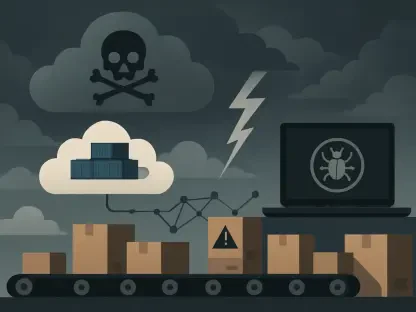
Building on this foundation of total device control, the hackers were able to publish malicious versions of the Axios library that appeared entirely legitimate to the automated security scanners used by most development teams. These corrupted versions contained a hidden dependency that functioned as a delivery vehicle for further malware, designed to infect any developer or automated build system that pulled the latest update. This creates a massive ripple effect throughout the industry, as the trust placed in a single lead maintainer is inherited by every downstream organization using that code. The breach highlights a terrifying reality where the “blast radius” of a single compromised workstation can extend to thousands of enterprise environments, shifting the threat model from individual data theft to a widespread contagion of the software supply chain. Consequently, the industry must recognize that identity-based security is no longer a silver bullet when the underlying hardware can be subverted by sophisticated social engineering.
The Limits of Current Authentication Models
The Axios incident forces a reevaluation of how the technology sector perceives trust and session persistence in the current year and beyond. While many organizations have spent the period from 2026 to 2028 reinforcing their cloud identities, this attack proves that the local environment remains a high-value target that can undermine years of progress in cloud security. When an attacker operates through a RAT, they are not just stealing a password; they are leveraging the existing trust relationships between a developer’s machine and the central repositories that distribute code to the world. This means that the security community can no longer rely on the assumption that a successful login challenge guarantees the presence of a legitimate user. Instead, the industry must move toward continuous verification models that look at behavioral patterns and device integrity throughout the duration of a session, rather than just at the moment of entry, to catch these types of “ghost” operators.
Furthermore, the transition to industrialized social engineering means that the psychological tactics used by groups like UNC1069 are designed to bypass the specific safety training programs that most corporations have implemented. By utilizing live video calls and collaborative platforms like Microsoft Teams and Slack, the attackers create a social context where technical red flags are often ignored in favor of professional courtesy. This environment allows for the delivery of payloads that would otherwise be flagged by automated email filters or web gateways. As these threat actors continue to refine their ability to mimic corporate workflows, the distinction between a legitimate software requirement and a malicious installation becomes nearly impossible to detect for even the most experienced engineers. The result is a landscape where the technical mastery of the code is secondary to the attacker’s ability to manipulate the social and professional environment in which that code is produced and maintained.
The Industrialization of Social Engineering
Strategic Pivots and the Influence of Artificial Intelligence
This systemic campaign marks a permanent pivot in North Korean cyber operations, moving away from the direct targeting of cryptocurrency exchanges toward the individuals who control global digital infrastructure. By gaining “write access” to open-source libraries, state-sponsored actors can achieve a level of persistence and scale that was previously unimaginable. This industrialization is significantly enhanced by the integration of Artificial Intelligence, which allows threat groups to maintain dozens of complex, multi-week deceptions simultaneously. AI-driven tools can generate perfectly articulated professional communications, maintain coherent personas across various platforms, and even assist in the creation of convincing deepfake materials. These technologies have effectively lowered the “cost of attention,” enabling a relatively small group of attackers to target a wide array of high-value maintainers without the linguistic or cultural barriers that once limited the effectiveness of international social engineering.
The scalability of these operations creates a new reality where the software development community is on the front lines of a global, state-backed conflict. Unlike previous eras where cyberattacks were often isolated incidents, the current approach by entities such as UNC1069 involves a mature organizational structure that treats social engineering as a full-time professional endeavor. This includes dedicated teams for persona development, infrastructure management, and technical payload delivery. The use of AI to automate the early stages of rapport-building ensures that human operators only need to intervene during the final, critical stages of the compromise. This shift suggests that the security industry must move beyond simple vulnerability scanning and focus on the resilience of the human networks that sustain the open-source ecosystem. As long as state-sponsored actors view the supply chain as a viable path for regime-backed goals, the intensity and sophistication of these “slow-burn” campaigns will only continue to increase.
Future Resilience and Actionable Defenses
To combat these evolving threats, organizations must implement more stringent controls over the development environment, specifically focusing on the isolation of sensitive build processes. Moving forward, the adoption of “ephemeral” or “disposable” development environments can limit the lifespan of a potential RAT, ensuring that a single compromise does not grant long-term access to critical publishing credentials. Furthermore, the industry must transition toward hardware-bound security keys that require physical interaction for sensitive actions, such as publishing a new version of a major library. This adds a layer of protection that even a remote access tool cannot easily bypass, as it necessitates a physical “touch” from the legitimate maintainer. These technical solutions, combined with a heightened awareness of the psychological tactics used in industrialized social engineering, represent the only viable path for securing the software supply chain against state-sponsored actors.
Ultimately, the Axios breach was a definitive signal that the era of trusting a single individual with the keys to the kingdom is coming to an end. Security protocols must now prioritize decentralized trust models, such as multi-signature publishing requirements, where no single maintainer can push an update without the verification of another trusted peer. This approach mirrors the security standards used in high-stakes financial environments and is increasingly necessary for the software libraries that power modern society. By distributing authority and requiring consensus for changes to critical codebases, the community can mitigate the impact of a single human error or sophisticated deception. The focus for the remainder of the decade must be on building a redundant, resilient framework that acknowledges the professionalization of cybercrime and protects the individuals who build the digital world from becoming the unwitting tools of its destruction.