
Lead
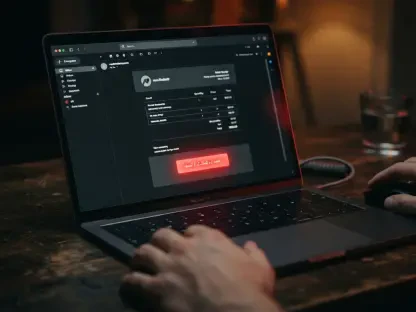
A routine help-desk email slid into an Indian banker’s inbox, draped in the language of support and stamped with quiet urgency, and the single click it invited masked a backdoor disguised as banking software while opening a covert channel tailored for spies rather than thieves. The ruse leaned on everyday workflow muscle memory—approve, update, move on—yet behind the familiar veneer sat a China-linked espionage team with a practiced hand and a patient plan.
The operation did not look flashy. It favored copied templates, reused code, and a modest backdoor called LotusLite that executed file operations and remote commands without theatrics. What made it startling was the choice of stage: large Indian banks, notably within the orbit of HDFC Bank, alongside U.S. and South Korean policy circles that have long been in a particular adversary’s sights.
Nut Graph: Why This Story Matters
The campaign signaled a shift in what state-aligned operators value from banks: not account theft, but intelligence. Transaction flows, government-linked activity, and relationships hidden in balance sheets offer geopolitical clarity that speeches and press releases cannot. Financial institutions, in short, serve as unwitting observatories for national strategy.
Researchers at Acronis Threat Research Unit connected this wave to Mustang Panda—also known as TA416, Bronze President, and Stately Taurus—through code lineage, operational cadence, and social-engineering hallmarks. Even as the tools stayed unremarkable, the targeting broadened, and the same HDFC-branded build reportedly appeared against U.S.–Korea policy recipients, underscoring a preference for speed over bespoke craft.
Inside The Campaign
Targets in India received crisp, almost boring IT messages that blended neatly into enterprise noise. Attachments led to DLL sideloading through trusted binaries, followed by registry-based persistence that kept the door ajar. On execution, a LotusLite variant established remote access, fetched instructions, and enabled collection with minimal footprint. The payload even surfaced a decoy pop-up that referenced HDFC Bank to complete the illusion.
Across the Pacific, the operators aimed at U.S.–Korea policy professionals using a counterfeit Google account impersonating Victor Cha, a well-known scholar. A headshot, a plausible tone, and a generic address were enough to win opens and clicks. The same compiled build—banking trappings and all—traveled with the lure, a reminder that time-to-deploy often beats perfect tailoring when defenses lag.
Evidence, Voices, and Impact
Analysts tied the operation to Mustang Panda through telltale overlaps: familiar sideloading workflows, registry persistence patterns, and LotusLite code reuse with light evasion tweaks. The social engineering echoed prior activity: credible personas, tidy pretexts, and lures that nudge rather than shout. None of it broke new technical ground, yet all of it aligned with a group that prizes reliability.
“The ‘lazy’ approach is not sloppy; it is strategic,” said Acronis TRU’s Santiago Pontiroli. He described a calculus that rewards low-cost rotation, post-exposure resiliency, and outcomes over novelty. When organizations fail at fundamentals—application control, DLL monitoring, behavior analytics—actors can recycle techniques, refresh indicators, and keep harvesting intelligence with little retooling.
For banks, the implications stretched beyond security budgets. Access to cross-border payments, trade finance, and government-related accounts carries signals about infrastructure priorities and influence channels across the Indo-Pacific. By pairing those signals with diplomatic monitoring, an adversary could map pressure points and anticipate policy moves without touching a single retail account.
The Tradecraft Behind The Curtain
Entry hinged on spear-phishing that delivered files primed for sideloading, abusing trusted executables to load malicious DLLs that looked legitimate enough to pass casual scrutiny. Persistence leaned on registry run keys and familiar startup paths, buying the operators time to pivot carefully and collect quietly.
LotusLite filled the espionage niche rather than the heist. It supported remote shells, directory traversal, file staging, and tasking, and in this run it gained small detection-evasion edits rather than sweeping upgrades. Cosmetic banking cues littered internals: function names that whispered “HDFC Bank,” and a decoy message that suggested routine software behavior, all engineered to lower suspicion inside financial workflows.
What Comes Next
Practical defenses now favored behaviors over signatures. Banks and policy shops could enforce application allow-listing, verify signed binaries at load, and flag anomalous DLL paths that deviate from known-good baselines. Teams could alert on suspicious registry modifications tied to startup, scrutinize parent-child process chains for living-off-the-land abuse, and shield executives and public-facing analysts with stronger impersonation controls backed by SPF, DKIM, and DMARC.
Playbooks mattered as much as tools. Rapid triage for suspected sideloading—host isolation, volatile data capture, indicator blocking, and credential rotation—shortened dwell time. Proactive hunts for LotusLite artifacts, bank-themed decoys, DLL anomalies by hash and path, and recent signed-binary abuse raised the odds of catching reuse. Strategic programs that fused payment telemetry with threat intelligence, and that mapped assets of high policy value, placed detections where they counted most.
This story ended by showing that ordinary TTPs still paid dividends when basics faltered, that banks functioned as intelligence amplifiers rather than just financial pipes, and that quick, disciplined execution of fundamentals—endpoint visibility, behavioral analytics, and hardening against sideloading—offered a path that narrowed the gap faster than chasing exotic exploits.