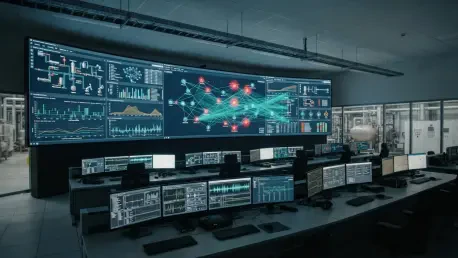

Industrial demilitarized zones and limited internal access rights serve as vital containment strategies for protecting the integrity of manufacturing lines. The rapid convergence of high-speed industrial connectivity and automated production has created a landscape where traditional air-gapped security is no longer a viable defense against sophisticated actors. This shift is necessitated by a new era of exploitation where attackers utilize artificial intelligence to automate the discovery and targeting of vulnerabilities in critical equipment, such as Siemens control devices. These AI-powered tools often masquerade as legitimate monitoring software to gain unauthorized access to memory and configuration data, signaling a need for a fundamental overhaul of traditional security models. In manufacturing hubs like South Korea, the vulnerability of infrastructure has reached a turning point as industrial control systems become increasingly connected to the internet. Recent global warnings highlight how modern threats bypass standard protocols, forcing a transition toward more layered defense frameworks.
Architectural Shifts in Manufacturing Security
Security by Design: Strengthening the Foundation
Building a resilient framework starts with the philosophy of security by design, which integrates protection directly into manufacturing equipment. This approach ensures that robust security protocols are established during the earliest stages of product development rather than being added as an afterthought. By employing AI-assisted security testing, including automated penetration testing and rigorous red-team exercises, manufacturers can proactively identify and remediate software weaknesses before they are deployed in a live environment. These advanced testing methods simulate the tactics of sophisticated attackers, allowing developers to discover zero-day vulnerabilities that traditional scanners might overlook. Furthermore, this method allows for the creation of more secure firmware that is inherently resistant to the types of memory-injection attacks currently seen in high-profile industrial incidents. Integrating these measures from the start reduces the long-term cost of patching and significantly limits the potential attack surface for future exploits.
Collaborative Resilience: Hardening Infrastructure Through Intelligence
Beyond internal development, industry-wide collaborations like Project Glasswing emphasize the collective hardening of critical software components to improve national infrastructure resilience. Such initiatives focus on creating standardized security baselines that can be applied across different types of industrial hardware, ensuring that a vulnerability in one system does not provide a roadmap for attacking another. By sharing intelligence on emerging AI threats and developing unified responses, these consortiums reduce the window of opportunity for cybercriminals to exploit newly discovered flaws. This collaborative environment also encourages the adoption of more transparent software supply chains, where every component is verified for integrity before integration. The goal is to create an ecosystem where cyber resilience is a shared responsibility among vendors, operators, and government agencies, resulting in a more robust defense posture that can withstand the evolving nature of automated cyberattacks and prevent widespread disruptions.
Operational Resilience and Perimeter Containment
Technical Isolation: Deploying Microsegmentation and IPS
On the operational front, the focus has shifted from simple perimeter defense to sophisticated internal network isolation through microsegmentation. This technique involves strictly separating information technology networks from operational technology networks to prevent lateral movement by intruders. By establishing specific zones and restricting communication between them, companies can ensure that a breach in the corporate office environment does not cascade into the production line. This strategy of containment is further supported by the implementation of virtual patching, which serves as a critical bridge for aging industrial equipment. Many legacy systems cannot be easily updated or taken offline without causing significant economic losses, so industrial intrusion prevention systems act as a network-level shield. These systems block known exploits and malicious traffic before they reach vulnerable devices, effectively buying time for administrators to schedule physical updates. This dual approach ensures both immediate protection and long-term sustainability.
Strategic Readiness: Maintaining Visibility and Recovery
Effective defense required total visibility and mapping of all operational technology assets to ensure recovery readiness in the event of an intrusion. Domestic security firms in South Korea, such as AhnLab and ESTsecurity, emphasized that detailed asset inventory and continuous monitoring for abnormal behavior were the only ways to detect sophisticated AI-driven threats. Beyond network integrity, protecting core technical intellectual property through multi-factor authentication and physically separated offline backups became a standard practice for maintaining a competitive edge. Strategic investments in visibility and internal segmentation allowed for faster response times and more effective containment of breaches. The industry successfully mitigated the risks associated with legacy equipment and AI-driven automation by prioritizing resilience over simple entry prevention. Ultimately, these integrated strategies established a new baseline for business continuity, ensuring that critical manufacturing lines remained functional even when faced with the most advanced cyberattacks.