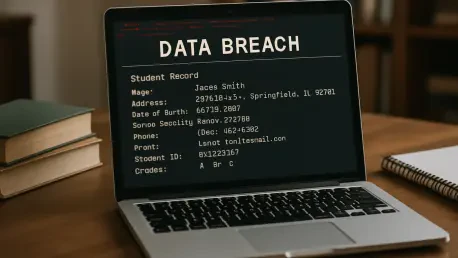

The sudden realization that years of personal academic records and sensitive financial information might be circulating on the dark web often begins with a single, cryptic notification from a university IT department. When the digital defenses of the Nottingham academic community faced a sophisticated intrusion, it exposed the fragile underpinnings of higher education cybersecurity infrastructure that many had previously assumed were impenetrable. This breach did not just disrupt administrative operations; it served as a catalyst for a painful reassessment of how modern institutions manage the lifeblood of their digital existence. Security experts now argue that the incident highlighted a systemic failure to prioritize data hygiene in an era where educational data is often more valuable to threat actors than credit card numbers. As campuses increasingly digitize everything from medical records to proprietary research, the gap between the speed of innovation and the resilience of protection mechanisms continues to widen, demanding a radical shift in strategy for 2027 and beyond.
The Challenge: Identifying Systemic Vulnerabilities in Higher Education
Threat actors have identified universities as soft targets due to the vast amounts of unclassified yet highly personal information they store alongside groundbreaking research intellectual property. Following the Nottingham incident, it became evident that the decentralized nature of campus networks, where thousands of personal devices connect to shared resources daily, creates an almost unmanageable attack surface. Hackers frequently utilize credential harvesting and sophisticated phishing campaigns tailored to the specific rhythms of the academic calendar, such as tuition payment deadlines or final enrollment periods. These methods exploit the high-trust environment inherent to scholarly communities, where open collaboration is often prioritized over strict digital compartmentalization. Consequently, the breach revealed that traditional perimeter-based security is no longer sufficient when internal actors can inadvertently grant access to external adversaries. The sheer volume of data involved—ranging from social security numbers to health histories—means that a single successful exploit can have long-lasting repercussions.
The implementation of a Zero Trust architecture emerged as the primary technical response, treating every access request as a potential threat regardless of its origin within the university network. This strategy required the deployment of micro-segmentation, which effectively partitioned the network into isolated zones to prevent attackers from moving laterally between student records and financial systems. Furthermore, AI-driven anomaly detection tools were integrated into the monitoring stack to identify unusual traffic patterns in real-time, allowing for the automated isolation of compromised accounts within seconds. These technological shifts were complemented by a rigorous data classification policy that ensured the most sensitive information received the highest level of encryption and monitoring. While these measures introduced new layers of complexity for users, they provided a necessary barrier against the increasingly automated and persistent nature of modern cyber espionage. The focus transitioned from a reactive posture to one of continuous verification, ensuring that the integrity of academic data remained protected against evolving threats.
The resolution of the security crisis necessitated a comprehensive overhaul of institutional protocols and a renewed focus on the human element of digital defense. Administrators successfully implemented mandatory hardware-based authentication and restricted administrative privileges to minimize the potential impact of unauthorized access attempts. They prioritized the decommission of legacy databases that lacked modern encryption, migrating vital student records to secure, cloud-native environments with automated redundancy. Educational leaders also established robust partnerships with cybersecurity firms to conduct biannual stress tests and vulnerability assessments, ensuring that defenses remained ahead of emerging threats. By investing in transparent communication and rigorous data governance, the institution eventually restored the confidence of its community and set a new benchmark for information stewardship. These collective efforts proved that a proactive, multi-layered approach was the only viable method for safeguarding the digital identities of the next generation of scholars.