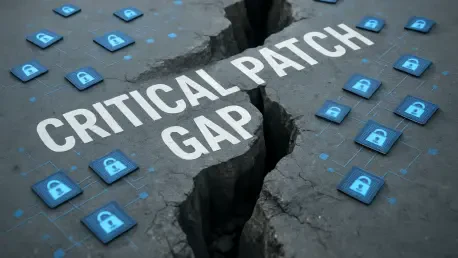

The contemporary cybersecurity environment is increasingly defined by a high-stakes race against time as sophisticated threat actors exploit the minute window between the public release of a security patch and its actual installation. Within this volatile landscape, a China-linked threat group identified as Storm-1175 has emerged as a primary exemplar of operational efficiency, demonstrating an uncanny ability to navigate complex network defenses with unprecedented speed. By focusing their efforts on the “patch gap,” these adversaries effectively turn the period of administrative delay into a weaponized opportunity for high-impact ransomware deployment. Their methodology is not merely reactive; rather, it involves proactive asset discovery and the weaponization of both zero-day and N-day vulnerabilities to achieve their objectives. Often, the transition from initial system infiltration to the final encryption of sensitive enterprise data occurs within a twenty-four-hour period, leaving security teams with virtually no room for error or remediation once the breach has been initiated.
Technical Foundations of the Exploit Cycle
Chaining Zero-Day and N-Day Vulnerabilities
The group’s technical repertoire is distinguished by a diverse array of more than sixteen distinct vulnerabilities that have been weaponized since the start of 2026. This comprehensive list includes critical flaws in widely adopted enterprise platforms such as Microsoft Exchange, Ivanti, ScreenConnect, and JetBrains, which serve as common entry points for lateral movement and privilege escalation. Unlike less sophisticated criminal entities that wait for public exploit code, Storm-1175 has been observed utilizing zero-day exploits for systems like Fortra GoAnywhere MFT and SmarterTools SmarterMail before the vulnerabilities were formally disclosed to the general public. This level of proactive research suggests a high degree of technical proficiency and a robust intelligence-gathering apparatus that allows them to identify and capitalize on unpatched assets before defenders are even aware of the risk. Recently, this scope has expanded to include Linux-based environments, specifically targeting Oracle WebLogic instances to ensure a broader reach across varied infrastructure.
Strategic Transition to Linux Environments
While their initial campaigns were primarily focused on Windows-centric enterprise environments, the group has significantly diversified its operational target list to include various Linux distributions and specific middleware like Oracle WebLogic. This strategic shift reflects a sophisticated understanding of the modern corporate data center, where high-value data often resides on non-Windows servers or within containerized environments. By exploiting vulnerabilities in these systems, they can bypass traditional security perimeters that may be more heavily tuned to monitor Windows-based activity. This expansion into Linux environments demonstrates that the threat is no longer confined to the desktop or the standard office suite; it now encompasses the core web and application servers that underpin critical business processes. This multi-platform approach ensures that regardless of the operating system a victim utilizes, the attackers possess the requisite tools to penetrate the environment, exfiltrate data, and deploy the Medusa ransomware payload with the same efficiency seen in their earlier campaigns.
Operational Velocity and Evasion Techniques
Subverting Legitimate Administrative Tools
To maintain a low profile and evade detection by automated security software, the actors rely heavily on “living-off-the-land” techniques that utilize the target’s own administrative tools against them. By repurposing legitimate software such as PowerShell, PsExec, and Impacket, they can perform lateral movement and execute malicious commands without triggering the alerts associated with custom malware. Furthermore, the group utilizes remote monitoring and management software, including AnyDesk and ScreenConnect, as a form of dual-use infrastructure that blends seamlessly with regular network traffic. This tactic makes it exceptionally difficult for security analysts to distinguish between a routine administrative session and a hostile infiltration. Before the final encryption phase, the attackers systematically weaken local defenses by modifying Windows Firewall policies, dumping administrative credentials with tools like Mimikatz, and configuring antivirus exclusions to ensure their ransomware payload can execute entirely unimpeded.
Rapid Ransomware Deployment and Exfiltration
The final stage of their operation is characterized by the swift deployment of Medusa ransomware, often facilitated by automated deployment tools like PDQ Deployer. This rapid-fire approach serves a dual purpose: it minimizes the time available for a security team to respond and ensures that the maximum amount of data is encrypted before the breach can be contained. During this process, the group prioritizes the exfiltration of sensitive information, which provides them with additional leverage for double extortion schemes. By the time a corporate incident response team is mobilized, the sensitive data has usually already been moved to external servers, and the local files have been rendered inaccessible. This operational model is particularly effective against sectors such as healthcare, education, and finance, where the urgency of restoring services often leads to a higher likelihood of ransom payment. The integration of high-speed technical execution with traditional criminal extortion techniques highlights a terrifying evolution in the capabilities of financially motivated threat groups.
Strategic Recommendations for Enterprise Defense
Security administrators were encouraged to adopt a zero-trust architecture that strictly limited the use of dual-use administrative tools to verified personnel only. It became clear that relying solely on traditional signature-based detection was insufficient against an adversary that leveraged legitimate remote monitoring and management software to mask its movements. To counter the rapid operational velocity of Storm-1175, organizations began prioritizing the automation of their patching processes, focusing specifically on perimeter devices and public-facing applications that were frequently targeted. Implementation of enhanced logging for PowerShell and other scripting environments allowed forensic teams to identify the early signs of lateral movement before ransomware deployment could occur. Furthermore, the segmentation of critical Linux-based application servers from the rest of the corporate network served as a vital barrier against the group’s expanded technical scope. These proactive measures ensured that even if a vulnerability existed within the patch gap, the attackers faced multiple layers of resistance that significantly hindered their ability to achieve complete system compromise.