
The digital landscape has shifted so fundamentally that the average person now carries an entire lifetime of private correspondence, financial records, and medical history in a pocket-sized device that remains constantly connected to global networks. This evolution has transformed email from a simple messaging tool into a critical storage center that houses the most sensitive aspects of modern life. Standard email protocols, which were designed decades ago for convenience rather than security, are often likened to postcards because they lack robust protections during the delivery process. For years, the general public viewed sophisticated encryption as a niche requirement for high-level experts or whistleblowers, but the reality of 2026 demands a different perspective. Every average internet user is now a target for brokers and cybercriminals who exploit the vulnerabilities of mainstream providers. Transitioning to a secure environment is no longer paranoia but a necessary response to the current digital reality.
Securing the Gateway: Protecting Your Digital Identity
Centralized Vulnerability: The Email Account as a Universal Master Key
The central role of an email address in the modern ecosystem cannot be overstated, as it serves as the foundational master key for nearly every digital interaction an individual initiates. While most users are diligent about the content of their personal messages, they often overlook the fact that their primary inbox is the centralized hub for password resets and security verifications across banking, investment, and healthcare platforms. If a standard account is compromised, an attacker does not just see the messages; they gain the capability to reset credentials and hijack the user’s entire digital life in a matter of minutes. This single point of failure creates a massive security debt that persists as long as the account remains open and unprotected by robust encryption. In the current landscape of 2026, the proliferation of automated credential stuffing attacks has made these mainstream inboxes even more susceptible to unauthorized access, regardless of the strength of individual passwords on other sites.
Automated Risk: Securing Sensitive Institutional Data
Beyond the threat of account takeover, a standard inbox accumulates a vast amount of sensitive automated notifications that the user likely never intended to share with a third party. Institutions such as hospitals, insurance providers, and law firms frequently send records, appointment summaries, or legal notices that eventually sit in an unencrypted state within the recipient’s storage. Even if a user practices good security habits, the act of receiving or forwarding medical information through a standard provider causes the legal protections and secure portals used by those institutions to evaporate. This data remains on the provider’s servers indefinitely, creating a permanent record of the user’s private life that is accessible to the provider’s internal systems. The risk is compounded by the fact that many users treat their email as a long-term archive, keeping years of financial statements and personal documents in a format that was never intended to serve as a secure digital vault for highly classified personal information.
Structural Weaknesses: The Flaws in Mainstream Infrastructure
Protocol Realities: Moving Beyond Basic Transport Encryption
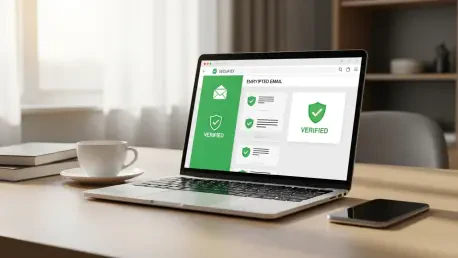
Technical misunderstandings regarding how data moves across the web often lead users to believe that major providers like Google or Microsoft offer sufficient protection through Transport Layer Security. While TLS effectively encrypts messages as they move from a sender’s device to a server, it does not provide comprehensive protection once the message reaches the destination server. Dedicated encrypted email services resolve this fundamental gap by implementing End-to-End Encryption, which ensures that a message remains unreadable to all parties, including the service provider itself. Under this model, the content is encrypted on the sender’s device and can only be decrypted by the intended recipient using a private key. This approach removes the need to trust intermediaries and ensures that private communications are not exposed during transit or storage. By utilizing PGP or similar cryptographic standards, users can maintain a high level of confidentiality that is simply not possible with the protocols utilized by mainstream service providers today.
Server Defense: Implementing Zero-Access Storage Models
The core danger of traditional email services lies in the fact that they store messages at rest using encryption keys that are managed and controlled by the corporation. This centralized model creates high-value targets for malicious actors, as evidenced by recurring breaches that have historically exposed billions of accounts and personal records. In sharp contrast, the zero-access models employed by modern encrypted providers ensure that only the individual user holds the key required to decrypt their data. This means that even in the event of a sophisticated server-side breach, the intruder would only find scrambled, useless code rather than legible private messages or sensitive attachments. By shifting the responsibility of key management to the user, these services eliminate the possibility of a single catastrophic failure affecting the entire user base. This structural shift is essential for maintaining privacy in an environment where data breaches are an expected occurrence rather than a rare anomaly, providing a robust layer of defense against both targeted and mass attacks.
Market Dynamics: Reclaiming Privacy in a Surveillance Economy
Data Sovereignty: Escaping Exploitation and AI Training
The economic reality of utilizing free email services is that the user is the primary product being sold to advertisers and data brokers. Major providers routinely scan and scrape the content of messages to build comprehensive consumer profiles, target advertisements, and train sophisticated artificial intelligence models without explicit, informed consent for every use case. By choosing to switch to a paid, encrypted service, a person effectively removes themselves from this pervasive surveillance economy. Because the provider is technically unable to read the messages due to the encryption architecture, they cannot exploit personal data for profit, shifting the relationship from exploitation to a professional service. This ensures that privacy is the primary commodity rather than a secondary consideration that can be traded away for corporate gain. In 2026, as AI models require more specific human data to remain competitive, the pressure on free providers to harvest inbox content has only increased, making the jump to secure alternatives a vital step for individual autonomy.
Practical Defense: Improving Long-Term Digital Hygiene
Adopting encrypted email protocols also facilitates significantly better digital hygiene by allowing users to reduce their overall footprint across the internet. Over years of consistent use, standard email addresses inevitably become corrupted by spam, marketing trackers, and data brokers who aggregate information from various public and private sources. Encrypted services offer a clean slate and advanced tools, such as self-destructing messages that expire after a predetermined period, to prevent the accumulation of permanent digital trails. While there are certain trade-offs to consider, such as annual subscription costs and the minor social friction of asking others to use secure communication links, the protection of one’s digital master key has become a vital priority. Modern personal data is an incredibly valuable asset, and failing to secure it is akin to leaving a physical vault unlocked in a crowded public space. Investing in a secure provider is the most effective way to regain control over who has access to your life and how that information is utilized over the long term.
Strategic Evolution: Moving Toward Secure Defaults
Proactive Measures: Establishing New Privacy Standards
The shift toward secure communication models represented a decisive moment in the protection of individual sovereignty over the digital self. Users recognized that their existing habits left them vulnerable and began the process of auditing their account recovery chains and institutional links. By identifying every service tied to an unencrypted master email, individuals were able to migrate their most critical financial and medical accounts to secure, end-to-end encrypted providers. This transition did not just protect the content of their messages; it essentially walled off the primary entry point used by hackers for identity theft and credential hijacking. Early adopters found that while the initial setup required effort, the long-term peace of mind provided by zero-access storage was invaluable. They successfully decoupled their private lives from the pervasive scanning and data harvesting that had become standard in the legacy email industry, establishing a new baseline for what personal security meant in a connected world.
Future Outlook: Maintaining Long-Term Digital Security
The implementation of advanced features like self-destructing messages and burner aliases proved to be effective strategies in the fight against data permanence. These technical solutions allowed users to interact with the broader internet without leaving behind a trail of readable data that could be exploited years later. As the landscape evolved, the community moved away from providers that treated personal data as a monetization asset and toward those that viewed privacy as a fundamental right. Organizations and individuals alike adopted a zero-trust posture, ensuring that even if a server breach occurred, the underlying data remained protected by the user’s own keys. This historical pivot to encryption helped mitigate the impact of large-scale leaks and reduced the effectiveness of automated profiling. By prioritizing secure defaults, a more resilient digital environment was created where communication remained private, and sensitive personal information stayed under the sole control of its rightful owner.