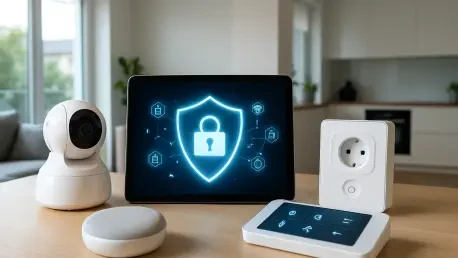

The modern homeowner often discovers that their expensive security camera is little more than a high-tech paperweight without a recurring monthly payment to a distant corporate server. This unsettling realization marks a growing disconnect between physical possession and actual ownership, as consumers find themselves trapped in ecosystems where they pay for the hardware but remain tethered to the manufacturer’s digital whim. While a device sits physically on a porch or a bookshelf, the data it generates and the software required to run it are frequently “rented” rather than owned, creating a precarious state of dependence on proprietary clouds.
This shift from private tools to mandatory services carries significant weight in a landscape increasingly defined by corporate surveillance and aggressive subscription models. When a company can unilaterally disable features or hike prices for a device that has already been purchased, the concept of digital autonomy begins to erode. This analysis explores the rising resistance to this model, examining the Fulu Foundation’s provocative bounty challenge, the legal friction caused by outdated copyright laws, and the burgeoning movement to migrate smart home processing back to local, user-controlled servers.
The Shift Toward Local-First Smart Home Ecosystems
Market DatThe Financial Burden of Proprietary Clouds
The economic transition toward Software-as-a-Service (SaaS) for physical hardware has reached a tipping point where subscription costs often dwarf the initial price of the device. Platforms like Ring exemplify this trend, with annual fees ranging from $49.99 to over $1,000 for comprehensive monitoring, turning a one-time purchase into a lifelong financial obligation. This monetization strategy has backfired among privacy-conscious consumers, who view these recurring costs as a “digital tax” on their own security data.
Furthermore, public records and consumer sentiment data reveal a deep-seated frustration with cloud-dependent hardware, especially following high-profile privacy breaches. The $5.6 million FTC settlement against Ring served as a major catalyst, proving that centralized data storage is a liability rather than a feature. Consequently, adoption statistics for open-source home automation platforms have surged, as users seek out alternatives that prioritize local control and eliminate the need for a corporate middleman to process every motion alert or doorbell ring.
Real-World Application: The Fulu Foundation Bounty
In a bold move to reclaim hardware independence, the Fulu Foundation launched a $10,000 bounty initiative specifically designed to “jailbreak” Amazon Ring cameras. This technical challenge aims to provide a reliable method for bypassing proprietary servers, allowing the hardware to function as a standalone device. By incentivizing developers to find workarounds, the foundation seeks to allow users to redirect their video footage to private, home-based servers without losing the core functionality they originally paid for.
This community-funded effort highlights a broader trend of decentralized innovation where users no longer wait for corporate permission to modify their gear. The bounty acts as a practical response to hardware that is locked behind artificial paywalls, proving that technical workarounds can be driven by collective financial support. If successful, this initiative could provide a blueprint for liberating other categories of smart home devices, transforming them from “connected” liabilities into truly private tools.
Expert Perspectives on the Right to Modify and Data Privacy
Legal and ethical experts, including advocates like Kevin O’Reilly, argue that the ability to modify software is a fundamental component of ownership. They contend that once a customer has fully paid for a device, the manufacturer should not have the power to dictate how that hardware is used or where its data is sent. This perspective challenges the current industry standard, where manufacturers maintain a “kill switch” over device functionality to ensure continued subscription revenue, effectively treating buyers as long-term tenants.
However, these efforts at digital sovereignty face significant hurdles from Section 1201 of the Digital Millennium Copyright Act (DMCA). This legislation complicates the act of circumventing technological locks, even when the goal is simply to make a purchased device work more efficiently or privately. The tension between the right to modify and copyright protection has created a legal gray area, leaving users caught between wanting to secure their data and the risk of violating federal regulations designed for a different era of technology.
The recent backlash against the “AI Search Party” concept served as a definitive turning point for many consumers who realized their data was being repurposed as a product. When companies use private video feeds to train algorithms or share information with third-party partners, the “service” of the cloud begins to look more like a surveillance mechanism. This realization prompted a massive shift in public opinion, as users began to value local processing not just for its cost savings, but as a necessary shield against corporate data harvesting.
The Future of Hardware: From Rented Services to Private Tools
The trajectory of the “Right to Repair” movement suggests an evolution from physical components to software sovereignty. Future legislative battles will likely focus on whether consumers have the right to install custom firmware or strip away proprietary bloatware that requires an internet connection for basic tasks. We are witnessing the emergence of a bifurcated market: one segment will continue to prioritize the convenience of intrusive cloud ecosystems, while a growing “power user” segment will migrate toward local-only hardware that offers total privacy.
For tech giants, the long-term implications are profound, as legal precedents could eventually mandate that hardware must be interoperable with third-party software. If users are legally permitted to decouple hardware from its original cloud service, the current business model of selling hardware at a loss to recoup gains through subscriptions would collapse. This would force a return to a quality-first manufacturing approach, where the value lies in the durability and capability of the device itself rather than the data it can extract.
Decentralized technology offers a promising path forward, though it presents unique technical hurdles for the average consumer compared to the “plug-and-play” simplicity of corporate clouds. While local servers provide immense gains in community privacy and data security, they require a level of technical literacy that most users currently lack. However, as user-friendly local-first interfaces continue to mature, the barrier to entry will drop, making digital sovereignty an accessible standard rather than a niche hobby.
Reclaiming the Digital Threshold
The ongoing conflict between corporate profit incentives and the fundamental right to digital privacy defined the initial era of the smart home. It became clear that the Fulu Foundation’s challenge was more than just a technical stunt; it functioned as a symbolic catalyst for a necessary shift in how society views digital property. The movement demonstrated that consumers were no longer willing to accept a reality where their homes were treated as data-mining outposts for Silicon Valley.
Moving forward, the smart home industry had to reconcile with a customer base that demanded transparency and true hardware autonomy. Manufacturers began to realize that offering “local-only” modes was not just a niche request but a market necessity for long-term survival. As legislative frameworks started to catch up with the realities of the digital age, the focus shifted toward building tech that respected the physical boundaries of the home. This transition ensured that the next generation of devices served the people who bought them, rather than the companies that built them.