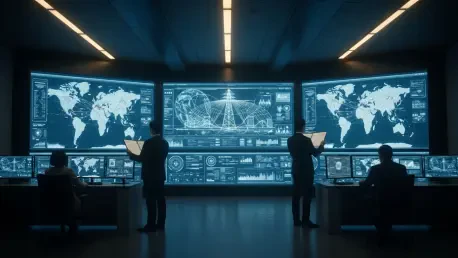

The modern landscape of national security is no longer defined by the visible deployment of hardware but by the silent, rhythmic pulse of malicious code embedded within the very systems that sustain civilian life. As societies lean more heavily on digital interconnectivity, the primary battleground has transitioned from physical borders to the pressurized lines of power grids, regional transport hubs, and the classified corridors of government servers. This shift marks a departure from traditional geopolitical friction, moving into a space where the threat is often present but entirely invisible to the naked eye.
Recent intelligence findings suggest a fundamental transformation in adversary doctrine, moving away from simple data theft and toward what specialists call “network colonization.” In this paradigm, state-sponsored actors do not merely infiltrate a network to exfiltrate files; instead, they embed themselves within the internal architecture to establish a permanent presence. These actors effectively inhabit critical systems, maintaining a low-profile existence while waiting for a high-level signal to initiate destructive operations.
This analysis examines the current trajectory of these persistent threats, specifically focusing on the activities of clusters known as Shadow-Earth-053 and 054. By exploring the sophisticated “sleep cycle” tactics used to evade modern detection and the broader implications of prepositioning destructive malware across both Western and Asian territories, a clearer picture of the digital battlefield emerges. The following sections outline how these strategies have evolved to bypass conventional perimeter defenses in favor of long-term strategic positioning.
The Evolution of the “Stay-Behind” Threat
Quantifying the Surge in Persistent Infiltration
Data collected from early 2026 through the first half of 2027 reveals a significant spike in targeted attacks against the defense and transportation sectors. This surge is not merely a quantitative increase in volume but a qualitative shift in intent. Organizations that once faced sporadic phishing attempts are now dealing with highly coordinated efforts to seize control of operational technology. The persistence of legacy vulnerabilities has facilitated this trend, as attackers continue to find success with exploits that many believed were obsolete.
Specifically, the “ProxyLogon” vulnerability (CVE-2021-26855) has remained a primary entry point for sophisticated actors, despite being several years old. Its continued utility highlights a systemic failure in patch management across critical infrastructure providers who often prioritize uptime over security updates. Furthermore, there is a visible geographical expansion of Chinese APT operations. These groups have moved beyond regional interests to target NATO logistics hubs, particularly in countries like Poland, where the movement of military assets provides a high-value target for disruption.
Real-World Case Studies: From Espionage to Colonization
The groups identified as Shadow-Earth-053 and 054 provide a chilling look into the mechanics of modern colonization. Investigations have confirmed that these entities successfully infiltrated more than a dozen critical networks across Poland, Taiwan, and India over the last year. Their methodology involves a deep integration into the host environment, where they map administrative structures and identify key kill-switches for later use. This is not a “smash-and-grab” operation; it is the construction of a subterranean military base within a nation’s digital sovereign territory.
Technological sophistication has also kept pace with these strategic shifts. The exploitation of “React2Shell” (CVE-2025-55182) in React Server Components has allowed these groups to bypass contemporary web application firewalls and modern defenses that were designed to stop older classes of injection attacks. Moreover, these actors have become adept at using dual-use tooling to hide in plain sight. By utilizing legitimate remote desktop applications such as AnyDesk, attackers mask their unauthorized traffic as routine administrative maintenance, making it nearly impossible for standard security teams to distinguish between a legitimate employee and a foreign agent.
Expert Perspectives on Modern Cyber Sabotage
The transition from espionage to colonization has sparked intense debate among industry leaders regarding the adequacy of current defense models. Researchers from TrendAI have noted that the goal of modern adversaries is no longer just “knowing” what a rival is doing, but “owning” the environment in which they do it. This long-term strategic positioning provides a level of leverage that traditional intelligence gathering cannot match, as it places the adversary in a position to physically disable a city’s water or power with a single command.
Tom Kellermann and other prominent cybersecurity analysts have pointed out that these new threats mirror the destructive prepositioning blueprints seen in the older Salt Typhoon and Volt Typhoon campaigns. The common thread is the intention to cause chaos during a kinetic conflict. Experts argue that the “patching paradox”—where organizations are aware of risks but cannot or will not implement fixes due to system complexity—is the greatest weakness facing Western infrastructure today. This systemic vulnerability suggests that perimeter-only defense is no longer a viable strategy for national security.
The Future Landscape: Sleepers and Digital Battlefields
The Rise of “Sleep Cycle” Command and Control
Advanced malware is now programmed to remain dormant for months, a tactic known as a “sleep cycle” that effectively neuters behavioral-based security and Endpoint Detection and Response (EDR) solutions. While these tools are excellent at spotting immediate suspicious activity, they often struggle to identify a process that performs a single, legitimate-looking action every ninety days. This patience allows the attacker to survive system reboots, security audits, and even partial network migrations, maintaining a foothold for years.
The modular nature of tools like ShadowPad and NoodleRat further complicates this landscape. These frameworks allow attackers to deploy cross-platform infrastructure that can be activated instantly during a geopolitical crisis. The long-term risk involves the prepositioning of “wipers”—malware designed to erase entire hard drives—as a form of diplomatic leverage. If an adversary can prove they have the capability to darken a major metropolis, they gain a seat at the negotiating table that no amount of traditional diplomacy can replicate.
Strategic Implications for Global Security
The colonization of NATO logistics hubs directly impacts the ability of Western nations to support regional conflicts or provide humanitarian aid. If an adversary can disrupt the rail or port systems of a key ally, they effectively neutralize that ally’s military utility without firing a shot. This evolution of “Island Hopping” demonstrates how attackers move from compromised technology service firms to reach high-value government targets, using the trusted relationships between vendors and clients to bypass security layers.
Consequently, the most significant risk remains a coordinated, sudden act of sabotage during a period of high diplomatic tension. Such an event would not be preceded by a warning but would occur simultaneously across multiple sectors, including transportation and the power grid. The goal would be to paralyze the civilian population and distract the government, creating a window of opportunity for the adversary to achieve kinetic objectives elsewhere in the world without fear of immediate intervention.
Summary and Defensive Outlook
The shift toward persistent, dormant threats necessitated a total reassessment of how organizations approached internal security. Attackers utilized sophisticated obfuscation techniques, such as the “RingQ” tool, to hide malicious binaries within legitimate system processes, ensuring that standard antivirus solutions remained blind to their presence. The focus moved away from simply keeping hackers out and toward the difficult reality of managing an environment that was likely already compromised.
Security professionals recognized that the only effective response was aggressive, continuous threat hunting. Organizations moved beyond reactive patching and began implementing proactive monitoring systems designed specifically to uncover “sleeper” cells within their architecture. This change in philosophy underscored the fact that in the realm of modern cyber warfare, the most dangerous threat was not the attack that had already occurred, but the one that was currently waiting in the shadows for the right moment to strike. Defensive strategies finally adapted to treat every network as a potential site of colonization, prioritizing visibility and rapid isolation above all else.