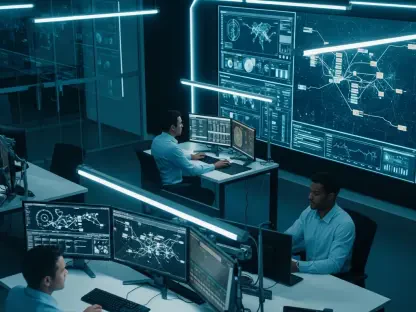

The global industrial landscape is undergoing a profound transformation as artificial intelligence transitions from a speculative technological trend into a non-negotiable component of modern manufacturing operations that defines the competitive standing of international firms. This shift is characterized by a move away from isolated digital experiments toward the creation of fully integrated, autonomous industrial ecosystems that can respond to market fluctuations in real time. Recent data involving hundreds of manufacturing decision-makers across nineteen countries suggests that the primary goal for the sector is now “AI-readiness,” a state where infrastructure and strategy align to support continuous innovation. This transition is not merely about replacing manual labor with automated systems; it is about reinventing the entire production lifecycle to be more resilient, data-driven, and adaptable to the complexities of a volatile global economy. As companies strive to bridge the gap between legacy processes and futuristic requirements, the focus has shifted toward building a foundation that can sustain long-term growth and operational excellence.
Accelerating Adoption: Economic Value and Market Expansion
Manufacturing has officially moved past the experimental phase, with roughly fifty-nine percent of companies already deploying artificial intelligence at scale within their daily production environments. This aggressive adoption is reflected in the market’s projected growth, which is expected to see a massive increase in valuation from thirty-four billion dollars to an estimated one hundred fifty-five billion dollars by the end of the decade. The rapid acceleration is driven by a consensus among industry leaders that digital intelligence is a critical lever for boosting throughput and maintaining a competitive edge. While initial efforts often focused on localized improvements, the current trend shows a broader commitment to integrating these technologies across multiple production sites. This scale of implementation indicates that the industry no longer views these tools as optional add-ons but as essential core components of the modern factory floor, enabling companies to meet increasing consumer demands with unprecedented precision.
Beyond the immediate financial metrics, there is a clear strategic shift toward using artificial intelligence as a primary driver for long-term business resilience and improved worker safety. Early adopters have moved from seeking short-term efficiency gains, such as automated quality inspections and basic process automation, to prioritizing deeper organizational stability. By utilizing sophisticated algorithms to predict equipment failures and optimize energy consumption, manufacturers are creating a more sustainable and predictable operational model. This evolution is also visible in the way technology is used to enhance the safety of the workforce, with intelligent systems monitoring hazardous environments and reducing the physical strain on human operators. Consequently, the narrative surrounding industrial automation is changing; it is increasingly viewed through the lens of empowerment and risk mitigation, ensuring that the manufacturing sector can withstand external shocks while simultaneously improving the overall quality of the industrial work environment.
Infrastructure Requirements: The Connectivity and Performance Gap
Despite the high level of interest in advanced software, a critical disconnect remains between digital capabilities and the physical hardware required to support them in a real-world setting. Many manufacturers continue to struggle with unreliable wireless connectivity, with over half of surveyed organizations reporting that network inconsistencies frequently disrupt their intelligent operations. To truly unlock the potential of these systems, facilities must modernize their infrastructure to support high-performance networking characterized by low latency and significant bandwidth. Without a robust communication layer, even the most sophisticated algorithms fail to deliver actionable insights or maintain the necessary speed for real-time production. The current challenge lies in the fact that many factory floors are still operating on legacy network architectures that were never designed to handle the massive data loads generated by modern sensors. Bridging this gap is now a top priority for executives who recognize that hardware is the bottleneck for software success.
The push for modernization is leading many organizations to invest heavily in edge computing and updated networking protocols that can facilitate machine-to-machine communication without delay. By processing data closer to the source rather than relying solely on distant cloud servers, manufacturers can achieve the near-instantaneous response times required for high-precision tasks. This transition to “AI-ready” networks involves a comprehensive overhaul of both wired and wireless systems to ensure that every sensor and actuator can participate in a unified digital ecosystem. Furthermore, the ability to scale these technologies across diverse global locations depends on a standardized infrastructure that provides consistent performance regardless of geography. As the industry moves toward more complex applications, the focus on building a reliable physical foundation has become as important as the development of the software itself. Organizations that fail to address these connectivity hurdles find that their digital investments remain confined to small, non-scalable pilot projects.
The Paradox: Industrial Cybersecurity as Barrier and Solution
Cybersecurity presents a unique paradox in the current industrial landscape, acting as both the largest obstacle to adoption and the most promising long-term solution for operational security. Many organizations delay the implementation of intelligent systems due to deep-seated fears regarding data breaches, the loss of intellectual property, and vulnerabilities within the complex supply chain. Traditional security measures often struggle to keep up with the new digital risks introduced by interconnected devices, leading to a significant “trust deficit” among conservative industrial leaders. This hesitation is particularly evident in sectors where production environments are highly sensitive or governed by strict regulatory frameworks. For these companies, the risk of a cyberattack that could halt production or compromise safety protocols often outweighs the perceived benefits of rapid digital transformation. This environment of caution has led to a slower rollout of advanced tools as firms prioritize the hardening of their digital perimeters.
On the other hand, the vast majority of manufacturers expect artificial intelligence to eventually become their strongest defense against the very digital threats they fear today. By leveraging automated systems for real-time threat detection and incident response, companies aim to achieve a level of operational visibility that was previously impossible for human analysts to maintain. These intelligent platforms can identify patterns of unauthorized access or unusual network behavior far faster than traditional software, allowing for immediate mitigation before a breach can escalate. As a result, industrial cybersecurity has emerged as one of the top priorities for investment, trailing only behind process automation and logistics in terms of budget allocation. This shift indicates a growing recognition that the only way to secure a modern factory is through the use of the same advanced technologies that introduced the new risks. Over time, the integration of these defensive tools is expected to rebuild trust and provide a more resilient framework for innovation.
Synergy and Convergence: The Role of IT and OT Teams
A recurring theme in the successful scaling of industrial technology is the necessity of deep collaboration between Information Technology and Operational Technology departments. Historically, these two divisions have operated in silos with different priorities, technical languages, and performance metrics, which now hinders the ability to implement advanced software across multiple factory sites. Organizations that foster synergy between these teams are significantly more confident in their ability to maintain regulatory compliance and manage overall network performance effectively. When the data expertise of the IT department is combined with the practical, floor-level experience of the OT staff, the resulting digital strategies are much more grounded in operational reality. This convergence is essential for ensuring that new technologies actually solve production problems rather than creating additional layers of complexity. However, achieving this level of unity requires a fundamental shift in corporate culture and management.
To overcome traditional barriers, successful companies are restructuring their internal hierarchies to encourage cross-departmental planning and shared responsibility for system uptime. This involves moving away from isolated projects toward a model where both teams are involved in the entire lifecycle of a technology deployment, from initial design to long-term maintenance. Experts suggest that the most resilient organizations are those where the boundary between the office and the factory floor has become blurred, allowing for a seamless flow of data and insights. This organizational integration not only speeds up the deployment of new tools but also ensures that the resulting systems are more robust and secure. As the complexity of industrial ecosystems continues to grow, the ability to maintain this collaborative environment will be a defining factor in a company’s success. Firms that continue to allow departmental friction to persist will likely struggle to keep pace with competitors who have embraced a more unified approach to digital growth.
Strategic Outlook: Autonomy and the Disaggregation Trend
Looking toward the coming years, the manufacturing landscape is moving toward a state of increased autonomy characterized by machine-to-machine decision-making and self-optimizing production lines. As specialized hardware becomes more expensive and difficult to source, a significant trend is the separation of software from hardware, allowing applications to run across more diverse and flexible environments. This “disaggregation” enables manufacturers to update their intelligent capabilities without needing to replace entire physical systems, providing a more sustainable path for technological evolution. Industry leaders have emphasized that immediate investment in these flexible architectures is a competitive necessity, as the window for establishing a dominant position in the digital economy is closing. The focus has moved toward creating a standard operating environment that can support a wide variety of software solutions, ensuring that the factory remains adaptable to future changes. This shift represents the final step in the transition toward a truly autonomous industrial sector.
To navigate this evolving landscape, manufacturers prioritized the modernization of their digital foundations and fostered a culture of cross-departmental collaboration. Successful organizations recognized that infrastructure had to be as intelligent as the software it hosted, leading to significant investments in high-performance networking and edge computing. Leaders addressed the cybersecurity paradox by utilizing automated defense mechanisms to secure their supply chains and protect their intellectual property. The integration of Information Technology and Operational Technology departments became a standard practice for those aiming to scale their digital initiatives across global sites. Ultimately, the industry moved away from tactical, short-term efficiency gains and toward a long-term strategy of operational resilience. These proactive steps ensured that companies remained competitive in an environment where technological agility was the primary driver of growth. By treating artificial intelligence as a fundamental requirement rather than an optional tool, the sector established a new baseline for global industrial excellence and sustainable production.