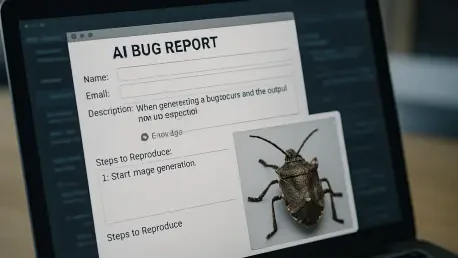

The landscape of open-source software maintenance is currently undergoing a radical transformation as advanced artificial intelligence models generate technical bug reports with unprecedented speed and sophistication. While the early iterations of automated vulnerability discovery were often plagued by “AI slop”—a term used to describe low-quality, easily dismissed hallucinations—the current generation of large language models produces narratives that are technically coherent and highly persuasive. This shift has created an unexpected crisis for the stewards of foundational digital infrastructure, including the developers behind the curl data transfer tool and the Linux kernel. Maintainers who once spent seconds filtering out obvious nonsense are now finding themselves locked in hours of deep technical analysis to debunk reports that look professional but offer zero practical security risk. This phenomenon suggests that as AI becomes more capable, the primary challenge is no longer identifying errors, but rather managing the sheer volume of high-fidelity, low-impact feedback that threatens to paralyze the global software development community through human burnout.
The Paradox of Higher Quality Automated Reports
The Transition From Low-Quality Noise to Technical Plausibility
The refinement of artificial intelligence has effectively eliminated the obvious markers of automated generation that previously allowed maintainers to quickly purge their queues. In the current environment, bug reports often feature well-structured code snippets, detailed reproduction steps, and logically sound explanations of potential memory leaks or data races. However, this increased technical accuracy does not necessarily translate into increased utility for the project. Many of these reports focus on theoretical edge cases or minor stylistic inconsistencies that possess no path to actual exploitation. Because the language used is indistinguishable from that of a human expert, the initial triage phase now requires a significantly higher level of cognitive engagement from senior developers. This trend has fundamentally altered the economics of open-source contribution, as the cost of generating a sophisticated report has dropped to near zero, while the cost of verifying its legitimacy remains high for the human experts responsible for project integrity.
The Hidden Costs of Externalized AI Productivity
Daniel Stenberg, the founder and primary maintainer of curl, has highlighted that the primary issue is the externalization of work from the reporter to the maintainer. When a researcher uses an AI tool to scan a codebase and generate a hundred plausible reports, they are essentially using the tool as a productivity multiplier that creates a tenfold increase in cleanup work for the project leads. Linux kernel maintainers such as Greg Kroah-Hartman and Willy Tarreau have observed similar patterns, noting that the volume of AI-assisted submissions is rapidly exceeding the remediation capacity of even the most well-funded open-source teams. This saturation leads to a dangerous bottleneck where critical, human-discovered vulnerabilities might remain buried under a mountain of AI-generated noise. The exhaustion experienced by these maintainers is not merely a matter of workload; it is a direct result of the psychological strain of investigating high-quality “mirages” that lead nowhere, distracting from the essential task of hardening core internet technologies.
Structural Adjustments in Software Vulnerability Management
Reevaluating Financial Incentives in Bug Bounty Programs
To combat the influx of automated reports, major open-source entities are forced to overhaul their reward structures and submission guidelines to prioritize quality over quantity. The curl project has taken a decisive stance by ceasing financial awards for certain classes of vulnerability reports, particularly those that lack a clear demonstration of security impact. Similarly, the Internet Bug Bounty program has implemented a temporary pause on submissions and payments to reassess its incentive models in light of the AI surge. These organizations realized that financial incentives were inadvertently fueling the growth of automated “vulnerability mining,” where users prioritized the volume of submissions over the actual safety of the software. By removing the immediate monetary gain for speculative reports, project leads hope to discourage low-effort automation and return the focus to meaningful collaboration. This structural shift signals the end of the era where any technical anomaly could result in a payout, requiring a new level of rigor from the security research community.
Mandating Proof of Exploitability for Security Researchers
The long-term solution to the strain caused by AI-assisted reporting lies in the implementation of stricter verification requirements that place the burden of proof back on the submitter. Rather than accepting a report based on a theoretical code path identified by an AI, maintainers are increasingly demanding functional proof-of-concept exploits or detailed evidence of how a flaw can be triggered in a real-world environment. This transition forces researchers to use AI as a tool for deeper investigation rather than just surface-level discovery. New reporting frameworks are being designed to filter out submissions that do not include specific artifacts, such as crash logs or memory dumps, ensuring that only substantiated claims reach the desks of core developers. By mandating that reporters perform the heavy lifting of validation, open-source projects can leverage the benefits of automated discovery without being overwhelmed by its output. This approach fosters a more sustainable ecosystem where the efficiency of AI serves the project rather than hindering its progress.
The escalation of sophisticated AI-generated bug reports necessitated a fundamental pivot in how the open-source community perceived and managed external contributions. It became evident that technical accuracy alone was insufficient for maintaining a healthy development cycle, as the saturation of credible but irrelevant reports threatened the stability of essential projects. Consequently, industry leaders adopted more stringent triage protocols and reconfigured their bounty programs to reward only those researchers who provided actionable, verified proof of exploitability. These actions effectively slowed the tide of automated noise and allowed human maintainers to reclaim their focus on high-priority security architecture. Moving forward, the most effective strategy involved the integration of defensive AI tools designed to screen submissions against known patterns of low-value automated output. Developers also initiated a closer dialogue with AI tool creators to ensure that future scanners prioritize exploitability over mere theoretical non-compliance. These steps helped stabilize the relationship between automated research and human maintenance.