
The digital battlefield has once again intensified as a notorious state-sponsored hacking group demonstrated alarming agility by turning a newly disclosed software flaw into a weapon against high-value government targets in less than twenty-four hours. This rapid exploitation marks a significant escalation in the ongoing cyber warfare campaigns targeting Ukraine and its allies, highlighting the relentless pressure on digital defenses in an era of geopolitical conflict. The campaign showcases a blend of technical sophistication and strategic patience, serving as a stark reminder that the window between a vulnerability’s disclosure and its active use in the wild is shrinking to almost nothing.
A New Cyber Front Opens in the Ukraine Conflict
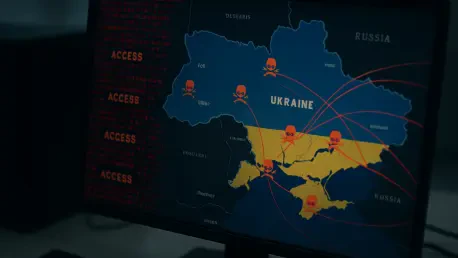
In a calculated and swift operation, the Russia-linked advanced persistent threat group APT28 has begun actively exploiting a critical Microsoft Office zero-day vulnerability, tracked as CVE-2026-21509. The attack’s significance is amplified not only by the novelty of the vulnerability but also by the selection of its targets: key government agencies within Ukraine and organizations across the European Union. This campaign represents a new front in the digital dimension of the conflict, aimed at espionage and disruption.
What makes this incident particularly remarkable is the speed at which the threat actor weaponized the flaw. According to Ukraine’s national cyber defense team, CERT-UA, the attackers developed and deployed their malicious exploit just one day after Microsoft officially announced the vulnerability. A malicious document designed to trigger the exploit was created on January 27, suggesting that APT28 may have had prior knowledge or was exceptionally prepared to act the moment the bug became public knowledge, underscoring their advanced capabilities and strategic focus.
The Adversaries and the Vulnerability
The group behind this offensive, APT28, is no stranger to the global cybersecurity stage. Also known by aliases such as “Fancy Bear” and “Strontium,” this group is widely attributed to Russia’s military intelligence and has a long history of conducting high-profile cyberattacks against political, military, and governmental entities worldwide. Their operations are characterized by sophistication, persistence, and a clear alignment with Russian state interests, making them a formidable adversary in cyberspace.
The vulnerability at the heart of this campaign, CVE-2026-21509, is classified as a security feature bypass bug within Microsoft Office. This type of flaw allows attackers to circumvent built-in protective measures designed to prevent the execution of malicious code. By exploiting this weakness, APT28 can trick the software into running unauthorized commands when a user simply opens a specially crafted document, turning a routine piece of office software into a gateway for a full-scale network intrusion.
Anatomy of a Sophisticated Cyberattack
The attack unfolds through a meticulously planned, multi-stage process designed to infiltrate systems, establish control, and evade detection. Each step of the infection chain is carefully orchestrated to build upon the last, leading from a simple email to a complete compromise of the target’s network.
The Phishing Lure
The initial entry point relies on a classic but effective technique: spear-phishing. Attackers crafted emails impersonating a legitimate and trusted organization, Ukraine’s Ukrhydrometeorological Center, to lower the guard of their targets. These deceptive emails, sent to over 60 central government bodies, contained a malicious DOC attachment. The lure was designed to appear as an urgent or official communication, enticing recipients to open the file and unwittingly trigger the first stage of the attack.
The Multi-Stage Infection Chain
Once the victim opens the compromised document, a complex technical sequence begins. The document first establishes a WebDAV connection to an attacker-controlled external server, a protocol that allows it to download additional components without raising immediate suspicion. From this server, it retrieves a malicious shortcut file. This file then acts as a launchpad, executing a script that drops a malicious DLL disguised as a legitimate Windows component. To further obscure its activities, the attack’s core shellcode is hidden within an ordinary-looking image file, which is then extracted and executed in memory.
Establishing a Persistent Foothold
Gaining initial access is only the beginning. To ensure their control over the compromised system survives reboots and user logoffs, the attackers employ advanced persistence techniques. The primary method observed is COM hijacking, a stealthy process where the attackers manipulate Windows components to load their malicious code instead of legitimate software. This is reinforced by a scheduled task designed to periodically restart the explorer.exe process, a critical part of the Windows user interface, which in turn ensures the malicious code is reloaded and remains active.
Advanced Evasion and a Covert Payload
A defining characteristic of this campaign is its emphasis on stealth. The attackers go to great lengths to hide their presence and communication, making detection by standard security tools extremely difficult. The final payload, the COVENANT post-exploitation framework, provides them with extensive capabilities for data exfiltration, lateral movement, and long-term espionage.
To conceal its command-and-control (C2) communications, APT28 routes its traffic through Filen, a legitimate and encrypted cloud storage service. By using Filen’s infrastructure, the malicious traffic is disguised as normal cloud activity, allowing it to blend in with legitimate network data and bypass security solutions that primarily look for connections to known malicious domains. This abuse of a trusted service is a hallmark of modern APT operations, complicating the defensive landscape significantly.
The Current Threat Landscape and Official Response
Following the discovery of the campaign, the situation remains critical. Microsoft has moved to address the vulnerability by releasing security patches, but the threat is far from neutralized. The effectiveness of these patches depends entirely on their widespread and timely adoption, a process that is often slow and inconsistent across large organizations.
Reflecting this reality, Ukraine’s CERT-UA has issued a stark warning, expressing pessimism about the immediate containment of the threat. The agency anticipates a surge in attacks leveraging CVE-2026-21509 as other malicious actors adopt the exploit. Their advisory underscores the gap between the release of a patch and its implementation, a window of opportunity that threat actors like APT28 are poised to exploit to its fullest potential.
Reflection and Broader Impacts
The attack offers a powerful case study in the current dynamics of state-sponsored cyber operations, revealing both the strengths of the attackers and the persistent challenges facing defenders. Its implications extend beyond the immediate targets, signaling important trends in the global cybersecurity environment.
Reflection
The attackers’ strategy demonstrates a mastery of operational speed and technical evasion. The ability to weaponize a zero-day vulnerability almost instantaneously highlights their advanced preparation and resourcefulness. Furthermore, the use of a legitimate cloud service for C2 communications is a particularly effective tactic, forcing defenders to grapple with the difficult task of distinguishing malicious activity from benign network traffic. For cybersecurity teams, this campaign reinforces the critical importance of rapid patch management and the need for more sophisticated monitoring that can identify anomalous behaviors, not just known threats.
Broader Impact
This campaign is not an isolated incident but a component of the broader hybrid warfare strategy being waged against Ukraine. It serves as a clear example of how cyber operations are integrated into geopolitical conflicts to achieve strategic objectives, such as intelligence gathering and undermining government functions. Moreover, the incident highlights a growing trend among APT groups of abusing legitimate cloud services to evade detection. This tactic fundamentally challenges traditional defense models and reinforces the urgent need for proactive threat intelligence sharing and adaptive security architectures that can keep pace with evolving adversary techniques.
A Call for Heightened Cyber Vigilance
The swift and sophisticated attack by APT28, leveraging a novel Microsoft Office zero-day, serves as a potent reminder of the persistent and evolving cyber threats facing government organizations. The multi-stage infection process, combined with advanced evasion techniques like the use of Filen for C2 traffic, underscores the capabilities of modern state-sponsored adversaries. The risk remains high, particularly for organizations that are slow to apply security updates.
Therefore, a proactive and vigilant defensive posture is essential. Based on the guidance from CERT-UA, organizations must prioritize the immediate application of Microsoft’s patches to close this critical vulnerability. In addition, security teams are strongly advised to actively monitor network traffic for connections to services like Filen and, where feasible, block such traffic if it is not required for legitimate business operations. Only through a combination of rapid remediation and vigilant monitoring can organizations hope to mitigate the threat posed by this and future campaigns.