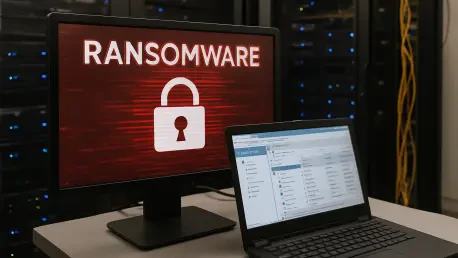

Attackers successfully breached a domain controller segment and utilized remote access tools to pivot into the sensitive virtualization management layer of a target network. This incident marks a significant departure from previous years when sophisticated exploits were the primary method for breaching hypervisors. Today, the cybersecurity landscape is witnessing a strategic transformation as ransomware operators realize that exploiting administrative oversights is far more efficient than attempting technically demanding virtual machine escapes. By focusing on the management framework rather than the hypervisor software itself, these threat actors can compromise entire server clusters with minimal technical friction. This evolution highlights a critical need for organizations to look beyond basic patching and address the structural vulnerabilities within their infrastructure oversight. Security teams must recognize that even the most hardened hypervisor cannot protect data if the keys to the kingdom are left exposed through simple management gaps.
Administrative Deficiencies: Structural Vulnerabilities in Infrastructure Oversight
The primary driver behind these modern attacks is the exploitation of misconfigurations rather than specific software bugs. Cybercriminals are bypassing the need for sophisticated zero-day exploits by leveraging administrative deficiencies, such as credential exposure and the reuse of privileged passwords. In many enterprise environments, the same administrative credentials used for local server management are frequently applied to the virtualization layer, creating a single point of failure that spans the entire infrastructure. When an organization fails to segment its virtualization layer from the standard corporate network, attackers can move laterally from a compromised workstation directly into the heart of the data center. This path of least resistance allows them to gain control over the tools used to manage virtual hosts, granting them the power to encrypt vast amounts of data simultaneously without ever needing to exploit a vulnerability in the underlying virtualization platform software itself.
Furthermore, the lack of isolation between the management plane and general user traffic provides a ready-made highway for lateral movement. Many organizations still treat their virtualization management interfaces as standard web services accessible from anywhere within the internal network. This architecture is increasingly dangerous because it assumes that internal trust is absolute, ignoring the reality that most ransomware campaigns begin on an endpoint. Once an attacker establishes a foothold on a standard laptop or server, the absence of network segmentation allows them to scan for and interact with sensitive management portals. Without a dedicated out-of-band management network or a strictly controlled jump host architecture, these portals become high-value targets that offer an entry point into the most sensitive data stores. This structural oversight effectively nullifies other security investments by providing a clear, unmonitored path to the most critical components of the modern enterprise IT environment.
Case Studies: Forensic Lessons From Management Layer Breaches
Recent forensic investigations into BlackNevas ransomware highlight the severity of the monitoring gap in virtualized environments. In several documented incidents from late 2025 and early 2026, attackers did not attack the hypervisor directly but instead compromised a network monitoring platform that held broad, uninhibited access to the virtualization hosts. Because the monitoring tool required high-level permissions to function and gather performance metrics, it served as a perfect pivot point for the intruders. Once the attackers gained entry to the monitoring system, they discovered that a universal root password was being reused across multiple nodes, allowing them to seize control of the entire environment through standard Secure Shell connections. This demonstrates how even auxiliary systems, if improperly secured, can provide the level of access required to execute a catastrophic ransomware attack across an entire cluster of servers in a matter of minutes.
The vulnerability of the management plane was further evidenced by The Gentlemen ransomware attacks, which focused on the Proxmox open-source virtualization platform during the early months of 2026. In these instances, the breach originated not from a network flaw or a software vulnerability, but from poor digital hygiene on a single administrator’s workstation. Attackers found root credentials stored in plaintext within digital notes and browser-saved passwords, providing them with immediate and total access to the virtualization interface. This lack of basic credential security turned a single compromised desktop into a gateway for a full-scale infrastructure collapse. The incident highlighted that the security of a virtualized environment is only as strong as the security of the devices and habits of the people who manage it. When administrators prioritize convenience over security by storing credentials in unencrypted formats, they provide threat actors with a simple path to total network domination.
Risk Mitigation: Strategic Defensive Hardening for Modern Environments
To counter these evolving threats, successful organizations implemented a holistic defense strategy that prioritized the hardening of the administrative ecosystem. This transition began with strict network segmentation, ensuring that management interfaces and monitoring tools were isolated from general traffic and accessible only through secure jump hosts. Furthermore, the practice of using shared or reusable credentials was eliminated in favor of strict credential lifecycle management, which included the mandatory use of multi-factor authentication for all privileged accounts. Security teams also enforced the principle of least privilege, ensuring that service accounts only had the specific permissions required for their tasks. By treating all paths leading to the virtualization layer as high-security zones, these businesses significantly reduced their attack surface. Ultimately, the integration of advanced detection and response solutions allowed for the continuous monitoring of management paths.
Organizations that successfully navigated these challenges adopted a mindset that prioritized the integrity of the management plane over simple perimeter defense. They recognized that protecting virtualized workloads required a specialized approach that integrated Cloud Workload Security with robust identity management. These entities performed regular audits of administrative access paths and successfully moved toward a zero-trust model for all infrastructure management tasks. By enforcing granular access controls, they ensured that even a compromised administrator workstation could not serve as an immediate gateway to the entire server cluster. These businesses also invested in continuous training for IT staff, which effectively reduced the prevalence of plaintext credential storage and password reuse. The shift from a reactive patching cycle to a proactive structural hardening process proved to be the most effective defense against modern ransomware campaigns. This strategy successfully maintained the integrity of critical business data.