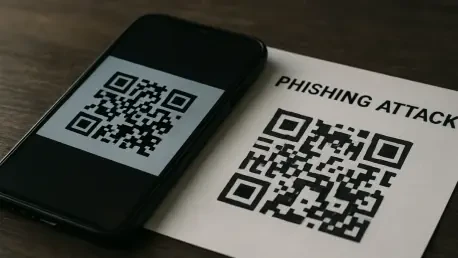

A comprehensive analysis by a leading cybersecurity firm has uncovered a significant and alarming trend in cybercrime, identifying a fivefold surge in phishing attacks that use malicious QR codes during the second half of 2025. The firm’s threat detection systems registered a dramatic escalation in these incidents, which jumped from 46,969 registered cases in August 2025 to a staggering peak of 249,723 by November 2025. This concerning trend, driven by the unique ability of QR codes to bypass conventional security measures, is expected to continue its upward trajectory, presenting a formidable challenge for businesses and individuals throughout 2026. The rapid adoption of this attack vector underscores a tactical shift among cybercriminals who are continuously evolving their methods to exploit the technologies people trust most in their daily personal and professional lives. This development signals an urgent need for heightened awareness and more sophisticated defense mechanisms to counter this burgeoning threat.
The Anatomy of a Modern Phishing Campaign
The core of this escalating issue lies in the inherent effectiveness of QR codes as a tool for cybercriminals seeking to evade detection. Attackers increasingly favor this method because it offers a remarkably simple and cost-effective way to conceal malicious URLs from standard security protocols. Unlike text-based hyperlinks, which can be scanned and flagged by many security filters, the visual nature of a QR code acts as a cloaking device. The primary tactic involves embedding these deceptive codes either directly into an email’s body or, more commonly, within an attached PDF document. This dual-layered approach effectively masks the phishing link from automated gateway scanners and strategically encourages recipients to scan the code with their mobile phones. This is a critical vulnerability, as mobile devices often lack the robust, enterprise-grade security protections commonly found on corporate desktops and laptops, creating an undefended pathway directly into a secure network or personal accounts.
These malicious campaigns are invariably powered by sophisticated social engineering schemes designed to deceive even cautious victims. Common tactics include creating highly convincing phishing forms that impersonate legitimate login pages for widely used services like Microsoft accounts or internal company portals, with the explicit goal of harvesting user credentials. In other instances, attackers send fraudulent HR notifications that create a sense of urgency, urging employees to review sensitive documents such as updated vacation schedules or lists of recently terminated staff, thereby tricking them into visiting credential-stealing websites. Another prevalent method involves the use of fraudulent invoices or purchase confirmations. These are often combined with vishing (voice phishing), a hybrid technique that prompts victims to call a provided phone number, where they are then manipulated into divulging sensitive financial or personal information to a live operator, leading to direct financial fraud.
Building a Resilient Defense Strategy
According to anti-spam experts, the use of malicious QR codes, particularly when embedded within PDF attachments and disguised as routine business communications, has rapidly become one of the most effective phishing tools in a cybercriminal’s arsenal. The success of this technique hinges on its ability to exploit both technological gaps and human psychology. By forcing a user to interact with the threat on a secondary device, the attacker breaks the chain of security that might exist on a primary workstation. The seemingly innocuous nature of a QR code, a tool now ubiquitous in marketing, payments, and information sharing, lowers the guard of many individuals who have been trained to be wary of suspicious links but not necessarily suspicious images. This observation highlights the critical need for security strategies to evolve beyond traditional email filtering and address the visual, multi-device nature of modern threats.
Given the escalating nature of this threat, a multi-pronged defense strategy that addresses both technological and human elements became essential. It was understood that merely blocking suspicious emails was no longer sufficient. The most effective approach involved a combination of robust employee education and the deployment of advanced security technologies. Organizations needed to implement comprehensive cybersecurity awareness programs that specifically educated employees on the risks associated with QR code phishing, teaching them to scrutinize any unsolicited requests to scan a code, especially those that create a false sense of urgency. In parallel, it was critical to deploy advanced mail server security solutions capable of sophisticated image analysis. These systems could identify and block QR codes leading to malicious destinations at the network gateway, before they ever reached an employee’s inbox, thereby neutralizing the threat at its source.