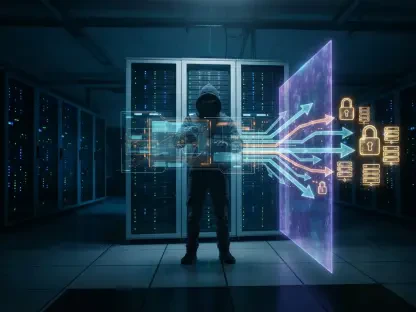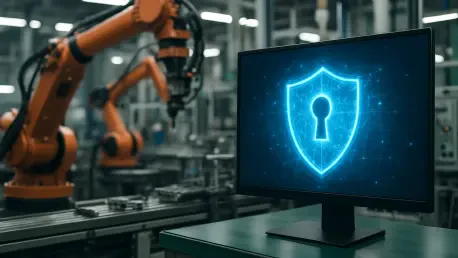

The traditional factory wall has effectively vanished, replaced by an invisible web of interconnected sensors, automated assembly lines, and cloud-based management systems that defy physical boundaries. Moving away from perimeter-centric security, the zero-trust model requires continuous verification for every device and connection within a manufacturing network. This paradigm shift addresses the fundamental reality that internal threats and lateral movement can be just as devastating as external breaches. In the current industrial landscape, a single compromised sensor can serve as a gateway for sophisticated ransomware or intellectual property theft. Consequently, modern security strategies must prioritize the granular control of data flows and the constant validation of user identities to maintain operational integrity. By abandoning the outdated concept of a trusted internal network, organizations can build a resilient defense that adapts to the fluid nature of contemporary cyber-physical threats.
Implementing Quantum-Resistant Encryption Standards
The rapid advancement of quantum computing necessitates a fundamental overhaul of the cryptographic foundations that currently protect industrial designs and technical records. Post-Quantum Cryptography (PQC) represents the next frontier in digital defense, utilizing complex mathematical algorithms specifically designed to withstand the immense processing power of both classical and quantum systems. This transition is not merely a theoretical exercise; it is a critical mandate for manufacturers today who must combat “harvest now, decrypt later” strategies. In these scenarios, malicious actors intercept encrypted data now with the intent of unlocking it once quantum hardware becomes accessible. Federal guidelines have already established clear benchmarks, requiring digital signatures and key establishment protocols to be quantum-resistant by 2030 and 2031, respectively. Organizations must begin auditing their current technical infrastructure to identify legacy encryption that will soon be obsolete.
Complementing these algorithms is the implementation of Quantum Key Distribution (QKD), which leverages the principles of physics to ensure the absolute integrity of data transmission. Unlike traditional methods that rely on computational complexity, QKD utilizes quantum states—such as the polarization of photons—to share encryption keys between two points. Any attempt by an unauthorized third party to observe or intercept the quantum transmission immediately alters the state of the particles, alerting the system to the presence of an eavesdropper. While the requirement for specialized fiber-optic hardware makes this a significant capital investment, the level of physical security it provides is unparalleled for high-value proprietary processes. For industrial entities operating across large campuses, QKD offers a method of information exchange that is fundamentally immune to algorithmic decryption, ensuring that sensitive communications remain entirely private and secure.
Transitioning to Zero Trust and SASE
The evolution of industrial networking has moved past the traditional model where once a user cleared the external firewall, they possessed broad access to internal resources. Zero Trust Architecture (ZTA) fundamentally redefines this relationship by assuming that every access request is potentially hostile, regardless of whether it originates inside or outside the physical plant. In a modern manufacturing environment, this necessitates the rigorous segmentation of network traffic to isolate Operational Technology (OT) from general corporate IT functions. By mapping all dependencies and communication paths between robotic controllers and management servers, organizations can implement micro-segmentation. This approach ensures that even if a single terminal is compromised, the threat is contained within a small zone, preventing it from spreading across the entire production floor and causing a catastrophic failure. This strategy is essential for protecting legacy systems that cannot support modern software.
Managing security across distributed production sites and a mobile workforce requires a unified framework that standardizes protection without hindering operational speed. Secure Access Service Edge (SASE) addresses this by converging networking and security services into a single, cloud-native platform that provides visibility into every connection. This model is particularly beneficial for manufacturers that operate multiple global facilities, as it allows for the centralized enforcement of security policies while processing data closer to the user to minimize latency. By integrating cloud access security brokers and firewall-as-a-service into a cohesive ecosystem, SASE eliminates the security gaps that occur when switching between on-site factory networks and remote virtual private connections. This convergence simplifies the management of complex industrial networks and provides security teams with a holistic view of the landscape, ensuring that every remote interaction is scrutinized.
Advanced Behavioral and Biometric Authentication
Standard authentication methods like static passwords and physical identification badges are no longer sufficient to stop modern social engineering and credential theft. Advanced behavioral biometrics provide a superior alternative by continuously analyzing the unique way an individual interacts with their digital environment. This includes subtle patterns such as typing rhythm, mouse movement trajectories, and even the specific gait of a worker moving through a facility equipped with motion sensors. Because these biometric signatures are collected passively, they offer a persistent layer of identity assurance that does not disrupt the worker’s focus or require repeated manual logins throughout a shift. If a user’s interaction patterns suddenly deviate from their established baseline, the system can automatically trigger a multi-factor authentication prompt or temporarily restrict access to sensitive machinery, effectively mitigating the risk of unauthorized account takeovers and ensuring safety.
As sophisticated threats like AI-generated deepfakes and high-resolution spoofing become more prevalent, industrial facilities are adopting liveness detection to reinforce their facial recognition systems. Traditional visual scans can sometimes be fooled by high-quality photographs, but modern liveness checks require active participation or physical depth sensing. These systems may ask a user to perform a specific movement, such as blinking or turning their head, or use infrared technology to detect the presence of a living human being rather than a static image. For the challenging environments of a warehouse, these tools are calibrated to function under varying lighting conditions and even when employees are wearing protective gear like hard hats or safety goggles. By ensuring that only a physically present, authorized individual can gain entry to secure production zones, liveness detection provides a robust barrier against both physical and digital intrusion attempts that target plant floors.
Autonomous Physical Security and Robotics
Physical security in the industrial sector is shifting away from reactive monitoring toward autonomous, AI-driven surveillance that proactively identifies threats. Modern smart surveillance platforms, often self-sustained by solar power, are revolutionizing how manufacturers protect remote storage yards and off-grid facilities. These systems utilize advanced computer vision algorithms to filter out environmental noise, such as animal movements or swaying vegetation, which typically cause false alarms. By focusing exclusively on genuine human threats or unauthorized vehicle entries, these platforms allow security personnel to dedicate their attention to high-risk incidents. Furthermore, the integration of edge computing allows these cameras to process data locally, triggering immediate alerts and deterrents—such as high-intensity strobe lights—before a human guard even views the footage. This approach reduces the burden on human staff while significantly increasing the detection rate.
The deployment of autonomous robotic patrols represents a significant leap forward in maintaining constant vigilance across expansive industrial campuses. These robots are equipped with 360-degree cameras and thermal sensors, enabling them to traverse predefined routes and monitor areas that might be hazardous for human guards to access consistently. By providing a continuous stream of real-time data to a centralized security hub, these autonomous units act as mobile sentries that never tire. In addition to patrolling, visual AI is being integrated into fixed access control points to verify vehicle cargo and personnel movements with extreme precision. This reduces the heavy reliance on physical badges that can be lost or shared, ensuring that access to sensitive assembly lines is strictly governed by verified visual data. This robotic augmentation allows human security teams to transition from routine observation to complex decision-making, optimizing the safety of the entire organization.
Proactive Anomaly Detection and Response Logic
Effective defense in an era of complex cyber-physical attacks requires the ability to identify threats that do not have a known signature, such as fileless malware or the misuse of legitimate system tools. Anomaly detection powered by machine learning solves this by establishing a granular baseline of what constitutes “normal” behavior for every device and user within the network. This includes monitoring the typical communication frequency of robotic controllers and the standard data volumes transferred by engineering workstations. When the system detects a departure from this established baseline—such as a programmable logic controller suddenly attempting to connect to an external server—it immediately flags the irregularity for investigation. This proactive approach allows organizations to identify the early stages of a breach before any data is exfiltrated or production processes are disrupted, staying ahead of increasingly stealthy attackers who seek to sabotage industrial workflows.
The evolution of industrial security culminated in a unified strategy that prioritized speed and precision through automated response mechanisms. By adopting these systems, organizations moved from a reactive posture to a resilient state where threats were neutralized in milliseconds, effectively preventing the lateral movement of malware. The integration of artificial intelligence allowed for a sophisticated hierarchy of defense, ensuring that critical production lines remained operational while compromised segments were isolated. Moving forward, the next step for manufacturers involves a continuous auditing process to refine these automated triggers and expand the use of behavioral analytics across all departments. This transition was characterized by a shift in mindset, viewing security not as a static barrier but as a dynamic enabler of industrial innovation. This approach ultimately protected intellectual property while fostering a safe environment for the deployment of next-generation automation and robotics on the plant floor.