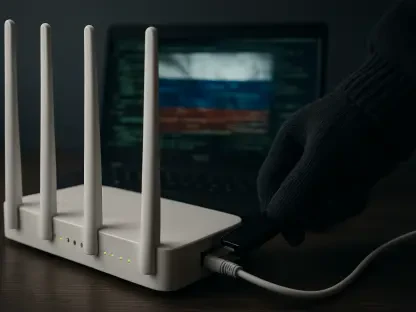

Most internet users trust their routers to faithfully direct web traffic, rarely suspecting that this fundamental piece of network hardware could be actively working against them. A recently uncovered and highly sophisticated “shadow” network has been silently compromising vulnerable home routers, altering their core settings to hijack internet connections on a massive scale. This campaign reroutes user DNS queries away from legitimate internet service provider servers and toward a malicious infrastructure controlled by threat actors. This subtle manipulation allows attackers to intercept and selectively redirect web traffic, creating a dangerous environment where users can be steered toward fraudulent advertising platforms, phishing pages, or other malicious scams without any obvious signs of compromise. The very foundation of trust in a home network is eroded, turning a device meant to be a secure gateway into an unwitting accomplice for cybercriminals.
1. The Anatomy of a Widespread DNS Hijacking Campaign
The core of this attack involves compromising routers and altering their Domain Name System (DNS) configurations to point to rogue servers. These malicious resolvers, hosted by a bulletproof hosting firm, act as a gatekeeper for the victim’s entire online activity. When an infected router requests the IP address for a website, the query is sent to these attacker-controlled servers instead of a trusted source. To remain undetected, the system is designed with a deceptive cleverness; requests for major websites like Google or popular social media platforms are often resolved correctly, ensuring the user experiences no immediate disruption. However, when a user attempts to access specific, targeted websites, the malicious DNS server initiates a complex redirection chain. This process often involves a secondary HTTP-based Traffic Distribution System (TDS) that fingerprints the victim’s device and browser to determine the most effective payload, which could range from deceptive ad-tech schemes to more direct malware delivery systems, all while the user remains unaware that their traffic is being manipulated.
This widespread campaign was first identified by security analysts who began connecting a series of seemingly unrelated user reports describing “insane” and inexplicable internet behavior. Victims detailed a range of bizarre issues, such as being unable to access common productivity tools like Google Sheets or experiencing persistent and random browser redirects to unwanted sites. Initially, many of these users assumed their individual computers were infected with malware, leading them down frustrating and ineffective troubleshooting paths. The investigation revealed that the threat actors were primarily targeting older, unpatched router models from various manufacturers. By compromising the router, they gained control over the entire home network’s trust chain, affecting every connected device—from computers and smartphones to smart home gadgets. The router, being the central point of traffic, became the perfect vehicle for this widespread, silent interception, fundamentally undermining the security of the entire local network.
2. A Masterclass in Stealth and Evasion
The most technically sophisticated aspect of this campaign was its ability to remain hidden from security researchers for an extended period. Analysts initially struggled to replicate the malicious DNS responses because the rogue servers would not reply to standard diagnostic queries. The critical breakthrough came with the discovery that these shadow resolvers were specifically configured to respond only if a protocol extension known as EDNS0 (Extension Mechanisms for DNS) was explicitly disabled in the query. Because EDNS0 is a modern standard used by nearly all legitimate DNS resolvers and security scanning tools to handle larger data packets and support enhanced security features, its presence is now the default in professional network analysis. By intentionally designing their servers to ignore any query that included this standard extension, the attackers created an effective filter. This simple but brilliant tactic rendered their malicious infrastructure invisible to automated security scans and most manual investigations, which would naturally use modern, compliant tools.
This clever evasion strategy allowed the malicious network to operate a two-tiered system with remarkable success. For security researchers and automated scanners using up-to-date tools that included EDNS0, the rogue servers would provide the correct, legitimate IP addresses for queried domains, appearing completely benign. This effectively cloaked the entire operation in a veil of legitimacy. Simultaneously, for the actual victims using older routers with outdated firmware or specific configurations that did not support or use EDNS0, the servers would deliver the hijacked, malicious responses. This selective filtering ensured the campaign could continue its fraudulent activities for years, targeting a vulnerable segment of users while remaining undetected by the broader cybersecurity community. The incident highlighted the critical importance of not only patching devices but also ensuring that network hardware stays current with modern internet protocols, as reliance on outdated standards created the very vulnerability that these attackers so effectively exploited.
Securing Your Digital Gateway
The discovery of this shadow DNS network underscored a critical vulnerability that had long been overlooked in consumer-grade network security. It became clear that outdated hardware and unpatched firmware were not merely performance issues but active security liabilities that threat actors could systematically exploit. The campaign’s success rested on a foundation of user inaction and the longevity of networking equipment that was no longer receiving security updates from its manufacturers. As a result, users were strongly advised to conduct thorough audits of their router’s DNS settings to identify any unauthorized or suspicious server addresses. The primary defense against such intrusions involved a proactive approach to hardware maintenance. This included diligently applying all available firmware updates, which often contain critical patches for known vulnerabilities, and, more importantly, replacing obsolete routers that had reached their end-of-life and were no longer supported by the manufacturer. This strategic shift from a reactive to a proactive security posture was deemed essential for safeguarding the integrity of home networks.