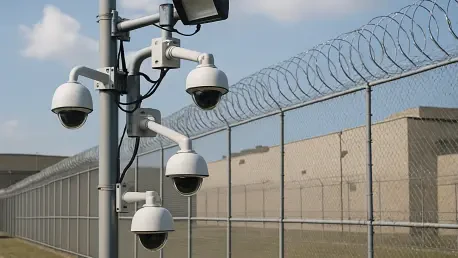

Modern military strategy has undergone a radical transformation where the digital vulnerability of a simple street camera can now dictate the target of a high-precision ballistic missile strike. As Iranian-linked threat actors intensify their focus on internet-connected surveillance systems across the Middle East, the line between traditional espionage and kinetic warfare has effectively vanished. Identifying these intrusion patterns is no longer just a technical exercise for IT departments; it has become a vital component of national security and regional stability in a world where data feeds directly into weapon systems.
The scope of this digital offensive encompasses a wide range of specialized tactics designed to exploit the very tools meant to provide security. By focusing on specific vulnerabilities in widespread hardware, attackers have turned passive monitoring devices into active reconnaissance assets. This shift necessitates a comprehensive understanding of how digital reconnaissance coordinates with physical strikes, emphasizing the need for robust defensive protocols to shield critical infrastructure from being used against its owners.
The Intersection of Digital Espionage and Kinetic Warfare
The escalation of Iranian cyber operations targeting surveillance infrastructure marks a significant evolution in regional conflict dynamics. These actors are not merely looking for sensitive information; they are seeking real-time visual confirmation to refine their military objectives. This convergence of interests means that a compromised camera in a city square or near a government facility acts as a forward observer for missile crews, providing immediate battle damage assessment and target verification.
Moreover, the geographic spread of these attacks across Israel, the UAE, and Bahrain suggests a disciplined and strategic campaign. By utilizing commercial VPNs to mask their location, these crews scan for specific entry points that allow them to hijack live feeds. This level of coordination demonstrates that cyber capabilities are now fully integrated into the broader military doctrine of the region, making digital defense a front-line priority for any entity operating within the reach of these kinetic threats.
Why Securing IoT Infrastructure Is Critical for Physical Safety
Following rigorous cybersecurity best practices for IP cameras is now a matter of physical survival in the current landscape of cyber-physical warfare. When an adversary gains control over a surveillance network, they strip away the advantage of domestic security and replace it with a persistent, invisible threat. Protecting these assets ensures that tactical intelligence remains out of the hands of those who would use it to launch physical attacks on civilian or military populations.
Maintaining the integrity of private and public surveillance networks also prevents the psychological impact of being watched by an enemy. Beyond the immediate danger of missile guidance, these breaches can be used to monitor the movement of personnel or identify patterns of life that lead to targeted assassinations. Securing the Internet of Things (IoT) infrastructure is therefore a foundational requirement for protecting critical facilities from being mapped and targeted with lethal precision.
Strategic Defensive Measures Against Specialized Camera Exploits
Developing a resilient defense requires moving beyond general security advice toward actionable steps that address the specific methods favored by sophisticated state actors. Security personnel must recognize that these attackers are highly selective, often targeting specific brands like Hikvision and Dahua to leverage known flaws. By implementing a layered defense strategy, organizations can significantly raise the cost and complexity of an intrusion, potentially deterring the reconnaissance phase altogether.
Every defensive measure must be informed by the reality of how these vulnerabilities were previously used to facilitate military objectives. History shows that attackers do not just stumble upon these feeds; they hunt for them with specific goals in mind. Therefore, administrators should treat every connected camera as a potential back door into the physical environment, requiring the same level of scrutiny as a primary database or a restricted entry point.
Remediating Hardware Vulnerabilities Through Proactive Patch Management
The first line of defense involves a rigorous approach to identifying and patching security flaws within camera hardware, specifically targeting bugs like command injection and remote code execution. Many of these devices ship with legacy code that remains vulnerable for years if not actively managed. Proactive patch management ensures that the “low-hanging fruit” sought by Iranian crews is removed, forcing them to find much more difficult and expensive ways to gain access.
The Impact of Unpatched Systems at the Weizmann Institute of Science
A striking example of this vulnerability occurred during a 2025 ballistic missile strike on the Weizmann Institute of Science. Investigation revealed that a compromised street camera, which had not been updated to fix a known authentication bypass bug, provided the exact intelligence needed to calibrate the kinetic attack. The feed allowed the attackers to monitor the facility in real-time, proving that an unpatched system is often the difference between a missed strike and a direct hit on a sensitive target.
Hardening Network Architecture to Prevent Remote Surveillance Hijacking
The second essential practice is the total removal of direct Wide Area Network (WAN) access for surveillance equipment. By isolating cameras on dedicated Virtual Local Area Networks (VLANs), administrators can prevent an attacker who gains access to a single camera from moving laterally through the rest of the corporate or government network. Furthermore, monitoring for suspicious login attempts that originate from known VPN exit nodes provides an early warning of a targeted scanning campaign.
Pre-Strike Reconnaissance and the Hijacking of Jerusalem CCTV Streams
In a documented case involving threat groups linked to Iran’s Ministry of Intelligence and Security, live CCTV streams in Jerusalem were hijacked days before a major offensive. These groups systematically bypassed weak network configurations to gain a bird’s-eye view of the city’s movement patterns. This reconnaissance was not accidental; it was a calculated move to identify high-value targets, illustrating how hardened network architecture could have blinded the attackers during the critical planning phase of the strike.
Assessing the Future of Cyber-Physical Conflict and Regional Security
The shifting threat landscape has made it clear that digital vulnerabilities lead directly to physical casualties, necessitating a total rethink of regional security. Government agencies and commercial entities in high-risk zones must now view camera procurement through a security lens rather than just a cost-benefit one. Selecting hardware with verified security lifecycles and avoiding brands with systemic vulnerabilities became the new standard for anyone responsible for protecting human lives and critical assets.
Future considerations for regional security involved the adoption of zero-trust architectures for all IoT devices, ensuring that no camera is ever trusted by default. Decision-makers shifted toward localized storage and encrypted transit protocols to mitigate the risk of interception. By moving away from vulnerable, internet-exposed hardware and toward isolated, well-monitored systems, organizations successfully reduced their physical profile in the eyes of digital adversaries, ultimately decoupling their network security from their physical safety.